


The crypto market in 2025 continues to see rapid experimentation and shifting narratives. Alongside large networks such as Bitcoin and Ethereum, newer meme-token projects and multichain ecosystems are also competing for attention. As more applications emerge across finance, gaming, and digital ownership, the sector’s risks and uncertainties remain significant.

At the same time, decentralization is increasingly being used as a design approach for infrastructure and applications. Networks such as Ethereum, cross-chain systems such as Polkadot, and narrative-driven meme-token projects such as Arctic Pablo Coin highlight the range of approaches used to attract users and developers. Readers should treat project claims and marketing materials cautiously and verify details independently.
Determining what is “best” to buy or hold depends on an individual’s risk tolerance, time horizon, and understanding of the underlying technology. Digital assets can be highly volatile, and prices can move for reasons unrelated to fundamentals.
Arctic Pablo Coin: A Narrative-Driven Meme-Token Project
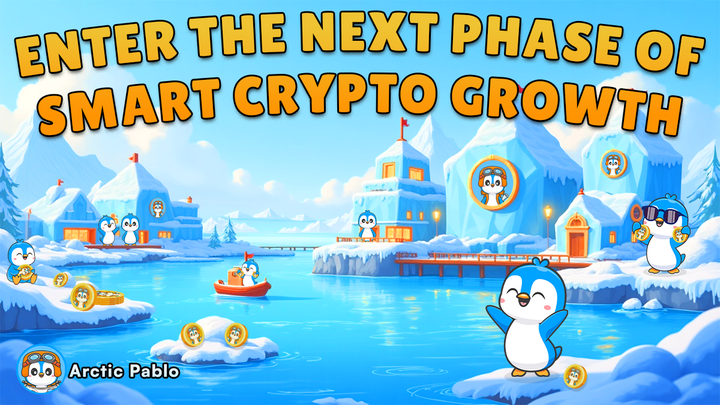
Arctic Pablo Coin is a meme-token project that presents an ongoing story, with weekly “locations” that the project says reveal new parts of its fictional universe. As with many meme tokens, interest may be driven as much by community engagement and branding as by technical development.
According to the project, the token was priced at $0.00023 during its ongoing token sale at the time this material was prepared, and the project has also referenced a potential listing price of $0.008. Any such targets are speculative and are not guarantees of future pricing, liquidity, or exchange availability.
The project describes a deflationary mechanism where unsold tokens are burned, and it also states that additional burns are implemented on Binance Smart Chain (BEP20). It further advertises a staking program with a stated 66% APY and a two-month vesting period; staking yields and terms can change and may involve smart-contract and counterparty risks.
Project materials also reference a total supply of 221.2 billion APC and indicate that a portion of the supply is allocated to the public token sale. Supply schedules, burn mechanics, and allocation details should be verified via primary sources (such as on-chain data and official documentation) where possible.
The project reports raising more than $2.64 million and lists accepted payment assets including BNB, ETH, USDT, BTC, SOLANA, and XRP. It also describes planned budget allocations and a team token lock-up period; such arrangements depend on implementation and enforcement and may not eliminate risks for buyers.
As with other early-stage token offerings, participants may face risks including extreme price volatility, limited liquidity, smart-contract vulnerabilities, and regulatory uncertainty.
Ethereum: Ongoing Protocol and Ecosystem Work
Ethereum remains a widely used smart-contract network for decentralized finance and Web3 applications. In May 2025, discussions around EIP-4444 drew attention from parts of the developer community. The proposal relates to data retention and could reduce the storage burden for nodes, though any changes depend on community review, implementation, and adoption.
Ethereum’s market price can be volatile and sensitive to broader macro conditions, regulatory news, and on-chain activity. Any price levels discussed by commentators should be treated as opinions rather than forecasts.
Polkadot: Multichain Architecture and Interoperability
Polkadot is designed to support multiple blockchains connecting through its Relay Chain. As demand for interoperability increases, Polkadot’s architecture is one approach that aims to enable independent chains to share security while maintaining separate execution environments.
The network’s parachain model is intended to let specialized blockchains operate in parallel. The practical impact depends on developer adoption, application demand, governance decisions, and the broader competitive landscape in multichain infrastructure.
Recent attention to Polkadot has included references to developer activity and ecosystem funding programs. As with other crypto networks, usage metrics and market pricing can diverge, and neither should be treated as a standalone indicator of future performance.
Final Thoughts
In 2025, the crypto sector continues to evolve across multiple fronts, from protocol-level discussions on major networks to experiments in community-driven tokens. Ethereum and Polkadot represent established infrastructure approaches, while meme-token projects such as Arctic Pablo Coin emphasize narrative and marketing alongside token-design features.
Arctic Pablo Coin’s token sale and related mechanics (including burns and staking terms) are described by the project and should be independently verified. Early-stage token offerings can carry elevated risk compared with more established assets, and outcomes can differ materially from project expectations.
This article is for informational purposes only and does not constitute financial or investment advice. This outlet is not affiliated with the project mentioned.
For More Information:
Arctic Pablo Coin (project website, for reference): https://www.arcticpablo.com/
Twitter (project account, for reference): https://x.com/arcticpabloHQ
FAQs
What is Arctic Pablo Coin?
Arctic Pablo Coin is a meme-token project that, according to its own materials, uses a story-based “location” theme alongside a public token sale and a burn mechanism. As with similar projects, independent verification is important and outcomes can be uncertain.
What has the project said about staking and tokenomics?
The project advertises token burns (including burns of unsold tokens) and a staking program with a stated 66% APY and vesting terms. These figures and mechanics are project-reported and may change, and staking can involve smart-contract and market risks.
Why is Ethereum widely used in crypto?
Ethereum is commonly used because it supports smart contracts and has a large developer ecosystem, including DeFi and Layer 2 scaling activity. Its usage and market performance can still fluctuate and are subject to technical and regulatory risks.
What role does Polkadot aim to play?
Polkadot aims to support interoperability through its Relay Chain and parachain model, allowing multiple blockchains to connect while sharing security. Adoption depends on developer and user demand, governance decisions, and competition from other networks.
Press releases or guest posts published by Crypto Economy have been submitted by companies or their representatives. Crypto Economy is not part of any of these agencies, projects or platforms. At Crypto Economy we do not give investment advice; if you decide to participate in any promoted project, you should do your own research.

