TL;DR:
- Yi He’s WeChat account was hijacked to promote Mubarakah, driving a $55,000 pump and highlighting social media risks for crypto users.
- She will fund a BNB airdrop reimbursing users who traded Mubarakah via Binance’s Web3 Wallet and Alpha, signaling willingness to address losses from hack.
- Lookonchain traced two wallets behind the trades and CZ warned that Web2 security is weak, while Binance suspended an employee over misuse of non-public information.
Binance co-founder and co-CEO Yi He is at the center of a fresh security scare after her WeChat account was compromised and used to promote the Mubarakah token, turning an inactive profile into the launchpad for a $55,000 pump and raising renewed questions about how social media hacks can ripple through global crypto markets. The incident has forced Binance leadership to respond publicly and promise compensation for some affected users.
https://twitter.com/heyibinance/status/1998750694736802117
How the Mubarakah scam unfolded and why it matters for Web2 security
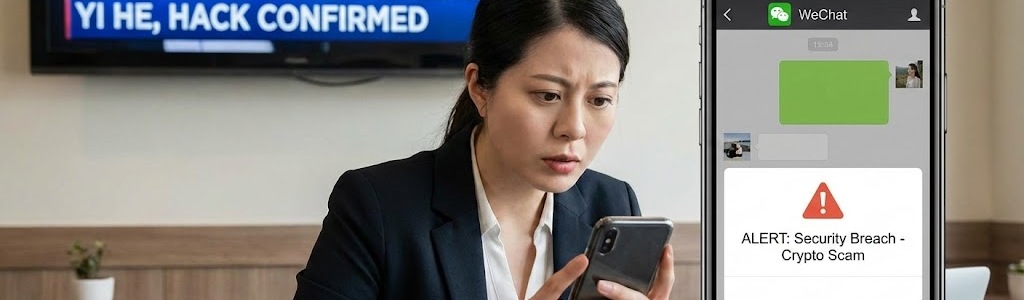
In a post on X, Yi He confirmed the hijacked WeChat account had been inactive and that the phone number linked to it had been reassigned, explaining that attackers exploited support channels and multiple friend-request mechanisms before resetting the password through external verification and seizing control of her identity. She acknowledged that users who saw her WeChat Moments and messages bought Mubarakah, likely trusting what looked like a legitimate endorsement.
To address those losses, He said she intends to allocate BNB for an airdrop to reimburse users who traded Mubarakah via the Binance Web3 Wallet and Alpha platform during the episode, signalling that the company sees a responsibility to respond even when the initial breach occurred on an external, Web2 messaging service outside its core infrastructure. The gesture is aimed at users who interacted with the token in Binance’s wider ecosystem rather than on unrelated venues.
Blockchain analytics firm Lookonchain reconstructed the trade pattern behind the scam, reporting that the attackers created two wallets, 0x6739 and 0xD0B8, and spent 19,479 USDT to accumulate 21.16 million Mubarakah tokens before the promotional posts went live, then sold 11.95 million tokens for 43,520 USDT and retained 9.21 million worth $31,000, locking in an estimated haul of $55,000 driven by the hijacked account’s reach. The data shows a textbook pump-and-dump run through decentralized onchain liquidity.
Former Binance CEO Changpeng Zhao confirmed that Yi He’s WeChat account had been hacked and urged users not to buy meme coins promoted from the compromised profile, warning that Web2 social media security is weak and stressing that neither Yi He, official Binance channels nor company employees will endorse these tokens. The hack, combined with a recent case where a Binance employee was suspended for abusing non-public information on a futures social account, underlines how platforms must pair rapid innovation with strong internal controls and vigilance around account security.