

Every time the market pulls back, social media fills with one question: Why is crypto down today?
Prices can fall across the board, portfolios may decline in the short term, and commentary can move faster than verified information. Market participants respond differently: some reduce risk, while others increase exposure.
When the crypto market today shows broad declines, it can reflect a range of factors, from macroeconomic news to leverage being unwound. Separately from spot-market moves, some projects continue stage-based fundraising. One example is Noomez ($NNZ).
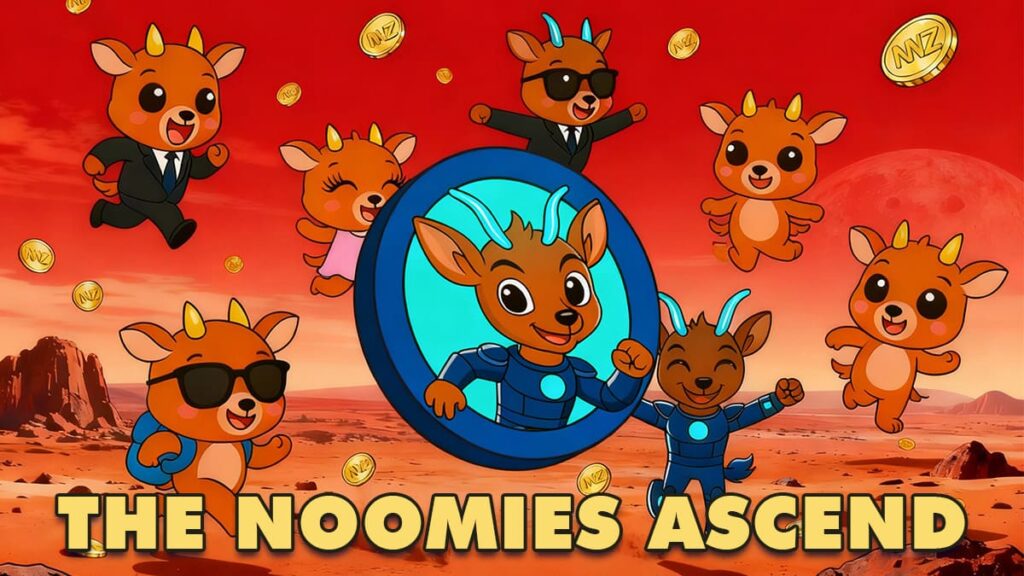
According to information published by the project, the Noomez token sale is in Stage 4 with a listed price of $0.0000187, more than 156 holders displayed on its dashboard, and over $31,310 raised. These figures are project-reported and have not been independently verified.
Why Is Crypto Down Today? Common Factors Behind Down Days
When people ask why the crypto market is down, explanations often fall into categories that can repeat across market cycles:
- Market-wide correction: After strong rallies, the market sometimes retraces as positioning resets.
- Profit-taking from large holders: Large orders can move thinner markets and trigger follow-on selling.
- Macro trends: Interest rates, inflation data, and broader risk sentiment can influence crypto prices.
- Exchange behavior: Liquidations, funding changes, and market-making activity can amplify short-term moves.
- Rotation between ecosystems: Some traders reallocate between assets (for example, between larger and smaller caps), though this is inconsistent and not predictable.
These drivers may look chaotic in real time, but they are common in volatile markets.
Why Dips Attract Attention From Some Market Participants
Short-term sell-offs can be uncomfortable, especially for newer traders focused on daily price action. Some market participants consider lower prices potential entry points, although declines can continue and losses are possible.
In practice, a dip can coincide with:
- Lower prices relative to recent levels.
- Reduced liquidity and wider spreads in some markets.
- Increased liquidation risk when leverage is involved.
- More uncertainty around near-term direction.
Some projects are also marketed through stage-based token sales that are not priced by secondary-market trading. Noomez is one such example, based on project materials.
How Stage-Based Token Sales Differ From Spot-Market Pricing
A stage-based token sale typically uses set pricing and time- or allocation-based stages rather than continuous price discovery on exchanges. That can make the sale price less responsive to day-to-day market moves, but it does not remove risk and does not guarantee any outcome after a token lists or begins trading.
As described by the project, Noomez uses staged pricing and includes features such as:
- A Stage 4 price listed at $0.0000187.
- A holder count displayed on the project dashboard.
- A stated intention to burn unsold tokens after a stage ends.
- A planned price change in later stages.
These are project-reported mechanics and should not be interpreted as a forecast of market performance.
Considerations People Often Weigh During Market Dips
During a downturn, market participants commonly focus on risk management and time horizon. Considerations may include:
1. Volatility and liquidity
Fast price moves can increase execution risk and slippage. Leverage can also magnify losses.
2. Pricing mechanisms
Stage-based token sales may have preset pricing, while exchange-traded assets fluctuate continuously. Both approaches carry risks, including smart-contract, custody, and market risks.
3. Attention and information quality
During sharp moves, misinformation can spread quickly. Many investors prioritize primary sources and verifiable disclosures.
4. Supply-related mechanics
Some tokens include supply adjustments (such as burns). These mechanisms can affect token economics, but they do not by themselves determine demand or future price.

Noomez Coin: Project-Reported Structure and Disclosures
While large-cap coins can fluctuate, the Noomez token sale continues through its stages with pricing and timing described by the project. Any later secondary-market pricing, liquidity, and volatility would be uncertain.
The project’s “Noom Gauge ” is presented as a dashboard showing remaining tokens and time information. Project materials describe features including:
- A fixed 280B supply.
- 28 stages with scheduled pricing changes.
- Burns at the end of each stage (as stated by the project).
- A referral system described by the project as a marketing incentive.
- Staking rewards described as available after launch (subject to the project’s implementation and any applicable conditions).
- A live dashboard presented as updating in real time.
These points are based on project statements and are provided for context, not as an endorsement or a prediction of results.
Project links (for reference):
Website: Visit the Official Noomez Website
X: Follow Noomez ON X (Formerly Twitter)
This article is for informational purposes only and does not constitute financial or investment advice. This outlet is not affiliated with the project mentioned. Cryptocurrency markets and token sales carry risk, including the risk of loss.

