TL;DR:
- A whale linked to Justin Bram deposited 14.19 million WLD into the Binance exchange, valued at $5.72 million.
- The asset’s price fell below its 20-day moving average (EMA20), establishing a short-term bearish bias.
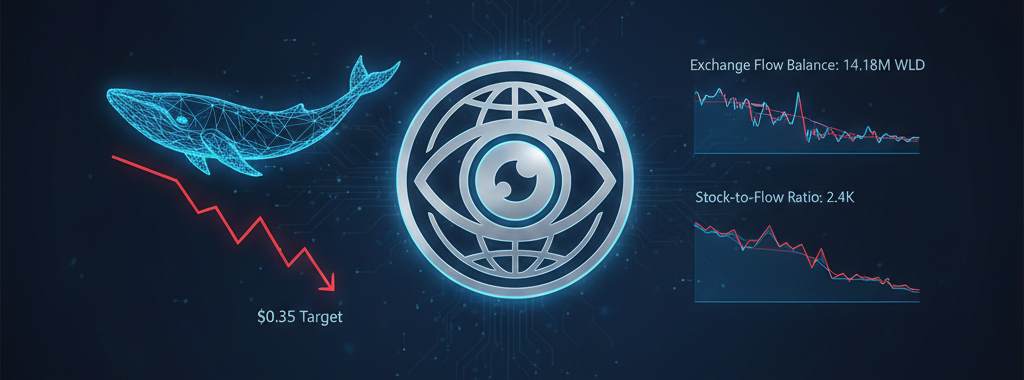
- Worldcoin’s Stock-to-Flow ratio plummeted drastically, indicating an excess of supply available for immediate sale.
The altcoin market suffered a shake-up this Tuesday after it was confirmed that Worldcoin loses key level due to a massive whale sale. The asset failed to hold the psychological support of $0.40 after an institutional wallet deposited millions of tokens into Binance, triggering a drop toward $0.38 and a break of its main short-term moving averages.
Arkham data reveals that the liquidated funds largely originate from vesting wallets, causing retail investors to lose confidence. With more tokens circulating on exchanges for sale, the asset’s scarcity has been drastically reduced, leaving current buyers without enough strength to absorb the exit pressure.
Technical weakness and potential downside targets for WLD
As a consequence of this increase in supply, technical indicators such as the Stochastic RSI made a bearish crossover, dropping from 92 to 75 points in a matter of hours. This suggests that the selling momentum has not ended and that any recovery attempt is being stifled by sell orders remaining active in the order books of major exchanges.
Consequently, analysts warn that if the supply-side pressure persists and the EMA20 zone at $0.41 is not reclaimed soon, WLD’s price could slide toward the next major support at $0.35. To invalidate this scenario of prolonged weakness, the token would need a significant rally to place it above $0.46, returning structural control to the bulls.
In summary, the capitulation of large holders has left Worldcoin in a vulnerable position within a market that was already showing signs of a general pullback. The key for the coming days will be to observe if new accumulation levels appear to halt the decline or if we will witness a period of stagnation below the historical support levels that the community previously defended.