TL;DR:
- VeChain’s 2026 roadmap says the network is entering a fourth chapter built around a thesis: billions of AI agents will need blockchain-based trust infrastructure.
- The plan centers on four pillars, scalability, interoperability, intelligence, and real-world adoption, all aimed at turning VeChainThor into a future-proof Web3 utility layer.
- VeChain is positioning its next phase as long-term infrastructure strategy, not a short product cycle, with agentic-economy relevance at the center of growth.
VeChain has laid out a 2026 roadmap that positions the network at an inflection point after roughly a decade of development. The plan argues that the next growth phase for blockchains will not be driven only by token activity or enterprise tooling, but by a world in which AI agents need infrastructure for identity, secure verification, transactions, and value transfer. VeChain is trying to recast itself as trust infrastructure for the agentic economy, presenting the next evolution of VeChainThor as a response to software systems that may soon act as economic participants at global scale.
Why the roadmap marks a strategic pivot
The company frames this moment as the start of a fourth chapter for VeChainThor. It follows an earlier path that began with enterprise-grade tools for trustless commercial data and later expanded into VeBetter, a sustainability-focused app ecosystem designed to push Web3 toward usage. The roadmap shifts the narrative from isolated blockchain utility to a much larger systems thesis, suggesting that the next wave of adoption will come from infrastructures able to support billions of autonomous agents moving through the real economy rather than from single-purpose applications alone.
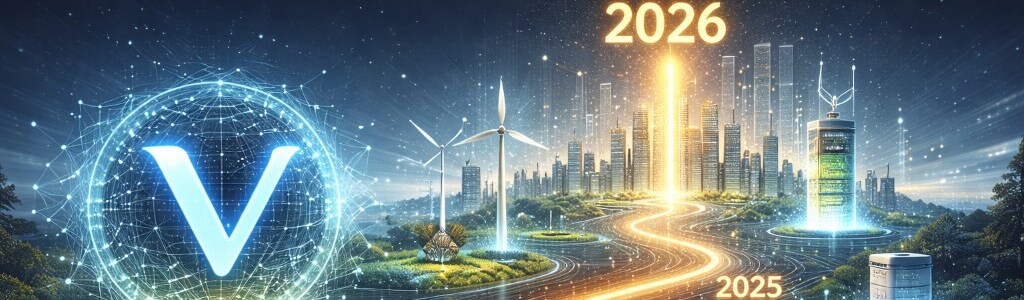
What gives the plan structure is its emphasis on four pillars: scalability, interoperability, intelligence, and real-world adoption. Rather than present those as disconnected workstreams, VeChain ties them to one outcome, making the protocol durable enough to serve as the underlying trust layer for agent-based activity. The roadmap is less about a single product launch than about redesigning the chain’s long-term operating logic, with future-proofing presented as the central objective and real-world Web3 utility kept firmly at the center of the network’s strategic identity, as execution priorities become more closely linked, going into 2026 and beyond.
The roadmap also signals how VeChain wants the market to read its next phase. Even the first visible protocol section, labeled “Core Protocol Evolution: VeChain Renaissance – Interstellar,” suggests a branding and architecture reset meant to support a longer horizon. The bigger message is that VeChain is not pitching incremental growth, but foundational relevance, betting that blockchains able to verify identity, move value, and coordinate intelligent activity will be best positioned if the agentic economy arrives at the scale the project now expects over the coming years across commerce, services, and digital infrastructure networks worldwide.