TL;DR
- USDC surpasses USDT in trading volume for the first time since 2019.
- Circle’s stablecoin now captures 64% of adjusted stablecoin trading volume.
- Institutional capital favors USDC due to its Treasury-backed, regulated reserve model.
USDC dethroned USDT as the highest-volume stablecoin in 2026, according to data cited by Mizuho Bank. It marks the first time Circle’s stablecoin has surpassed Tether in trading activity since 2019, with USDC capturing 64% of adjusted stablecoin trading volume so far this year.
The shift marks a turning point in how digital capital moves through the global crypto market.
Why USDC Is Gaining Ground on USDT
The key difference between both stablecoins comes down to their reserve structure.
USDC, issued by Circle, backs its supply primarily with short-term US Treasury bonds and regulated financial institutions. For investment funds, asset managers, and corporate treasuries, that model aligns directly with traditional financial standards.
The rise of spot Bitcoin ETFs, tokenized assets, and regulated crypto platforms accelerated institutional capital flows into the market. That capital tends to operate with stablecoins offering clearer compliance frameworks — and USDC meets that requirement better than USDT in regulated environments.
USDT Still Dominates Global Liquidity
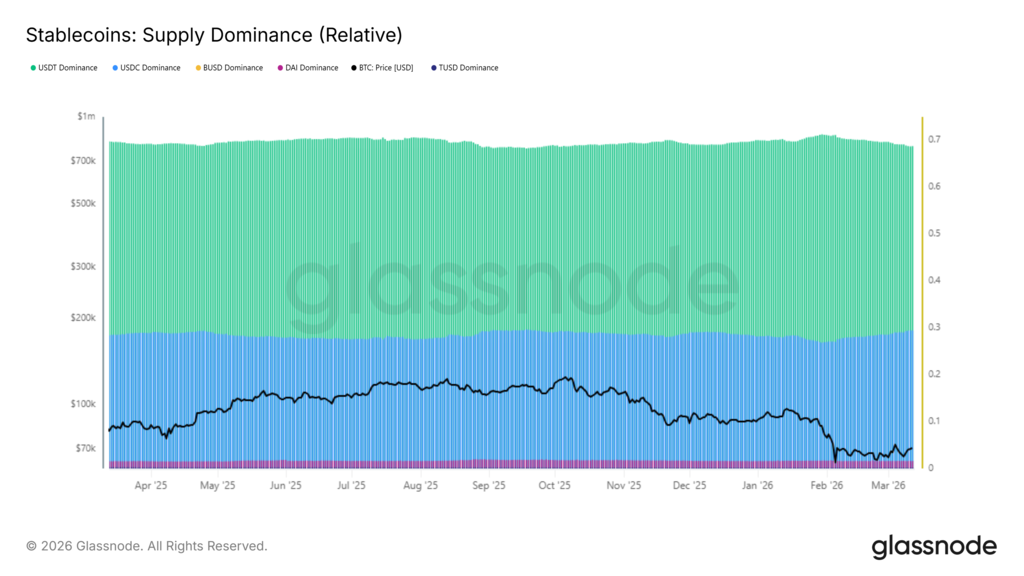
Despite the volume shift, Tether holds the largest circulating supply among all stablecoins and remains the primary liquidity engine across several global exchanges, particularly in derivatives markets.

USDT also dominates in regions where access to dollar-based banking infrastructure is limited. In those markets, stablecoins function as substitutes for conventional financial rails, and Tether has occupied that space for years.
The competition between USDT and USDC does not point toward replacement. It points toward a division of roles within the market.
A Sector That No Longer Has a Single Leader
USDC’s advance reflects a broader transformation across the stablecoin sector.
- USDT built the crypto liquidity infrastructure during the period when traditional financial institutions were largely absent from the market.
- USDC represents the liquidity layer operating where crypto markets and regulated financial systems overlap.
Both models coexist, but their user bases are growing further apart. The stablecoin market is moving away from a single dominant player toward a more competitive structure — where the user profile, retail or institutional, global or regulated, determines which stablecoin leads in each segment.