TL;DR:
- An OCC report shows 9 banks restricted services to legitimate businesses, including digital assets.
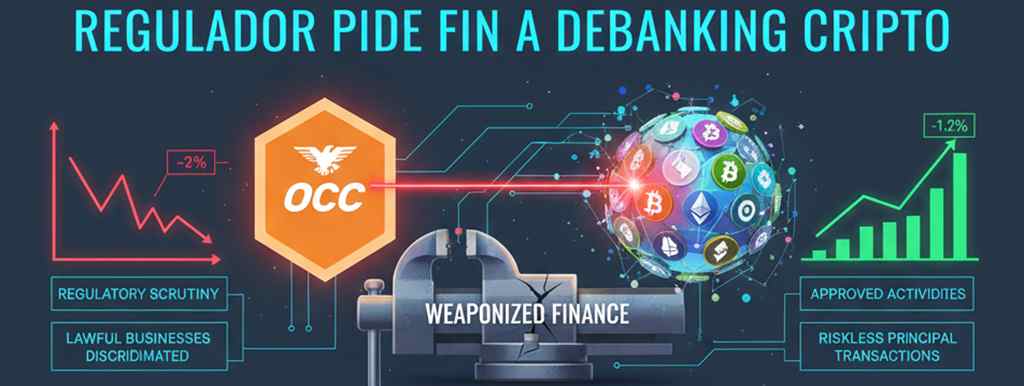
- Comptroller of the Currency, Jonathan V. Gould, denounced the practice as “weaponized finance.”
- The investigation revives “Operation Choke Point 2.0” concerns about regulatory harassment of the crypto sector.
The U.S. Office of the Comptroller of the Currency (OCC) issued a preliminary report shedding light on certain discriminatory banking practices. The document reveals that nine largest national banks have restricted or denied services to customers based on the nature of their lawful businesses, such as digital assets, rather than actual financial risk.
The OCC’s findings revive concerns about the alleged “Operation Choke Point 2.0,” an unofficial effort by federal regulators to discourage banks from serving crypto firms.
Comptroller of the Currency Jonathan V. Gould was emphatic in stating that these findings reflect the agency’s commitment to “ending efforts—whether instigated by regulators or banks—that would weaponize finance.” The OCC promised to hold banks accountable as the inquiry continues, which still has thousands of complaints under review.
This tough regulatory stance is a relief for the industry, which has been calling for a halt to Crypto Debanking by the traditional financial system.
Illegitimate Restrictions and the History of “Operation Choke Point”
In addition to digital assets, other lawful industries that received heightened scrutiny included oil and gas exploration, coal mining, firearms, private prisons, and adult entertainment.
The OCC examined the policies of banking giants such as JPMorgan Chase Bank, Bank of America, Citibank, and Wells Fargo, finding that at least some of them applied special restrictions or heightened scrutiny to customers in these industries, even when their businesses were legal.
The resurgence of these practices has been compared to 2013’s “Operation Choke Point,” an official Justice Department initiative that pressured banks to treat certain lawful industries as high-risk. While that program officially ended in 2017, concerns about an unofficial sequel, which fuels Crypto Debanking, had intensified in recent years.
It is noteworthy that this denouncement comes as the OCC has adopted a more flexible stance toward cryptocurrencies. Last month, the agency officially permitted major banks to keep crypto on their balance sheets to pay network fees, and authorized banks to conduct “riskless principal transactions” with crypto assets.
In summary, these recent steps by the OCC indicate a regulatory alignment that seeks to end the barriers imposed by traditional banking and ensure that Crypto Debanking is addressed, allowing for greater integration of digital assets into the financial system under clear and fair rules.