

People researching potential crypto price moves often review token supply mechanics, burn policies, and how early-stage token sales are structured.
Some commentators argue that lower market capitalizations and changing supply schedules can contribute to larger price swings, although outcomes vary widely and many projects fail to gain sustained demand.
Burn mechanisms and fixed or capped emissions are sometimes presented as ways to reduce circulating supply over time, but a reduced supply on its own does not ensure higher prices.
In practice, liquidity, market conditions, and ongoing demand tend to play a major role alongside any scarcity features.
Why Supply Shocks Matter in Crypto Market Discussions
A “supply shock” is generally used to describe a meaningful reduction in available supply relative to demand. Token burns, lockups, and fixed supply designs can affect circulating supply, but the impact depends on adoption, liquidity, and broader market sentiment.
How supply mechanics can affect pricing dynamics:
- Lower available supply can increase price sensitivity to changes in demand
- Burns can reduce circulating supply if executed as described
- Fixed supply structures can limit dilution from additional issuance
- Stage-based pricing can change entry prices over time
The Noomez Coin Token Sale: Token Sale Structure (Project Description)
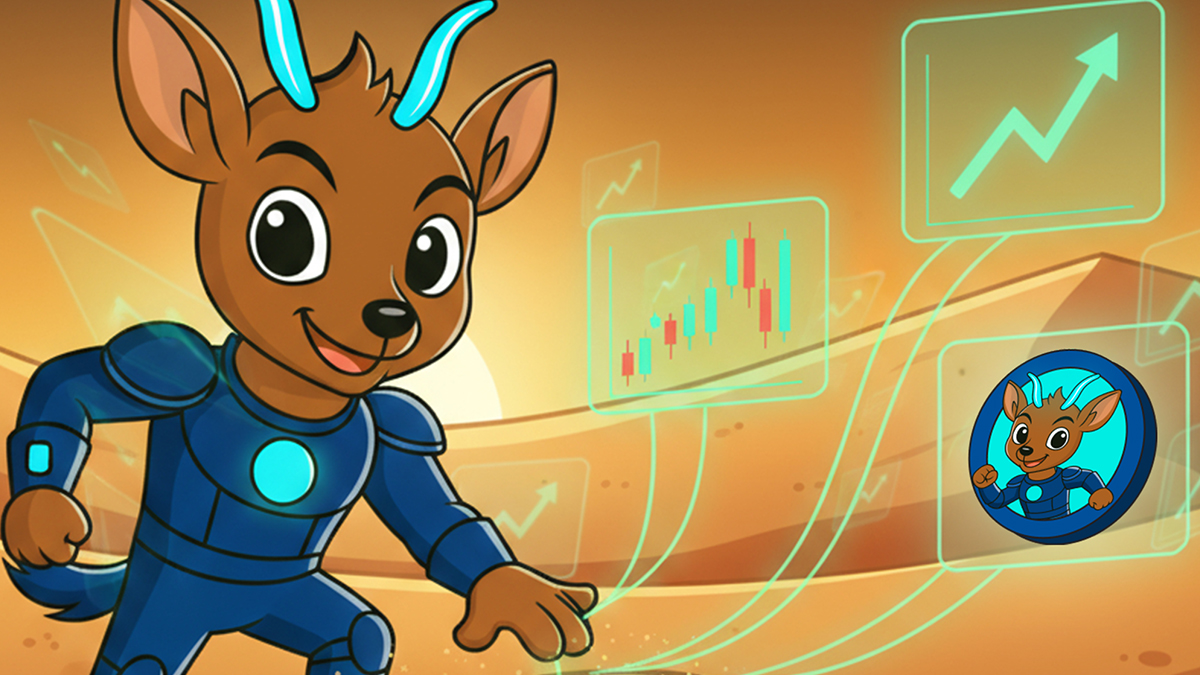
Noomez is one example of a project using staged pricing and supply rules. According to the project’s materials, the token sale is divided into multiple stages with preset allocations per stage and stage-specific pricing.
The project’s website has also published figures such as holder counts and amounts raised. These figures are project-reported and may change over time.
The token sale mechanics are presented by the project as a way to make supply changes predictable across stages.
The token sale mechanics are described by the project as follows:
Token Sale Supply Model
- Total token sale allocation: 140,000,000,000 $NNZ
- Stage 1–7: 12.7B $NNZ each
- Stage 8–14: 5B $NNZ each
- Stage 15–21: 2B $NNZ each
- Stage 22–28: 300M $NNZ each
- Project-reported stage pricing range: $0.00001 to $0.0028
- Cadence (per project description): Sell-out or 7 days maximum per stage
The project states that unsold tokens are burned at the end of each stage, and that progress is tracked via a “Noom Gauge” as stages complete.
The project has also described promotional distributions (for example, stage-based airdrops and minimum purchase thresholds). Such incentives are marketing features and do not indicate future performance.
Incentives and Staking: What the Project Describes
Noomez also describes referral and bonus incentives, as well as a staking program (“Noom Rewards”) with published yield figures and stage-based terms. Any such incentives and rates are project-defined, may change, and involve risk.
For reference, the project’s website is linked here: Noomez.
Launch Overview (Project Outline)
In its roadmap, the project describes a transition from the staged token sale to open-market trading after the final stage is completed.
Transition steps (as described by the project)
- Completion of all 28 stages.
- Distribution of purchased $NNZ to participant wallets.
- “Noom Gauge” status updates as stages are verified.
- Start of trading once the token becomes available on secondary markets.
Where $NNZ Launches (project outline)
- Blockchain: Binance Smart Chain (BEP-20)
- DEX listing: PancakeSwap pairs (BNB/NNZ, USDT/NNZ)
- Liquidity: 15 percent described as permanently locked through a third-party service
- Transparency: Proof of locks and deployment described as published for the community
Post-launch continuation (project outline)
- The project describes post-launch development as an ongoing process rather than a single event.
- Trading begins as $NNZ enters open markets.
- The project describes an “Access Engine” intended to distribute partner project tokens to $NNZ holders.
- The project describes staking durations of 30 to 365 days.
- The project also describes continued narrative (“lore”) updates for its ecosystem.
Final Outlook
Token burns and staged token sale designs are frequently discussed as tools to influence circulating supply. However, they are only one part of how crypto assets are valued, and they do not remove the risks associated with volatility, liquidity, execution, and market demand.
Noomez presents itself as a project using a staged token sale and a burn policy for unsold allocations. As with any crypto asset, readers should treat project-reported claims as unverified unless supported by independent evidence.
This article is for informational purposes only and does not constitute financial or investment advice. This outlet is not affiliated with the project mentioned.

