TLDR
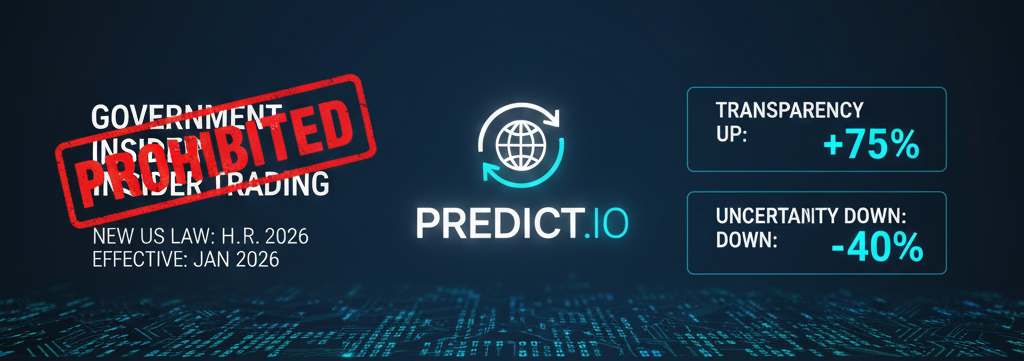
- Congressman Ritchie Torres introduced the “2026 Financial Forecasting Market Public Integrity Act.”
- The legislation will prohibit government officials from using insider information to bet on prediction platforms.
- The measure seeks to replicate the ethical impact of the 2012 STOCK Act within the decentralized finance ecosystem.
Digital finance in the United States is facing a structural regulatory shift. This Tuesday, Congressman Ritchie Torres introduced the “2026 Financial Forecasting Market Public Integrity Act.”
The purpose of this proposal is to establish an insider trading ban in prediction markets, ensuring that government officials do not use confidential information to obtain personal gains on political and economic betting platforms.
Impact on Transparency and the DeFi Ecosystem
The rise of platforms like Polymarket and Kalshi represents a gray area where unpublished government information can become an unfair advantage. Torres’ proposal seeks to reduce these risks by imposing strict restrictions on individuals who handle sensitive data.
If the law is passed, it could radically alter trading dynamics, forcing prediction markets to implement more rigorous compliance systems to guarantee transparency and fairness among all participants.
Reactions from the crypto community following the proposal have been diverse. On one hand, some defend the need for strict regulation to legitimize the sector, while others fear that excessive oversight could stifle innovation in decentralized finance (DeFi).
What is certain is that this legislative move evokes historical precedents like the 2012 STOCK Act, which increased accountability in Congress. Now, the challenge lies in the authorities’ ability to apply these rules in decentralized environments where enforcement and compliance present complex technical obstacles. Achieving a balance between market freedom and ethical supervision will be the central axis of the financial debate in 2026.