TL;DR:
- Date and Access: Early access begins on March 17, initially limited to users registered on the whitelist.
- Economic Incentive: During this phase, trades will have 0% commission and will generate a real rebate of up to 1%.
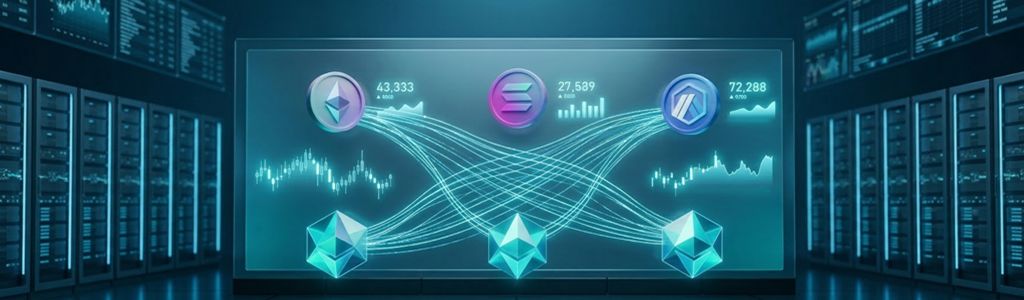
- Multi-network Infrastructure: The platform supports over 12 blockchains, including Ethereum, Solana, and Arbitrum, under a unified balance system.
The decentralized platform Trady is launching early access for its multi-network trading terminal, marking a milestone by introducing unified asset balances. With this limited rollout, users will be able to manage assets across at least 12 networks through a single interface, eliminating the need for manual bridging.
Technically, its “smart account” architecture stands out, along with the use of session keys with spending limits, ensuring secure self-custodial execution. With support for networks such as Base, Polygon, and HyperEVM, the platform seeks to optimize capital flow in a fragmented ecosystem.
Fee Innovation: The Negative Commission Model
The cost structure is undoubtedly one of the pillars of this launch. During the initial period, Trady not only eliminates transactional fees but also implements a negative commission system. This means traders receive an immediate rebate in real funds, without lock-ups or loyalty conditions.
Furthermore, the interface is completely modular. Users can customize their workspace using drag-and-drop widgets, integrating real-time PnL tracking tools and MEV (Miner Extractable Value) protection.
Additionally, the terminal incorporates an advanced portfolio tracker. With this feature, users can monitor the movements of whales and project teams across all compatible chains, facilitating the native identification of institutional trends or significant capital flows.
In summary, Trady aims to professionalize on-chain trading through a simplified user experience and deep analytical tools. By unifying liquidity from multiple ecosystems, the platform positions itself as a robust solution for the fragmented decentralized finance market.