

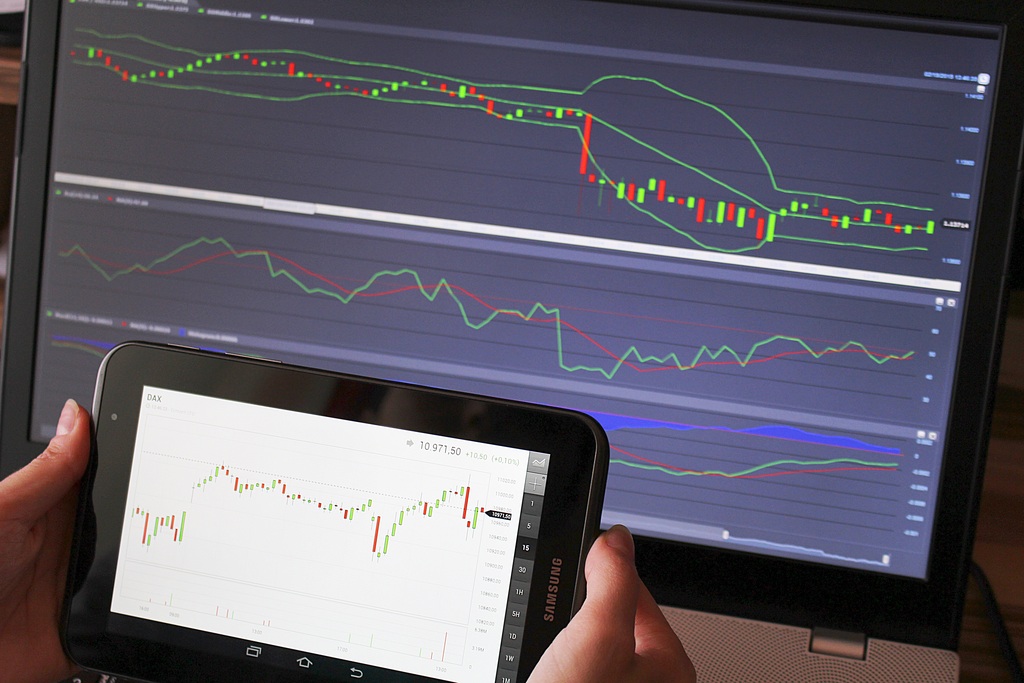
What happens when a trader clicks “Buy” and nothing happens. Slippage grows, clients complain, and your brand takes the hit. Now flip the picture. Orders hit the market on time. Risk limits react instantly. Reports are ready before the regulator asks.
That gap is not magic. It is the work of a trading software development company that understands both code and market structure. This article breaks down what such a partner should do, how trading platforms are put together, and what to check before you sign a contract.
Why Trading Software Is a Board-Level Topic Now
Electronic and algorithmic trading shape nearly every liquid market today. FX alone now reaches around 7.5 trillion USD in daily turnover, driven in part by electronic trading platforms and automated strategies.
Regulators expect firms that use algorithmic trading to maintain tested systems, clear risk controls, and strong monitoring. At the same time, groups like IOSCO publish reports on online trading, digital engagement, and copy-trading risks, raising the bar for retail platforms as well.
So a trading platform is no longer “just IT.” It sits at the intersection of trading, risk, compliance, and client service. Your choice of trading software development company feeds directly into revenue, regulatory exposure, and reputation.
What a Trading Software Development Company Actually Builds
A serious trading system is a chain of components. Each one has a specific job.
Here is a simplified view of that chain.
- Market data gateway
- Connects to exchanges, ECNs, liquidity providers, or internal market makers.
- Normalizes feeds and pushes data to charts, order books, and algos.
- Connects to exchanges, ECNs, liquidity providers, or internal market makers.
- Client applications
- Web, mobile, or desktop terminals used by traders or brokers.
- Show prices, positions, risk, and order entry panels.
- Web, mobile, or desktop terminals used by traders or brokers.
- Order Management System (OMS)
- Accepts incoming orders.
- Checks limits, validates inputs, and manages state from “new” to “filled” or “canceled.”
- Accepts incoming orders.
- Execution logic
- Chooses the venue and timing.
- Implements VWAP/TWAP, smart routing, internalization rules, or hedging logic.
- Chooses the venue and timing.
- Risk and surveillance layer
- Applies pre-trade and post-trade controls.
- Watches for patterns linked to market abuse or operational failure.
- Applies pre-trade and post-trade controls.
- Back-office and reporting
- Feeds data to clearing, settlement, billing, and regulatory reports.
- Supports reconciliation and audits.
- Feeds data to clearing, settlement, billing, and regulatory reports.
The job of a trading software development company is to design, build, and connect these blocks so they behave predictably under real load, not just in demos.
From Click to Settlement: The Trade Lifecycle in Plain Language
Let’s walk through a single order. This is what your vendor needs to support.
- Pre-trade
- Client logs in and passes authentication.
- System pulls margin, positions, and account status.
- Market data engine streams quotes and depth.
- Client logs in and passes authentication.
- Order entry
- Trader selects instrument, side, size, order type, and time-in-force.
- UI validates fields immediately to avoid basic errors.
- Trader selects instrument, side, size, order type, and time-in-force.
- Risk checks
- OMS checks limits for price bands, max order size, exposure, and credit.
- If rules fail, the order is rejected with a clear reason.
- OMS checks limits for price bands, max order size, exposure, and credit.
- Routing and execution
- Valid orders go through chosen execution logic.
- System sends orders to venues or counterparties and waits for confirmations.
- Valid orders go through chosen execution logic.
- Post-trade
- Fills update positions, PnL, and risk.
- Trade data moves to reporting, settlement, and regulatory databases.
- Fills update positions, PnL, and risk.
- Monitoring and alerts
- Dashboards show key indicators: latency, error rates, risk breaches.
- Alerts fire when limits are hit or systems misbehave.
- Dashboards show key indicators: latency, error rates, risk breaches.
A good trading software development company designs this chain around your products, volumes, and regulatory context. Every gap in that chain shows up later as operational incidents or regulatory findings.
Table: Key Modules vs Business Outcomes
| Module / Area | What It Does | Business Outcome |
| Market data engine | Ingests and normalizes price and depth feeds | Tighter spreads, better price discovery |
| Client terminals (web/mobile) | Present prices, charts, and trade tickets | Higher client activity and lower support friction |
| OMS | Validates orders and tracks their lifecycle | Fewer rejected orders and clearer audit trail |
| Execution algorithms | Choose venue and timing | Better average execution quality and lower slippage |
| Risk controls | Enforce limits and monitor exposure | Fewer incidents and lower regulatory risk |
| Surveillance and monitoring | Detect improper patterns and system faults | Early detection of abuse or failures |
| Reporting & back-office | Feed data to finance, compliance, and regulators | Faster reporting cycles and smoother audits |
When you speak with any trading software development company, tie discussions back to this table. Every feature should connect to a concrete outcome.
Build, Buy, or Mix: Your Platform Strategy
You have three broad choices. Each one makes sense in specific situations.
Table: Build Options for Trading Platforms
| Approach | Description | Pros | Cons |
| Off-the-shelf | License a commercial or white-label platform | Fast initial launch, less technical responsibility | Limited differentiation, vendor lock-in, license fees |
| Fully custom | Build core trading stack with a development firm | Full control over features and roadmap | Higher upfront investment and longer delivery |
| Hybrid | Combine existing engines with custom components | Keeps proven parts, customizes high-impact areas | Integration complexity, shared dependencies |
A trading software development company usually works on the custom or hybrid side. Their job is to decide where you can safely reuse standard components and where custom work creates real advantage.
Regulation, Risk, and Why Controls Are Not Optional
Electronic trading runs under intense regulatory scrutiny. MiFID II in Europe, for example, demands firms that use algorithmic trading maintain systems and risk controls that can stop erroneous orders, enforce limits, and avoid disorderly markets.
Bodies like IOSCO and BIS publish principles and reports that highlight how electronic and automated trading change market risk, including in FX and other global markets. In the US, the SEC maintains a steady flow of equity market structure research and data to support rule changes around tick sizes, routing, and execution quality.
A trading software development company should speak this language. They should talk immediately about:
- Pre-trade controls: price collars, size limits, fat-finger checks.
- Kill switches and throttles for extreme conditions.
- Testing environments with replayed market data.
- Logging, audit trails, and data retention.
- Business continuity and disaster recovery plans.
What to Expect from a Trading Software Development Company
You are not buying a box from a shelf. You are entering a multi-year relationship. Most serious projects move through these phases.
1. Discovery and scoping
The team interviews traders, risk, operations, and compliance. They map asset classes, venues, flows, and regulatory regimes. They turn that into user journeys and a first list of features and constraints.
2. Architecture and planning
Architects propose a target architecture. They define latency budgets, fault tolerance, data models, and integration points. They also decide which parts are custom and which can rely on existing engines or services.
3. Delivery in iterations
Development runs in sprints. Each sprint produces working slices of functionality. Traders and internal teams test early to catch misalignments before they spread.
4. Testing with real-world scenarios
The platform runs through:
-
- Functional tests on each flow.
- Load tests to simulate peak volume.
- Failover tests for feed and venue outages.
- Controlled market replays for algorithms.
- Functional tests on each flow.
This is where your risk and compliance teams should be closely involved.
5. Go-live and support
Go-live is staged. You may start with a subset of instruments, venues, or clients. The trading software development company maintains a dedicated support window for the first weeks, then shifts into a steady-state support model.
How to Evaluate a Trading Software Development Company
Price matters, but it is rarely the deciding factor on its own. Use concrete questions.
Vendor Evaluation Checklist
Domain fit
-
- Have they built platforms for your asset classes and client types.
- Do they understand the difference between, for example, FX, listed derivatives, and equity markets.
- Have they built platforms for your asset classes and client types.
Technical depth
-
- Can they explain OMS and execution logic without jargon.
- Do they propose concrete latency targets and monitoring approaches.
- Can they explain OMS and execution logic without jargon.
Regulatory awareness
-
- Can they name relevant rules in your regions.
- Do they show examples of how they implemented controls and reporting.
- Can they name relevant rules in your regions.
Delivery model
-
- Who will be on your core team.
- How often will you see demos and releases.
- Who will be on your core team.
Support
-
- What are the response and resolution times for incidents.
- How do they handle patches and upgrades that touch core modules.
- What are the response and resolution times for incidents.
Collect written answers. Compare vendors side by side. Many firms sound similar on their websites; this process exposes the real differences.
Example Scenario: Replacing a Legacy Trading Front-End
Consider a mid-size broker with an aging desktop front-end. Clients complain about frequent freezes, lack of mobile access, and missing order types.
The broker hires a trading software development company with experience in retail and professional platforms. Together they agree to keep the existing back-end for now, and replace only the client applications, OMS, and risk layer.
The new system includes:
-
- A web terminal for everyday clients.
- A richer desktop app for high-activity traders.
- Mobile apps for on-the-go monitoring and small adjustments.
- A web terminal for everyday clients.
Risk rules move from manual checks into pre-trade controls. Rejected orders drop because clients see clearer validation messages. Average time from click to confirmation falls thanks to better routing logic and monitoring.
Within a year, active client numbers rise. Call-center tickets about platform failures fall. The project shows how concrete technical changes map to measurable business results.
Budget, Timeline, and Internal Workload
No article can give a single price tag. But you can think in ranges.
Factors that drive cost and duration include:
-
- Number of asset classes and venues.
- Depth of risk and compliance features.
- Support for algorithms versus only manual trading.
- Number of client channels (web, mobile, desktop).
- Integration with CRM, risk, accounting, and data warehouses.
- Number of asset classes and venues.
The internal workload also matters. Your subject-matter experts must be available for workshops, early testing, and feedback. A trading software development company can write code, but only your own teams can confirm whether flows match the way you actually trade.
Final Checklist Before You Choose
Before you sign with any trading software development company, confirm that:
-
- You have a written description of the main trading flows and instruments.
- The vendor has shown similar projects and references.
- You agreed on measurable technical targets such as latency, uptime, and response times.
- There is a clear testing plan with involvement from risk and compliance.
- You understand the support model for the first year after go-live.
- You have a written description of the main trading flows and instruments.
Trading platforms are now strategic assets. The right trading software development company helps you turn market ideas into systems that execute those ideas every second of the trading day, without drama. Choose carefully, and the technology becomes a steady foundation under your trading business, not a constant source of surprises.
Press releases or guest posts published by Crypto Economy have been submitted by companies or their representatives. Crypto Economy is not part of any of these agencies, projects or platforms. At Crypto Economy we do not give investment advice, if you are going to invest in any of the promoted projects you should do your own research.

