The cryptocurrency landscape rarely follows a linear path; recent movements show how investor sentiment shifts between established networks and emerging projects. Reviewing several currently prominent assets — BlockDAG, Ethereum, XRP, and Chainlink — highlights a mix of early-stage activity, ongoing protocol development, and evolving roles within digital finance.
Launch dynamics influence some projects, while others rely on long-term utility or evolving regulatory clarity to attract institutional and retail interest. Price alone does not capture the full picture; network adoption, strategic partnerships, and market structure provide additional context. This report summarizes reported facts and publicly described developments shaping these assets.
1. BlockDAG: Early-stage price movement and listings
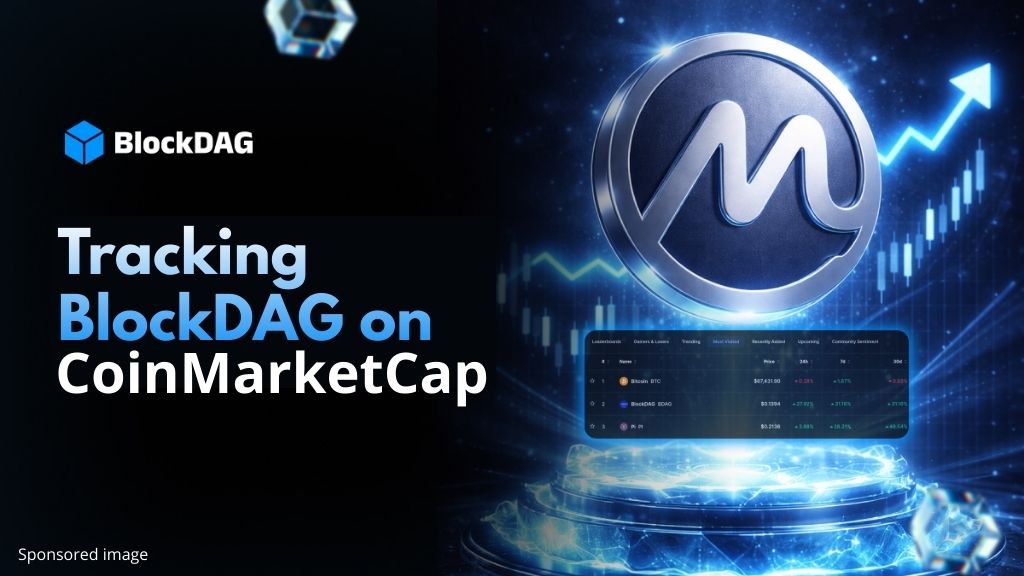
BlockDAG’s reported early-stage price movements have attracted market attention. CoinMarketCap listed BlockDAG at $0.35; project materials describe a significant increase from its Stage 1 price and a higher level than its initial listing valuation.
Some market participants have discussed $1 as a potential milestone and have modelled hypothetical market-cap scenarios (for example, a $10 billion market cap). Such projections are speculative and should be viewed as opinion rather than verification of future outcomes.
What the project has reported is a set of launch preparations around its April 8 release. Listings on BitMart and P2B have been announced.

According to project materials, a priority-access model was used prior to April 8 and an early-stage price of $0.000022 has been cited. These are reported launch details; they do not constitute an indication of future performance.
2. Ethereum: Network development and utility
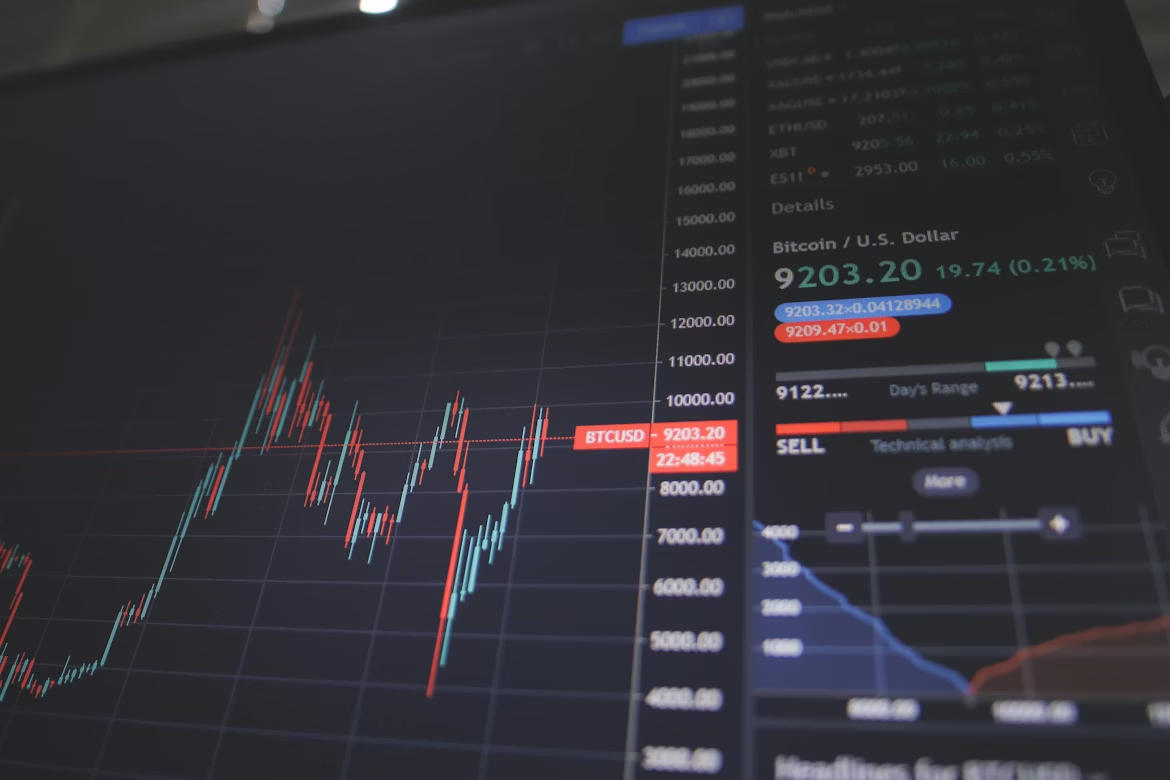
Ethereum retains a significant role as a programmable settlement layer. Its price has been near the $2,100 range, and the network continues to support substantial stablecoin activity. According to Standard Chartered, the stablecoin market could reach about $2 trillion by 2028, a projection that would, if realized, affect network demand.
Technical upgrades such as Pectra and Fusaka reflect ongoing development activity, while the planned 2026 Glamsterdam update is intended to address scalability and transaction costs. Ethereum’s role as a settlement and smart contract platform supports ongoing staking and on-chain usage.
At present, Ethereum’s trajectory appears focused on iterative development and network scaling rather than immediate, large-scale price acceleration; market outcomes remain uncertain.
3. XRP: Legal clarity and institutional interest
According to regulatory announcements, in March 2026 XRP was classified as a digital commodity by the SEC and CFTC, a development that reduced a period of legal uncertainty. Following this, some institutional products, including the Franklin Templeton XRPZ ETF and new CME futures, were introduced.
Ripple has stated initiatives such as pursuing a U.S. national bank charter and expanding the RLUSD stablecoin, which market reports have valued at roughly $470 million. Ripple has also reported partnerships with banks such as DBS to explore payments and asset tokenization use cases.
These developments indicate growing institutional engagement and a shift in focus toward regulated financial use cases; however, they are part of an evolving landscape with regulatory and market risks.
4. Chainlink: Oracle services and integrations
Chainlink provides oracle services that many decentralized applications use to access external data. In March 2026, Chainlink reported an integration with Coinbase’s DataLink, reflecting demand for verified on-chain data across markets, including commodities and energy products. The project has also described data streams for U.S. equities and partnerships with networks such as Canton aimed at interoperability.
These reported integrations reinforce Chainlink’s role as a provider of data connectivity between legacy systems and blockchain environments. Reported developments should be understood as operational and strategic updates rather than assurances of asset performance.
Key Insights
Ethereum, XRP, and Chainlink are advancing through structured, longer-term developments: Ethereum focusing on scaling and settlement capabilities, XRP leveraging regulatory developments to support institutional products, and Chainlink emphasizing data infrastructure and interoperability. These are ongoing processes with outcomes that remain uncertain.
BlockDAG presents a different case: reported appreciation prior to broad exchange trading has drawn attention, and the project has described early access pricing and announced exchange listings. These are early-stage developments reported by the project and market observers; they are speculative and carry inherent risks.
This article contains information about a cryptocurrency presale. Crypto Economy is not associated with the project. As with any initiative within the crypto ecosystem, we encourage users to do their own research before participating, carefully considering both the potential and the risks involved. This content is for informational purposes only and does not constitute investment advice.