

Recent market strength has lifted sentiment across parts of the crypto ecosystem, with traders watching Ethereum trade back above the $3,600 area. The move has coincided with ongoing attention on smart-contract adoption, scaling developments and decentralized finance activity. Regulatory developments and institutional participation are also frequently cited as factors that can influence short-term market conditions. Against this backdrop, some market commentary has used hypothetical examples (such as a $500 amount) to discuss how exposure might be split between large-cap assets and higher-risk projects, though such framing is not a recommendation.
Beyond Ethereum, the Polygon network has drawn attention for its POL token transition and announcements around partnerships and ecosystem development. Polygon’s focus on interoperability and scalable transaction infrastructure is often referenced by market participants assessing medium- and long-term network adoption. Separately, BullZilla has been promoted by its team as an early-stage token sale; as with similar fundraising efforts, the details are project-reported and should be treated cautiously. BullZilla is sometimes discussed alongside more established assets, but any comparison between early-stage tokens and mature networks involves materially different risk profiles.
| BullZilla token-sale snapshot (project-reported; not independently verified)
Stage: 10th (Castle Bravo) Phase: 2 Price: 0.00025239 Reported total raised: Over $1M Reported token holders: Over 3500 Reported tokens sold: Over 31 B |
Ethereum: Staking activity and key technical levels
Ethereum was trading around $3,604 at the time of writing, near the $3,607 area that some traders have treated as a short-term resistance level. Technical levels can change quickly, and any “breakout” interpretation is inherently uncertain. Market participants also track network upgrades, staking participation and Layer-2 usage as part of broader narratives around Ethereum’s ecosystem, alongside macroeconomic conditions and regulatory news that can affect risk assets.
Frequently Asked Questions About Ethereum
How does Ethereum relate to DeFi and staking?
Ethereum supports a wide range of decentralized finance applications and allows ETH to be staked to help secure the network. Staking outcomes depend on protocol rules, validator performance, fees and market conditions, and are not guaranteed.
What are the main risks for Ethereum now?
Ethereum faces competition from other smart-contract networks, regulatory uncertainty, and broader market volatility. Network upgrades and ecosystem growth can influence adoption, but price movements remain unpredictable.
BullZilla: project-described tokenomics and burn mechanics
According to the project’s materials, BullZilla uses a mechanism it calls “Roar Burn,” where tokens from a designated reserve may be removed from circulation when the project reaches certain internal milestones. The project also describes related website and social updates tied to these events. While supply changes can affect a token’s economics, the market impact is uncertain and depends on liquidity, demand, trading venues and broader sentiment.
About BullZilla promotional performance scenarios
Some promotional content around early-stage token sales may include hypothetical return scenarios. These figures are not verifiable forecasts and should not be treated as promises of future performance. Early-stage tokens can be illiquid, volatile and exposed to smart-contract, custody and listing risks, and participants can lose some or all of their capital.
BullZilla token-sale participation considerations
Participation in any token sale typically involves interacting with third-party wallets and smart contracts and may require paying network fees. It is generally important to verify official domains and contract addresses, be cautious of phishing attempts, and understand that token delivery, trading availability and post-sale timelines can vary by project. These activities carry technical and financial risks.
Frequently Asked Questions About BullZilla token sale
How long is the staking lock‑up for BullZilla tokens?
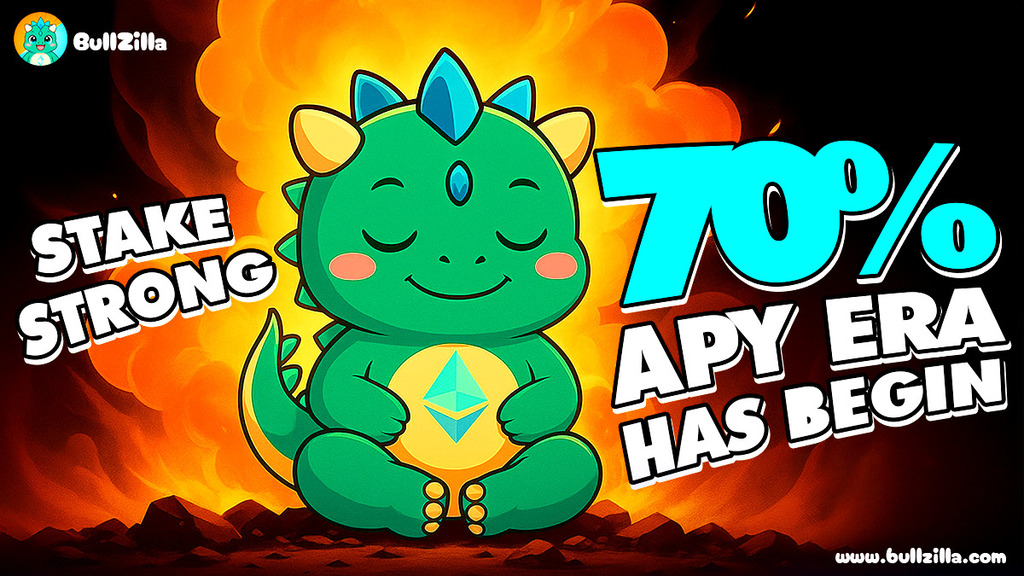
The project describes staking options with set periods, sometimes branded as “HODL Furnace.” Terms, lock-ups and reward mechanics (if any) are determined by the project and can change; readers may wish to review the latest documentation and risks before relying on such features.
What happens after the token sale stage completes?
Project materials indicate that the token may become tradable after the sale and that additional tokenomics events (including burns) may occur. Any potential effect on price is uncertain and depends on market conditions, liquidity and exchange availability.
How can one evaluate token-sale legitimacy?
When assessing token sales, common diligence steps include reviewing whether smart contracts are audited (and by whom), whether team and company information is disclosed, and whether tokenomics and risk disclosures are clear. Be cautious of channels that request private keys or unusual verification methods.
Polygon: network transition and market data context
Polygon ($POL) now uses the ticker POL as part of changes to its network architecture. At the time of writing, POL’s reported 24-hour trading volume was about $79,534,422, and the token was described as trading well below its historical peak, according to publicly available market trackers. Market-cap and circulating-supply figures can vary by data provider and update frequency.
Conclusion:
Ethereum’s move back above $3,600 has coincided with renewed attention on network activity, upgrades and staking participation, while Polygon’s POL transition continues to be tracked by traders and developers focused on scaling and interoperability. BullZilla, described by its team as an early-stage token sale, is sometimes discussed alongside larger networks, but it carries substantially different risks, including limited operating history, smart-contract exposure and uncertain liquidity. Readers should treat project-reported figures and marketing claims with caution and consider the elevated volatility and operational risks across the sector.
Project website (for reference): BullZilla
Article Summary:
This article discusses market attention around Ethereum, Polygon’s POL token and BullZilla, an early-stage token sale promoted by its team. Ethereum and Polygon are established networks with broad usage and deep liquidity relative to many new tokens, while early-stage offerings can involve higher uncertainty, limited track records and additional technical and trading risks. Any allocation decisions depend on an individual’s risk tolerance, time horizon and ability to evaluate smart-contract and custody risks.
This article is for informational purposes only and does not constitute financial or investment advice. This outlet is not affiliated with the project mentioned. As with any initiative within the crypto ecosystem, readers should do their own research and carefully consider the risks involved.

