

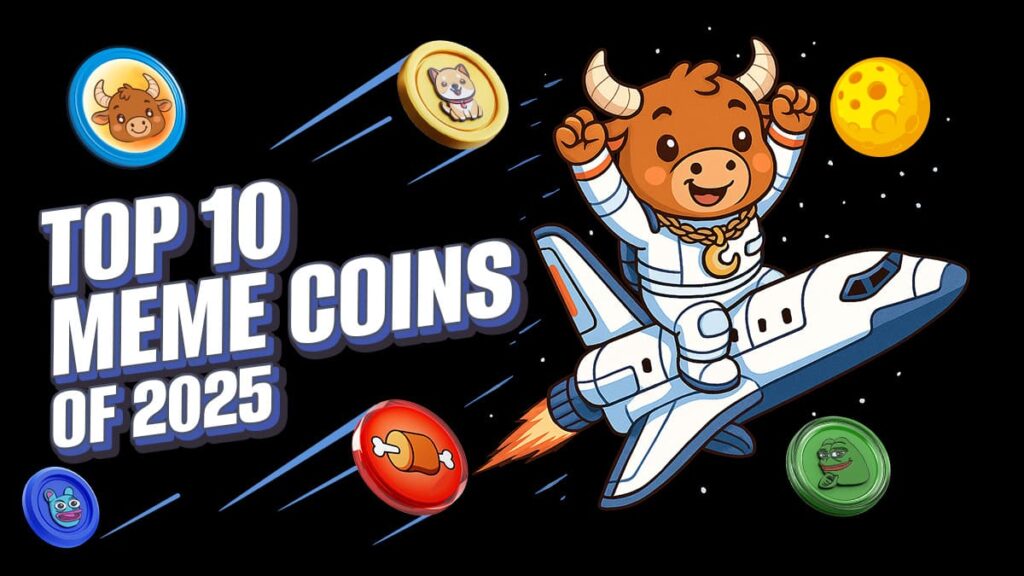
Meme coins continue to draw attention in 2025, but outcomes vary widely and risk remains high. Market narratives can change quickly, and it can be difficult to separate community-driven interest from short-term speculation.
One project frequently mentioned in meme-coin discussions is MoonBull, which is running a whitelist for a token sale, according to its own materials. Other tokens often cited in this category include Dogecoin, Shiba Inu, Pepe, Useless Coin, Notcoin, Official Melania, ANDY, Tutorial, and Keyboard Cat. The sections below summarize commonly discussed narratives around each token rather than providing a recommendation.
1. MoonBull ($MOBU)
MoonBull ($MOBU) describes itself as an Ethereum-based token that uses meme branding alongside smart-contract functionality. The project says it is operating a whitelist tied to an upcoming token sale and that participation may involve submitting contact details and meeting eligibility requirements set by the team.
In project communications, the whitelist is described as potentially including:
- Early-access terms for a token sale (terms and pricing are set by the project and may change).
- Staking or rewards features (if offered), subject to conditions and risk.
- Token distributions or marketing incentives described by the project.
- Allocations that may differ between participant groups.
- Additional product or roadmap information shared with interested users.
As with any token sale, readers should treat project-provided claims as unverified until independently confirmed and should review the applicable terms, risks, and disclosures.
A Relatable Scenario: Timing and Market Volatility
Meme-coin activity often moves quickly across social media, and price changes can be extreme in either direction. Projects may trend for reasons that are unrelated to fundamentals, and late entries can carry additional downside risk if liquidity changes or sentiment reverses.
If considering participation in any whitelist or token sale, it is generally important to understand the rules, lockups (if any), and the possibility of total loss.
2. Dogecoin ($DOGE)
Dogecoin is one of the earliest and most widely recognized meme coins. Launched in 2013 as a parody, its Shiba Inu logo helped it gain broad visibility. It has maintained a long-running community and periodically receives attention from high-profile online commentary.
Why is it included here? Dogecoin is often referenced in meme-coin discussions due to its longevity, large user base, and historical role in the category.
3. Shiba Inu ($SHIB)
Shiba Inu emerged in 2020 with branding that positioned it as a rival to Dogecoin. Built on Ethereum, SHIB developed an ecosystem that has included a decentralized exchange and NFT initiatives, alongside ongoing development work referenced by the community.
Why is it included here? SHIB is frequently cited because it combines meme-driven visibility with attempts to expand utility through related products and community activity.
4. Pepe ($PEPE)
Pepe coin is a meme-themed token associated with a widely recognized internet character. It drew significant attention during its early trading period and has remained a reference point for meme-coin volatility and social-media-driven interest.
Why is it included here? PEPE is often mentioned due to its strong meme recognition and the way it has been used as a proxy for meme-coin sentiment during active market periods.
5. Useless Coin ($USELESS)
Useless Coin is marketed around irony, emphasizing branding rather than utility. This approach can appeal to audiences that are skeptical of projects that make expansive promises without clear delivery.
Why is it included here? USELESS is discussed mainly for its unconventional positioning and community culture rather than for specific product utility.
6. Notcoin ($NOT)
Notcoin has been associated with Telegram-based distribution and game-like participation mechanics in its early narrative. It is often discussed as an example of how meme branding can intersect with lightweight gamification and social distribution.
Why is it included here? NOT is frequently cited because it blends meme culture with an onboarding approach that has been described as accessible to large user communities.
7. Official Melania ($MELANIA)
Official Melania reflects a broader pattern of celebrity-themed tokens that use public-figure association as part of marketing. Such tokens can attract attention quickly, but they also carry heightened reputational, legal, and market risks, and branding does not necessarily imply endorsement by any individual.
Why is it included here? MELANIA is mentioned as an example of the celebrity-token trend and how branding can influence awareness, regardless of fundamentals.
8. ANDY ($ANDY)
ANDY is a meme token whose identity and community presence have contributed to online discussion. Like many tokens in this segment, attention can rise or fall quickly based on social-media dynamics.
Why is it included here? ANDY is commonly discussed due to its community-driven narrative and visibility in meme-coin channels.
9. Tutorial ($TUTORIAL)
Tutorial Coin is framed around mixing meme culture with educational themes. Projects in this style often attempt to lower barriers for newcomers by pairing entertainment with learning resources.
Why is it included here? TUTORIAL is referenced for its theme and positioning in a crowded meme-token segment.
10. Keyboard Cat ($KEYCAT)
Keyboard Cat draws on a well-known internet meme and leans into nostalgia-based branding. Meme recognition can help tokens gain initial awareness, although it does not reduce price or liquidity risk.
Why is it included here? KEYCAT is discussed primarily for its cultural reference point and meme recognition.
Conclusion
This list summarizes 10 meme coins and meme-themed tokens that are frequently discussed in 2025: MoonBull, Dogecoin, Shiba Inu, Pepe, Useless Coin, Notcoin, Official Melania, ANDY, Tutorial, and Keyboard Cat. These assets vary widely in maturity, liquidity, and risk profile.
Token sales and whitelist programs can be part of how some projects distribute tokens. However, participation mechanics, incentives, and outcomes are uncertain and should not be treated as an indication of future performance.
This article is for informational purposes only and does not constitute financial or investment advice.
For More Information:
Website (project link for reference): https://www.moonbull.io/
Telegram: https://t.me/MoonBullCoin
Twitter: https://x.com/MoonBullX
Frequently Asked Questions for Tokens Set to Create Future Millionaires
Are there notable token sales in 2025?
Some projects run token sales or early-access programs such as whitelists. MoonBull is one example of a project that has described a whitelist for a token sale in its materials, but readers should independently verify details and understand the risks.
Can any meme coin be reliably predicted to surge in 2025?
No. Meme-coin price moves are difficult to predict and can be driven by short-term sentiment, liquidity conditions, and social-media attention.
Do meme coins have a future?
Some meme coins persist as cultural and community-driven assets, and a subset of projects attempt to add features such as staking, gamification, or DeFi integrations. Adoption and longevity vary significantly by project.
How should readers think about “potential” in meme coins?
In this category, “potential” is often used as marketing language rather than a measurable forecast. It can help to focus on verifiable information such as liquidity, distribution, disclosures, and whether the project provides transparent documentation.
How to pick a good meme coin?
Consider factors such as liquidity, on-chain distribution, transparency of team/project communications, and the presence (or absence) of clear disclosures. Because meme coins can be highly volatile, risk management is important and losses can be total.
Glossary Of Key Terms
- Ethereum: A blockchain platform supporting smart contracts and decentralized applications
- Market Capitalization: Total value of a cryptocurrency calculated by multiplying price by circulating supply
- Liquidity: Ease of buying or selling an asset without affecting its price
- DeFi: Decentralized finance, allowing financial transactions without central institutions
- Whitelist: A list of approved participants (or addresses) allowed to take part in a token sale or early-access period under specific rules
- Token Allocation: Distribution of tokens to participants, investors, or community members
- Community Engagement: Level of active participation from a coin’s supporter base
This outlet is not affiliated with the project mentioned. As with any initiative within the crypto ecosystem, we encourage users to do their own research before participating and to carefully consider the risks involved. This article is for informational purposes only and does not constitute financial or investment advice.

