


Meme coins and other fast-moving crypto trends have periodically drawn attention alongside longer-running blockchain platforms. Past rallies in assets such as Dogecoin and Shiba Inu have shown how sentiment and online communities can influence prices, although outcomes vary widely and carry significant risk. Against that backdrop, some market participants are watching a new wave of meme-themed tokens and established networks to understand what may shape crypto narratives in 2025.
One project that has attracted attention is BullZilla ($BZIL), a meme-themed token that, according to project materials, is running an early-stage token sale with staged pricing changes over time and fundraising milestones. These details are reported by the project and may change.
Below is an overview of BullZilla, TRON and Cardano, three projects often discussed for different reasons ranging from early-stage fundraising to established blockchain infrastructure.
1. BullZilla ($BZIL): Project overview and token-sale structure
BullZilla is presented by its creators as a meme-coin project with a themed narrative and token mechanics. The project has described its token sale as being divided into stages and phases with a posted token price for each phase. At the time the project’s marketing materials were referenced, it described itself as being in Stage 3 (“Whale Signal Detected”), Phase 3A, with a listed price of $0.00005908, along with claims of more than $440,000 raised and 1,500+ token holders. These figures have not been independently verified.
Token-sale pricing schedule
According to the project’s description, the token sale uses a pricing model that changes on a schedule and fundraising milestones. The project describes it as follows:
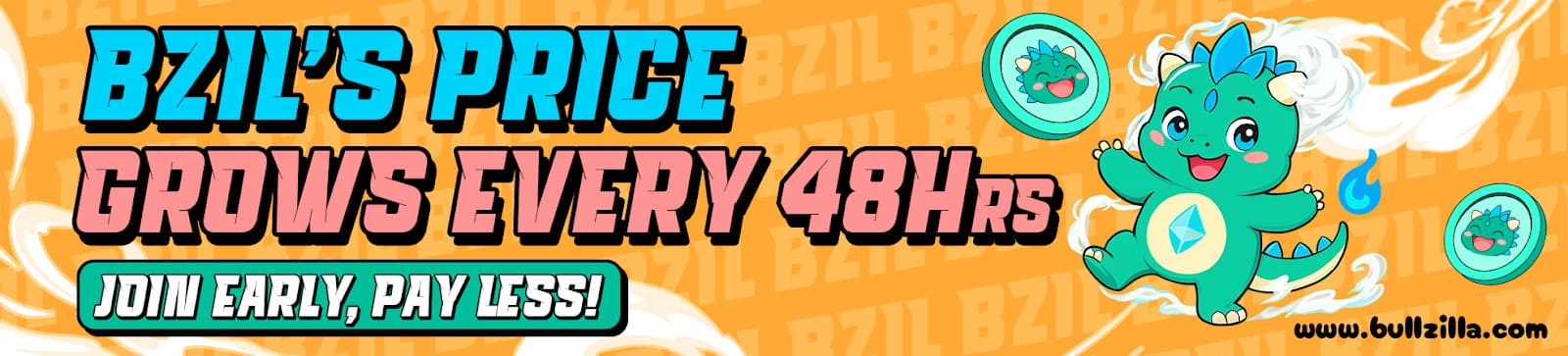
- Dynamic pricing: The project says that every $100,000 raised or every 48 hours triggers a token price increase.
- Progressive stages: The project indicates later stages are priced higher than earlier stages; this structure is a feature of the sale rather than an indicator of future market performance.
As with any early-stage token sale, pricing schedules and fundraising mechanics do not guarantee liquidity, exchange listings, or future price outcomes.
Lore and token mechanics (project-described)
BullZilla’s materials emphasize a themed “lore” approach alongside token mechanics, including:
- Roar Burn: A feature the project describes as removing tokens from supply.
- HODL Furnace: A holding- and staking-related concept described by the project; specific terms and potential rewards depend on the project’s rules.
- Roarblood Vault: A liquidity-related mechanism the project says is intended to support post-launch trading conditions.
Participation notes for BullZilla’s token sale
Project materials indicate that participation is designed around common Ethereum-based token-sale mechanics. In general, this may involve:
- Wallet software: A Web3 wallet (for example, MetaMask or Trust Wallet) is typically used to connect to token-sale sites.
- Payment asset: ETH is commonly used for purchases on Ethereum-based token sales; fees and network conditions can vary.
- Website connection: Token-sale portals generally include a wallet-connection interface; users should verify URLs and security details carefully.
- Allocation and claiming: Early-stage sales often involve an allocation during the sale and a later claiming process; specifics depend on the project’s stated rules and timelines.
2. TRON (TRX): A long-running smart-contract network
TRON is an established blockchain platform associated with founder Justin Sun and designed to support smart contracts and decentralized applications. The network is often discussed in relation to throughput and low transaction fees, factors that can influence user activity and application development.
TRON is also frequently used for stablecoin transfers, including USDT, which has contributed to its role in cross-border transfers and exchange-related flows. Network usage, fees and ecosystem activity can change over time.
3. Cardano (ADA): Research-driven development approach
Cardano is a smart-contract platform founded by Ethereum co-founder Charles Hoskinson. It is often described as research-driven due to its emphasis on peer-reviewed work and a staged rollout of protocol upgrades.
Supporters point to its approach to security, decentralization and sustainability, while critics sometimes cite development pace and ecosystem maturity as areas to watch. As with other networks, adoption and developer activity depend on many external factors.

Conclusion
BullZilla, TRON and Cardano are discussed in 2025 for different reasons: BullZilla as an early-stage, meme-themed token project running a staged token sale; TRON as a high-usage network often associated with low fees and stablecoin transfers; and Cardano as a platform known for a research-oriented development process. Market conditions, execution risk, regulation and liquidity considerations can materially affect outcomes for any crypto asset.
For More Information:
Join BZIL Telegram Channel
Follow BZIL on X (Formerly Twitter)
Frequently Asked Questions
What makes BullZilla different from other meme coins?
The project highlights its staged token-sale pricing schedule, which it says increases every $100,000 raised or every 48 hours.
How many stages are in the BullZilla token sale?
The project states there are 24 stages, each priced higher than the previous stage.
Why is TRON still relevant in 2025?
TRON remains widely used for transfers and smart-contract activity, including stablecoin transactions, although usage trends can change with market conditions.
What makes Cardano unique among blockchains?
Cardano is commonly described as research-driven due to its peer-reviewed approach and staged protocol development.
What are common considerations with early-stage token sales?
Early-stage token sales can involve substantial risk, including limited disclosures, smart-contract vulnerabilities, liquidity constraints and regulatory uncertainty.
Is BullZilla audited?
According to the project’s documentation, BullZilla has undergone contract audits; readers should review any audit reports directly and consider their scope and limitations.
How do investors typically think about long-term holding?
Time horizon and risk tolerance vary by individual. Established networks and early-stage tokens can have different risk profiles, including differences in liquidity, development maturity and market sensitivity.
Glossary
- Progressive token sale: A token-sale model where prices change over time or based on fundraising milestones.
- Token Burn: Permanent removal of tokens from supply, as defined by a project’s rules.
- HODL Furnace: A project-specific term describing holding or staking-related incentives.
- ERC-20: Standard protocol for Ethereum-based tokens.
- Referral System: Marketing incentives that reward users for bringing new participants, as defined by a project.
- Roarblood Vault: A project-specific term describing a liquidity-related mechanism.
- Staking APY: A way of expressing staking rewards, typically annualized; it can change and is not guaranteed.
- Supply Scarcity: Limited token availability; impacts depend on demand and market structure.
- Community Vesting: Gradual token release schedules intended to manage distribution over time.
- Ethereum Smart Contracts: Self-executing programs on Ethereum’s blockchain.
This outlet is not affiliated with the project mentioned. This article is for informational purposes only and does not constitute financial or investment advice.

