

The world of memecoins has changed significantly over the past decade. What started with Dogecoin as a playful nod to internet culture has grown into a multi-billion-dollar segment of the crypto market.
As the market has matured, some participants say they look for more than memes, including clearer project direction, defined ecosystems, and product development. This shift has also contributed to more marketing around early-stage token fundraising.
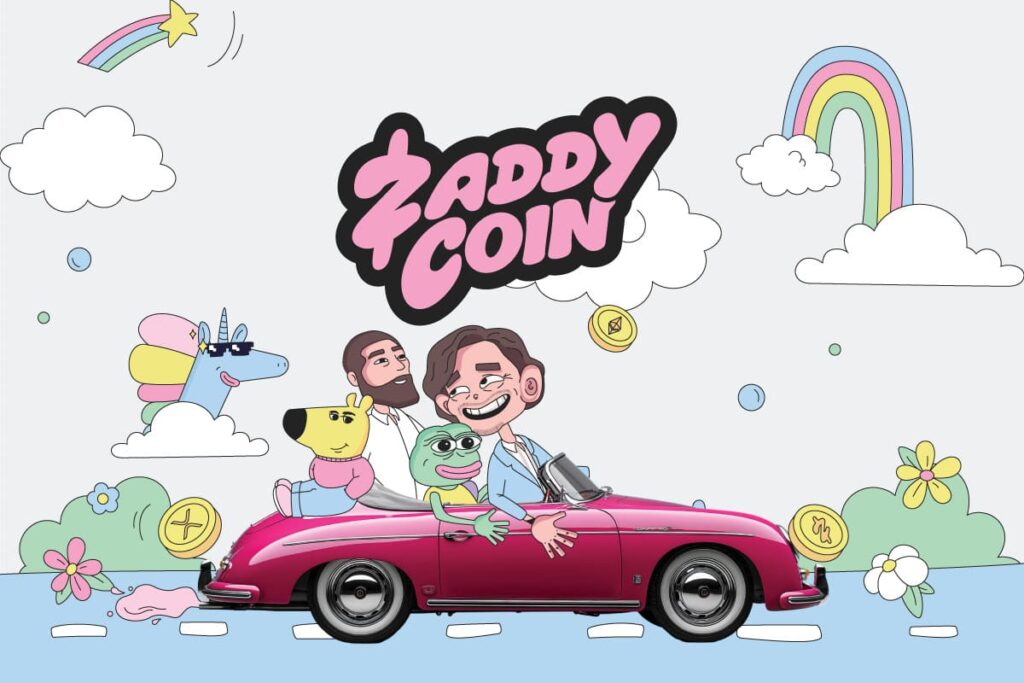
Zaddy Coin is one example of a newer memecoin-adjacent project that is positioning itself around community branding alongside an outlined roadmap and utility claims.
Zaddy Coin: A Culture-Led Approach Paired With Utility Claims
Zaddy Coin positions itself at the crossroads of culture, finance, and Web3 technology. According to project materials, it is being developed with an ecosystem, roadmap, and tokenomics intended for ongoing use.
The team has said the token sale began with an initial price of $0.00037 and that it had raised around $1k at the time of its own reporting. These figures have not been independently verified.
Project materials describe $ZADDY as a multi-utility token intended to operate across the XRPL EVM and Ethereum. The project also describes allocations that include 35 percent for a public token sale, 17.5 percent for staking rewards, and 15 percent for a strategic reserve and treasury referencing assets such as $XRP, $ETH, and a stablecoin. As with any allocation plan, how these mechanisms work in practice depends on execution and market conditions.
The roadmap described by the project includes staking functionality and early dApp launches, with later phases referencing NFTs, merchandise, and governance through a DAO.
Supporters frame the concept as an attempt to move beyond purely meme-driven interest by combining community identity with features often associated with broader crypto ecosystems. As with other early-stage tokens, utility, adoption, and longevity remain uncertain.
Zaddy Coin and a Broader Shift in Memecoin Narratives
Memecoins have often followed cycles of attention, rapid inflows, and sharp drawdowns. From Dogecoin to Shiba Inu, Floki, and Bonk, each token developed a distinct identity while also experiencing significant volatility.
Zaddy Coin’s positioning draws on those earlier examples, emphasizing cultural relevance while also describing planned use cases. The roadmap presented by the project references merchandise and NFT collaborations, token-based governance, and DeFi-related features, though timelines and delivery can vary widely across crypto projects.
In general, claims of “sustainability” in early-stage token projects are difficult to assess in advance, and participants should consider the risks associated with new token launches and limited operating history.
Staking, Rewards Mechanics, and Consumer-Facing Tools
The project describes an ecosystem that includes a staking protocol, where rewards may be offered at a variable (dynamic) APY. Any staking program can involve lockups, smart-contract risk, liquidity constraints, and changing reward rates.
Project materials also describe a rewards program after the token generation event (TGE) that may include multi-asset rewards in $XRP, $ZADDY, and a governance token (ZGT). The project states that users may be able to select among different lock durations with different terms.
Beyond staking, Zaddy Coin’s dApps are described as creator- and consumer-oriented tools, including products referenced as a meme creator and a DeFi platform. As with similar tools, usability and adoption typically depend on execution, distribution, and ongoing maintenance.
Overall, the project frames its token as tied to access and participation within its planned ecosystem rather than only meme-based trading activity.
Conclusion
The rise of memecoins illustrates how internet culture and finance can overlap in the digital age. Dogecoin opened the door, Shiba Inu built on that momentum, and Floki and Bonk added their own chapters.
Zaddy Coin is one of many newer projects attempting to combine meme-driven community identity with a more structured roadmap and product claims. Whether those plans translate into durable adoption is uncertain and depends on execution and broader market conditions.
Project links (for reference):
Website: https://presale.zaddycoin.com/
This outlet is not affiliated with the project mentioned. This article is for informational purposes only and does not constitute financial or investment advice.

