The series of Bitcoin sales executed by Strategy during 2026 has generated a set of market readings that merit technical examination. The company, which accumulated the largest corporate Bitcoin reserve in the world under a narrative of perpetual accumulation, has modified its operational profile. Since May 2026, Strategy has executed cumulative sales of 6,948 BTC, generating approximately USD 432.5 million. The most recent transaction, corresponding to the week of August 3–9, involved the disposition of 1,690 BTC at an average price of USD 64,262, net of fees.
These operations do not constitute a liquidation of positions nor a change in thesis on the underlying asset. They represent, instead, the execution of an active capital management program that Chief Executive Officer Phong Le has described as a shift from a unidirectional equity issuance toward an administration of liabilities and assets. The framework approved by the board of directors in June 2026 authorizes the monetization of Bitcoin for specific purposes: dividend payments, debt servicing, share buybacks, and strengthening of dollar reserves.
The origin of the pressure: Strategy’s capital structure
To understand the rationality behind these sales, it is necessary to examine the financial architecture that Strategy built during the Bitcoin bullish cycle. The company financed its acquisitions through a combination of convertible debt and issuances of perpetual preferred stock, with the STRC series being the most relevant instrument. STRC was designed with a par value of USD 100 and a cash dividend payment, unlike traditional debt instruments that accrue interest.
The dividend burden of Strategy has increased significantly. Total annual preferred dividend payments across all series currently amount to approximately USD 1.2 billion. This obligation has been exacerbated by the progressive increase in the STRC dividend rate, which rose from 11.5% to 12% annualized as of July 2026. The company has increased the rate on at least six occasions since the instrument’s launch in July 2025.
The structural problem lies in the STRC trading below par value. At the end of July 2026, the security was trading more than 10% below USD 100. During the second-quarter earnings call, the price stood near USD 89.50. This situation prevents Strategy from issuing new preferred shares on favorable terms, closing off one of its main financing channels. The drop of STRC to lows of USD 85 in June reflects the market’s perception of risk regarding the company’s capacity to sustain payments.
The logic behind the sales: buybacks and reserves
The proceeds obtained from Bitcoin sales have been allocated to two main uses. In the most recent operation, the entirety of the USD 108.6 million generated was used to repurchase 1,152,020 shares of STRC. This repurchase is part of a USD 1 billion program authorized to restore STRC’s value toward par. The strategy has shown partial effectiveness: STRC has surpassed USD 94, with an increase of approximately 30% from its June lows.
Simultaneously, Strategy has strengthened its dollar reserve through the issuance of MSTR common stock. In the week of August 3–9, the company raised USD 653.1 million through the sale of 6.59 million common shares, allocating USD 650 million to its dollar reserve. This reserve reached USD 4.65 billion as of August 9, providing a coverage cushion for approximately 2.1 years of preferred dividends and interest. Management has set a target of maintaining a minimum coverage of one year.
The argument of irrelevance and the net buyer position
Strategy’s management has insisted that the sales volume is marginal relative to its total holdings. Phong Le has characterized the sales as “irrelevant” to price formation in the market. With a position exceeding 840,000 BTC, equivalent to approximately 4% of the total Bitcoin supply, the sale of a few thousand units represents a minuscule fraction of the holdings. The CEO has noted that the company has bought 175,000 BTC and sold 7,000 BTC since January 2026, maintaining a net buyer position with a purchase-to-sale ratio of 25 to 1.

From a corporate treasury perspective, the decision to monetize a portion of the reserve to meet cash obligations is not irrational. The company faces dividend payments that require dollars, not Bitcoin, and the capital market for STRC issuances has temporarily contracted. The sale of Bitcoin at prices that, although below the average acquisition cost of USD 75,385, generate realized losses that can be used as tax credits to offset future tax liabilities, adds a component of tax efficiency to the operation.
Implications for the crypto sector
The strategy shift at Strategy has implications that transcend its corporate balance sheet. First, it questions the “never sell” narrative that Michael Saylor popularized as part of the Bitcoin investment thesis. Saylor has clarified that his personal statement—”never sell your Bitcoin”—refers to his personal holdings, not to those of Strategy, which is a public company with fiduciary obligations. This distinction, though technically precise, introduces an element of complexity in communication that may erode the clarity of the institutional message.
Second, the Strategy case illustrates the challenges of maintaining a treasury strategy based on a volatile asset when the capital structure includes liabilities with fixed maturities and payments in fiat currency. The company has created a currency mismatch: assets denominated in Bitcoin and liabilities denominated in dollars. Managing this misalignment requires, at certain moments, converting assets to meet obligations in the currency of denomination of the liabilities.
Third, the recovery of STRC toward its par value is a goal that management has prioritized over Bitcoin accumulation. This decision reflects a hierarchy of objectives in which the stability of the capital structure and the confidence of preferred holders prevail over the expansion of the Bitcoin reserve. Chief Financial Officer Andrew Kang has indicated that the stabilization of STRC takes priority over other capital considerations.

Strategy’s management has signaled its intention to resume Bitcoin accumulation during the remainder of 2026. CEO Phong Le has confirmed that the company plans to buy more Bitcoin throughout the year, maintaining its position as the largest institutional holder. However, Michael Saylor has qualified that future capital allocation will not by default be entirely directed to Bitcoin, but will instead assess credit conditions, the equity market, Bitcoin’s position relative to its 200-week moving average, and the need for cash reserves.
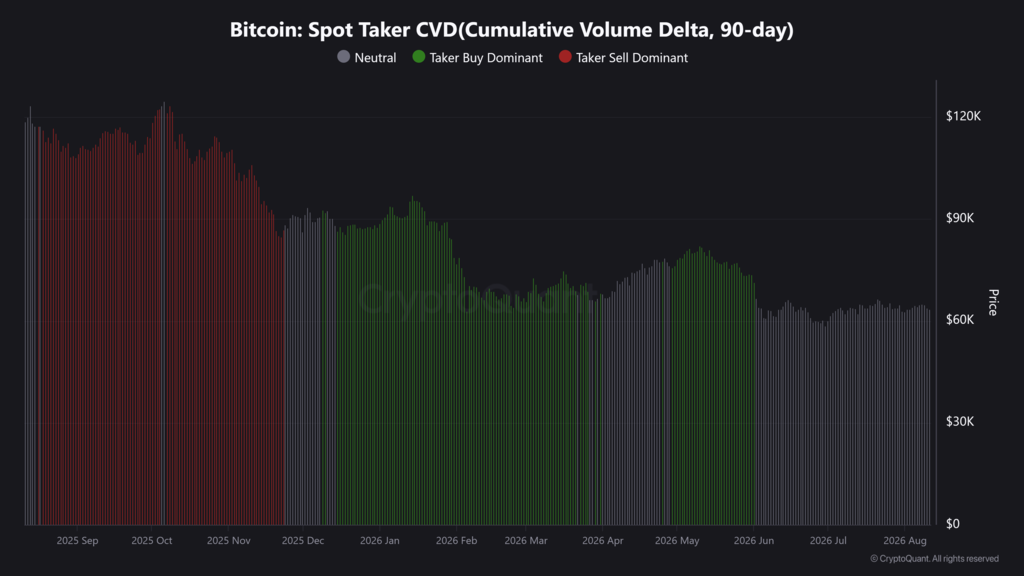
The primary risk for Strategy lies in the evolution of Bitcoin’s price. A sustained decline below current levels could further compress the value of its assets relative to its liabilities, increase pressure on STRC’s trading price, and limit its ability to issue new equity. The USD 4.65 billion reserve cushion provides a temporary maneuvering margin, but does not resolve the structural mismatch between asset and liability denomination.
Strategy’s Bitcoin sales do not constitute an abandonment of its thesis on the asset, but rather an operational adaptation to the constraints imposed by its capital structure. The company has demonstrated that it is possible to maintain a net buyer position of Bitcoin while executing selective dispositions to meet cash obligations. The market has received these operations with limited volatility, and Strategy executives have argued, with data supporting their position, that the impact on price formation is marginal.