TL;DR
- S&P Global Ratings has introduced a Vault Risk Assessment framework for crypto lending vaults, a market that has grown to around $10 billion.
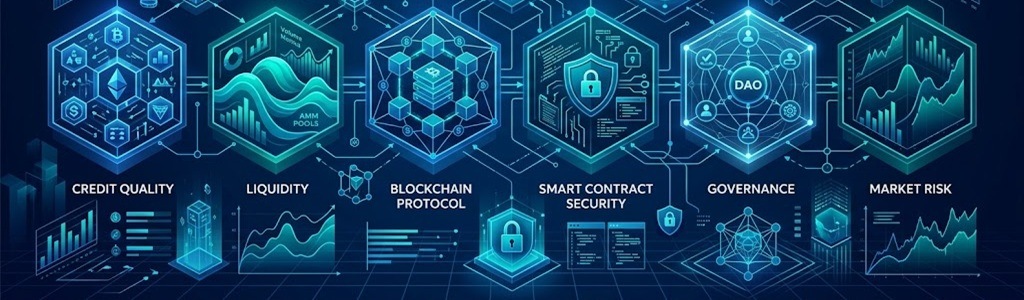
- The system evaluates six areas of risk, including credit quality, liquidity, blockchain infrastructure, protocols, and governance.
- S&P says the assessments are not credit ratings but could give institutional investors a more standardized way to evaluate on-chain lending products.
Crypto lending vaults have expanded rapidly as decentralized finance develops products that resemble traditional credit markets. According to S&P Global Ratings, deposits reached approximately $10 billion in September, compared with $1.5 billion in 2024. That growth has increased demand for clearer risk information as banks, asset managers, and other professional investors explore blockchain-based financial products.
The new framework arrives as the structure of crypto lending becomes more sophisticated. Vaults pool deposits and allocate capital to borrowers through blockchain-based protocols, while curators manage investment strategies and determine how funds are deployed. Unlike traditional financial products, however, the quality of disclosures can vary considerably between protocols and platforms.
How S&P Global Will Assess Crypto Lending Vaults
S&P’s Vault Risk Assessment examines six categories that can influence the possibility of losses. These include portfolio credit quality, liquidity mismatches, the curator’s capabilities, blockchain infrastructure, protocol risks, and vault security and governance.
The assessment is designed to provide a forward-looking analysis of potential investor losses. S&P will not evaluate the yields advertised by vaults, keeping the framework focused on risk rather than return. The company also emphasizes that a VRA should not be interpreted as an S&P credit rating.
The role of the curator is particularly important because these firms determine how capital is allocated. A weak strategy, poor risk controls, or excessive exposure to a single borrower can amplify losses when market conditions deteriorate.
James Wiemken, head of global ratings services at S&P Global Ratings, has pointed to inconsistent reporting as one of the challenges facing the sector. A standardized framework could therefore improve transparency without requiring crypto lending to abandon its on-chain structure.
TradFi Moves Deeper Into DeFi Risk Infrastructure
S&P’s move fits into a broader expansion of traditional financial institutions into digital assets. The company has previously assessed decentralized finance credit risks, including Sky Protocol, formerly known as MakerDAO, and a structured finance transaction backed by Bitcoin.
Recent security incidents also demonstrate why independent risk analysis matters. In August, a governance exploit involving Term Labs reportedly drained around $8.5 million from its vaults, highlighting how smart-contract and governance vulnerabilities can affect depositors.