SolanaNews
Solana Sets October 21 for Alpenglow Upgrade Targeting 150ms Finality
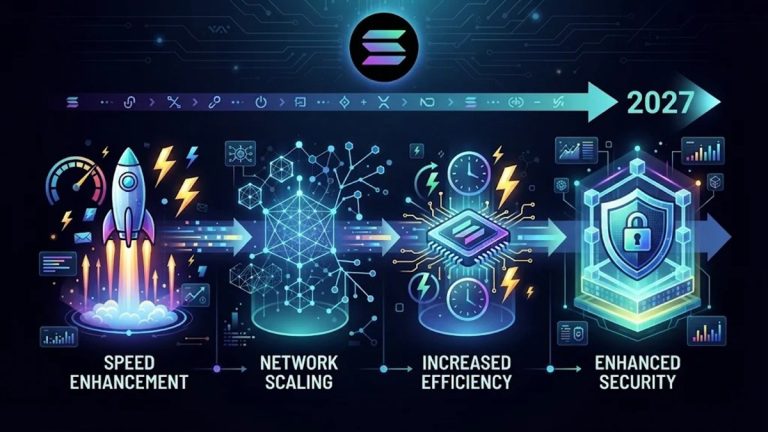
The Solana network scheduled the activation of the Alpenglow upgrade for October 21 at 14:50 UTC, slashing finality down to milliseconds.


Key points
- Mainnet activation has been scheduled for October 21 at 14:50 UTC, according to technical planning by Anza.
- The mechanism is projected to reduce transaction finality times from 12.8 seconds to a sub-second margin in the milliseconds range.
- Validators will replace the daily cost of 1.1 SOL with a fixed fee of 0.8 SOL per epoch by shifting voting off-chain.
On October 21, the Solana mainnet will activate the Alpenglow upgrade. This represents an overhaul of its consensus mechanism designed to cut block settlement times.
It’s time.
Alpenglow goes live on mainnet-beta Wednesday, October 21, ~14:50 UTC.
18 months of work for a migration that happens in one slot. Finality drops from seconds to ~150ms.
Make sure to follow us @anza_xyz as we countdown to go-live.
Details: https://t.co/MEf26uzCMW
— Anza (@anza_xyz) October 13, 2026
Development organization Anza unveiled the foundations of this architecture in May 2025. After completing testing phases across devnet, testnet, and community clusters, the team scheduled the final deployment for mainnet epoch 1064.
Price at publication$106.7922:48 UTC
- Past 7 days−11.6%
- Since this story−32.1%
- All-time high−63.6%$293.31
The change replaces TowerBFT, the algorithm that has governed Solana’s consensus since its official launch in March 2020.
According to SolanaFloor’s technical report, the goal is to drastically reduce transaction settlement times. Technical documentation suggests that finality could drop from the typical 12.8 seconds to marks near 150 ms under stable network conditions, marking a substantial improvement over the previous design.
Additionally, the technical proposal raises the network’s Byzantine fault tolerance from 33% to 40%. According to estimates from Anza developers, this structural adjustment aims to bolster the protocol’s resilience against coordinated attacks or validation anomalies.

Technical Requirements and Operational Cost Reductions
The Alpenglow architecture redefines how node-issued signatures are processed to validate each block.
Currently, operators pay an individual fee of 0.000005 SOL for every vote transaction transmitted, amounting to an operational expense of roughly 1.1 SOL per day per machine.
With Alpenglow’s implementation, votes will be processed off the main chain to free up block space. Technical documentation data indicates operators will transition to paying a unified fee of 0.8 SOL per network epoch, potentially providing relief for ongoing infrastructure costs.
To carry out the transition, validators must upgrade their nodes to Agave client versions 4.3 before the start of epoch 1064.
Operators running Jito BAM received instructions to migrate to version v4.3.0-jito.0. A report issued by Jito Network specified that its 376 associated nodes will temporarily enter maintenance mode during the deployment window to prevent operational discrepancies.
For their part, everyday users and those holding delegated staking SOL will not need to make transfers or sign additional transactions. The foundation warned ecosystem participants to ignore external token migration requests to prevent phishing and impersonation incidents.
The technical schedule sets the activation kickoff for October 21 at 14:50 UTC, at which point formal verification of the new consensus’s performance in the production environment will begin.
Notice. For information only; not investment advice.