TL;DR
- Solana set a record with $650 billion in stablecoin transfers during February.
- Solana briefly surpassed Ethereum in RWA holders but trails in capital.
- SOL trades near $84, holding within a range between $80 and $90.
The Solana network reached $650 billion in stablecoin transfer volume during February, the highest monthly figure ever recorded on a blockchain, according to sector data. This record surpassed the volumes processed by Ethereum and Tron during the same period, marking a shift in digital payments.
The growth responds to increased use of stablecoins for value transfers beyond speculative trading. Industry data indicates global stablecoin transaction volume reached $1.8 trillion in February, with Solana capturing the largest share of that activity. The network processed more than double its previous peak recorded in late 2025.
Stablecoin Record and RWA Expansion
The increase in stablecoin usage on Solana stems from its low fees and high processing speed. These features make the network suitable for frequent value transfers, displacing traditionally dominant networks like Tron in the USDT payment market.
Simultaneously, the network experienced an increase in wallets holding tokenized real-world assets. According to RWA.xyz data, Solana briefly surpassed Ethereum in the number of holders of these assets, with 155,064 addresses compared to 153,592. This indicator reflects new users attracted by products such as fractional shares of technology companies.
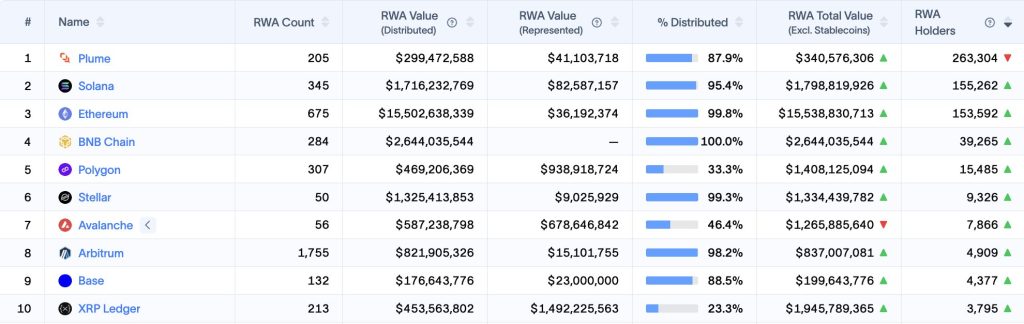
However, the difference in total value of tokenized assets between both networks remains wide. Ethereum holds approximately $15.16 billion in RWAs, while Solana accumulates around $1.71 billion. Products issued on Ethereum mostly consist of institutional funds from firms like BlackRock and Fidelity, while growth on Solana has been driven by retail investors.
SOL Price Remains in Consolidation Range
Solana’s native token currently trades near $84, after several sessions within a range between $80 and $90. During the last week, price has shown sideways movement, reflecting the lack of clear market direction.
The $80 level has acted as support on multiple occasions during recent days, with buyers defending that zone. On the upper side, resistance at $90 has contained recovery attempts. Crypto Economy analysts point out that a breakout above that level could open the door to testing the $100 zone, while losing support at $80 would bring attention to the $70 area.
Technical indicators show a balance between buyers and sellers. The money flow index stands at a neutral level of 50.78, while the accumulation/distribution line remains stable at 338.5 million, indicating that long-term holders are not liquidating positions despite the decline from January highs.
"To run stablecoins, you need stable rails. You need a network that is secure, efficient, fast, and cheap. You can't find anyone better than Solana." – Shawn Chan, CEO of @SGB_app pic.twitter.com/DQD3FEvZzF
— Solana (@solana) March 9, 2026
Solana ETFs recorded $24 million in net inflows last week, though outflows in the last two trading sessions suggest short-term weakness. Derivatives data shows retail demand resurfacing despite liquidations totaling roughly $20 million over the last 24 hours.
Several traditional financial firms have begun using Solana to develop blockchain-based products. Western Union selected the network to build its USDPT stablecoin, which can be redeemed at more than 360,000 locations across 200 countries. Likewise, Ondo Finance, a firm specialized in tokenized assets, deployed its infrastructure on Solana.

Stablecoin issuance on Solana reached $154 billion in February, with growth exceeding 12% compared to the previous month. USDC maintains approximately 53% market share of stablecoins on the network, providing liquidity for transactions and operations within decentralized finance.
The increase in payment activity and arrival of institutional projects coincides with a relative decline in volume associated with memecoins, which had concentrated attention during the previous cycle. This shift in the type of applications using the network could influence investor perception of the token’s value in the medium term.