

Solana is an established blockchain network, while BullZilla is an early-stage token project running a public fundraising event. The two are often discussed together in social media commentary as examples of a large, liquid market versus a much smaller, higher-risk token sale. This article summarizes publicly available claims and market context without endorsing either asset.
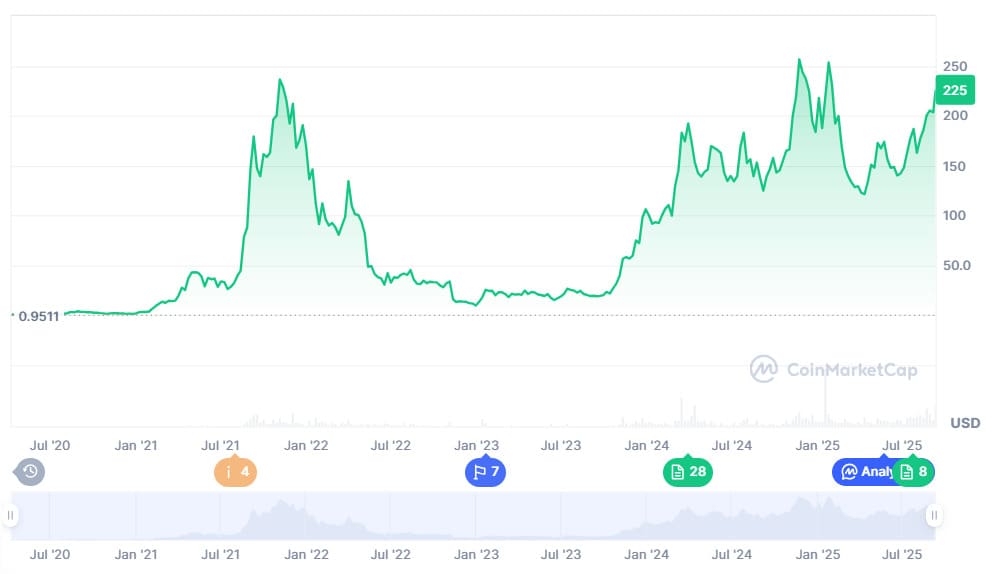
Solana has been a notable network among large-cap altcoins, with a high-activity developer ecosystem and usage across DeFi, NFTs, and other Web3 applications. Commentary around BullZilla, by contrast, focuses on its marketing narrative and token-design features described in its materials. While Solana is typically evaluated through network usage and market liquidity, BullZilla is being promoted as an early-stage token sale with features such as supply reductions (“token burns”) and staking. BullZilla is mentioned here for context as described by the project.
BullZilla ($BZIL): An early-stage token sale, as described by the project
BullZilla ($BZIL) is presented in its own materials as an ERC-20 token project running a staged token sale. According to the project’s website at the time of writing, the sale was described as being in “Stage 2” with a token price of $0.00004575, more than $350,000 raised, over 23.8 billion tokens sold, and a holder count above 1,100. The project also references an intended listing price of $0.00527. These figures and any implied return calculations are project-reported and are not independently verified; they are not a guarantee of future price or liquidity.
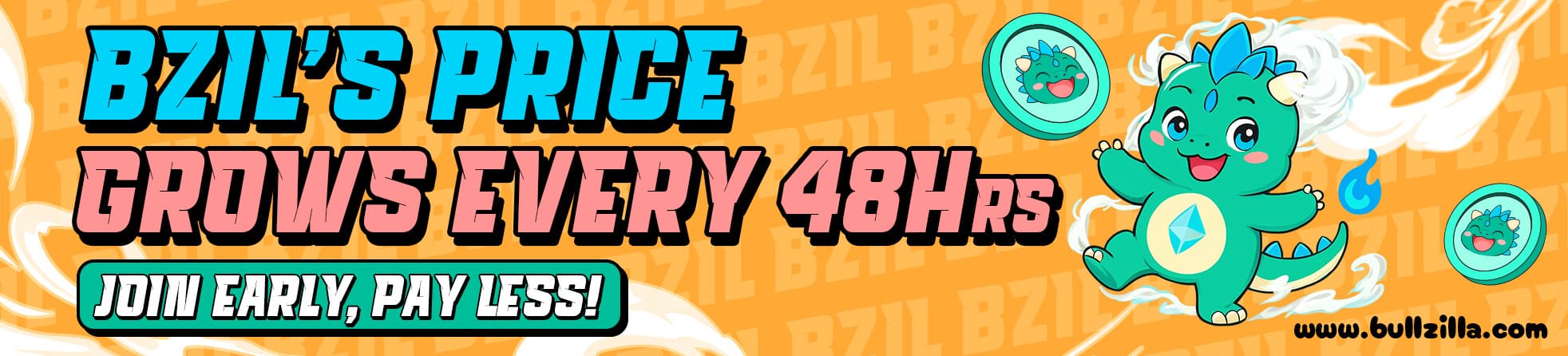
The project also describes an automatic schedule under which the token-sale price can increase based on fundraising milestones or time intervals (for example, the website references changes tied to each $100,000 raised or every 48 hours). Mechanisms like staged pricing can affect entry prices for participants, but they do not indicate market demand after a token lists on an exchange.
Some promotional materials also include illustrative “investment math” examples. Such scenarios are inherently speculative, depend on future market conditions (including liquidity, listings, and demand), and should not be treated as forecasts.
Token-sale mechanics referenced by BullZilla
In addition to staged pricing, BullZilla’s materials reference token supply reductions (“burns”) tied to the project’s milestones. Token burns can reduce supply, but they do not by themselves determine market price.
The project also advertises a staking feature (“HODL Furnace”) and references a stated yield figure (for example, 70% APY). Any yield, if offered, is typically variable, depends on program rules and token economics, and may change or end; it is not risk-free.
Solana ($SOL): The established network
Solana operates in a different segment of the market as a large, widely traded blockchain ecosystem. At the time referenced in this text, it was described with a price of $225.19 and a market capitalization of $122 billion, with daily trading volume above $9 billion. The article text also cites recent performance figures (24-hour, weekly, monthly, and longer-term changes) and notes a prior all-time high of $294.33 reached in January 2025. Market data can change quickly, and past performance does not predict future results.
The network is often characterized by high transaction throughput and relatively low fees, which has supported activity in NFTs, decentralized applications, and DeFi. However, as with other major networks, users and developers also evaluate factors such as reliability, security incidents, and competition from other chains.
Outlooks for Solana over the coming months vary by analyst and depend on broader market conditions, network usage, and regulatory developments. Any price targets or forecasts should be treated as speculative rather than certain outcomes.

Conclusion
Solana and BullZilla represent different categories of cryptoassets. Solana is a mature, heavily traded network token that is commonly assessed through ecosystem usage and liquidity. BullZilla, as presented by the project, is an early-stage token sale where many key variables (including exchange listings, liquidity conditions, and long-term demand) are uncertain.
Readers should be cautious with narratives that frame early-stage token sales as comparable to large-cap networks, or that imply specific return outcomes. Any participation in token sales or staking programs can involve significant risk, including loss of principal.
For More Information:
BZIL Official Website (project link)
BZIL Telegram Channel (project link)
Frequently Asked Questions about token sales and meme-coin risk
How do people evaluate a meme-coin token sale?
People commonly look for publicly available documentation (such as a website, smart-contract information, and disclosures), and may compare stated token distribution, vesting, and liquidity plans. Availability of information is not a guarantee of legitimacy or future market performance.
What is “the best” token sale to invest in?
There is no universally “best” token sale. Any decision depends on personal risk tolerance and independent verification of project claims, and it can still result in losses.
What’s the next big meme coin?
It is not possible to reliably identify the “next” breakout meme coin in advance. Meme-coin prices can be highly volatile and are often driven by short-term attention rather than fundamentals.
Do meme coins have a future?
Some meme coins maintain communities and trading activity for long periods, while many fade quickly. Outcomes vary widely and depend on market conditions, liquidity, and community behavior.
Can any meme coin be expected to surge in 2025?
No specific token can be expected to surge, and predictions are speculative. Readers should treat forward-looking claims as uncertain.
Glossary of Key Terms
- Presale – A token sale that takes place before a public exchange listing (sometimes referred to as an early-stage token sale).
- APY – Annual yield from staking, calculated as a percentage.
- Roar Burn – A supply-reduction mechanism described by BullZilla.
- ATH – All-time high, the peak price of a token.
- ATL – All-time low, the lowest price of a token.
- ROI – Return on investment, a measure of profitability.
- FOMO – Fear of missing out, common in fast-moving crypto markets.
- Market Cap – The total value of a cryptocurrency (price × circulating supply).
- Liquidity – The ease of trading a token without moving its price.
- Tokenomics – The economic design and supply structure of a token.
This article contains information about a cryptocurrency token sale. This outlet is not affiliated with the project mentioned. This article is for informational purposes only and does not constitute financial or investment advice. As with any initiative within the crypto ecosystem, readers should do their own research before participating and carefully consider the risks involved.

