

Interest in meme tokens has picked up again, with market participants tracking both large, established projects and newer launches. Shiba Inu ($SHIB) remains one of the better-known tokens in the meme-coin category, while BullZilla ($BZIL) is an Ethereum-based project running a token sale. This article reviews publicly discussed claims about both tokens without endorsing any participation or investment decision..
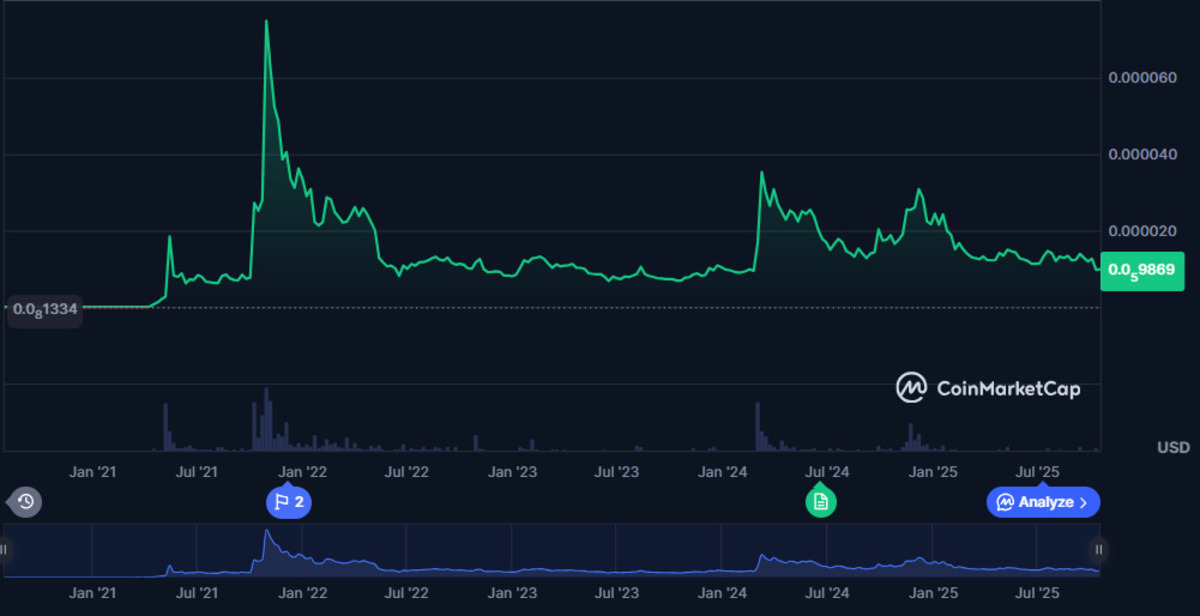
Shiba Inu price forecasting remains a frequent topic among commentators as its community watches for a potential recovery in 2025. Separately, BullZilla’s ongoing token sale has been discussed in the meme-token space, including claims around supply reductions (“burns”) and staking features. As with other crypto assets, narratives and marketing can move faster than verifiable data, so readers should treat project-reported metrics with caution.
BullZilla ($BZIL): Project overview and token-sale claims
BullZilla is an Ethereum-based token project that, according to its own materials, uses staged pricing and includes mechanisms described as token burns and staking. Supporters present the project as an attempt to combine meme branding with an incentive-driven token model; however, the economic outcomes of such designs depend on market conditions and execution. Project website (for reference).

The project states that its token sale is in a staged phase and that the token price changes across stages. It also claims to have raised more than $920,000 and to have distributed tokens to thousands of wallets. These figures are project-reported and may change over time; this outlet has not independently verified them.
BullZilla also describes additional features, including a pricing model that changes at set intervals or milestones and marketing incentives (such as bonus allocations and referral rewards). The project additionally references a staking product with a stated yield. Any bonuses or yield figures should be treated as promotional claims rather than reliable expectations, and outcomes may differ materially from stated targets.
Launch strategy: transparency and deflation claims
According to BullZilla’s published roadmap, the team plans post-launch liquidity measures and indicates it does not intend to apply vesting restrictions to certain early participants. It also describes ongoing “burn” events intended to reduce token supply. Whether these measures occur as described, and what effect they have on price, depends on execution and market demand.
The project further promotes a series of themed events (“Lore Chapters”) tied to supply reductions. Supply reductions do not, by themselves, ensure price appreciation, and token economics can be influenced by broader market conditions, trading liquidity, and concentration of holdings.
Shiba Inu ($SHIB): Market context and 2025 scenarios
Shiba Inu remains a heavily traded meme token with an active community and a broader ecosystem. At the time of writing, SHIB was quoted around $0.000009883. Reported recent performance includes a 3.88% change over 24 hours and a 25.86% decline over the past month, with a market capitalization reported around $5.82 billion. Prices and market caps can change quickly.
Some analysts point to Shibarium, the project’s Layer-2 network, as a development that could support utility by reducing transaction costs and enabling DeFi integrations. Forecasts that SHIB could trade near $0.00001249–$0.00001500 in 2025 are speculative and uncertain, and should not be interpreted as guarantees.
Shiba Inu’s ecosystem includes products and initiatives such as Shibarium, an NFT marketplace, and token burn activity. However, the relationship between burns, network usage, and market price is complex and depends on adoption, liquidity, and overall risk appetite across crypto markets.
Unlike a structured token-sale schedule, SHIB’s market performance is primarily driven by trading activity and broader sentiment. Factors such as liquidity conditions, large-holder activity, and macroeconomic developments can significantly affect outcomes, including the possibility of further declines.
Conclusion
Shiba Inu and BullZilla reflect two different segments of the meme-token landscape: an established token with an existing ecosystem and a newer project raising funds through a token sale. BullZilla’s public narrative emphasizes staged pricing, supply-reduction mechanisms, and staking incentives, while Shiba Inu’s discussion often centers on ecosystem development and community activity. Readers should treat all projections as uncertain and separate project marketing from independently verifiable information.
This article is for informational purposes only and does not constitute financial or investment advice. This outlet is not affiliated with the project mentioned.
Links (for reference):
BZIL Official Website
Follow BZIL on X (Formerly Twitter)
Frequently Asked Questions About Shiba Inu market context and BullZilla token sale
What is the current price of Shiba Inu?
At the time of writing, SHIB was quoted around $0.000009883, with a market cap reported around $5.82 billion. Crypto prices can change rapidly.
What makes BullZilla different from other meme coins?
BullZilla’s materials describe mechanisms such as staged pricing, token burns, referral-style incentives, and a staking feature. The existence and impact of these mechanisms are not guaranteed and have not been independently verified by this outlet.
Are any return projections for BullZilla participants reliable?
No return is guaranteed in crypto markets. Any ROI figures shared in promotional materials should be treated as hypothetical and not as a reliable expectation of future performance.
How does Shiba Inu plan to grow in 2025?
Commentary often points to Shibarium, token burn activity, and ecosystem products such as NFTs and DeFi integrations. Whether these translate into sustained demand is uncertain.
Why is BullZilla discussed by some traders?
Supporters highlight its fundraising progress and tokenomics narrative. Readers should treat such claims as project-led marketing and independently verify details before relying on them.
Glossary of Key Terms
- Token sale: A fundraising period in which a project distributes tokens, typically before broader secondary-market trading
- Deflationary Tokenomics: Reducing token supply through burns, aiming to increase scarcity
- APY: Annual percentage yield stated for a staking or yield program (often variable and not guaranteed)
- Roar Burn: BullZilla’s term for a token burn event described in its materials
- Shibarium: Shiba Inu’s Layer-2 network intended to enable faster and cheaper transactions
- Liquidity Lock: A mechanism that can restrict access to liquidity for a period of time; specifics vary by project
- HODL Furnace: BullZilla’s term for a staking vault described in its materials
- Referral Rewards: Bonus tokens awarded for inviting new participants, as described by a project
- Tokenomics: Economic model defining token distribution and incentives
- ROI: Return on investment; future ROI is uncertain and not guaranteed
Summary
Discussion around Shiba Inu in 2025 often focuses on whether ecosystem activity (including Shibarium) can support demand, while BullZilla’s token sale is promoted around staged pricing and supply-reduction claims. Any stated fundraising totals, burns, incentives, or staking yields should be treated as project-reported and subject to change.
Disclaimer
This article is for informational purposes only and does not constitute financial or investment advice. Cryptocurrency markets are volatile and risky. Consider reviewing primary sources and, where appropriate, seeking professional guidance.
This article contains information about a cryptocurrency token sale. Crypto Economy is not associated with the project. Details cited from project materials may change and have not necessarily been independently verified. This content is for informational purposes only and does not constitute investment advice.

