

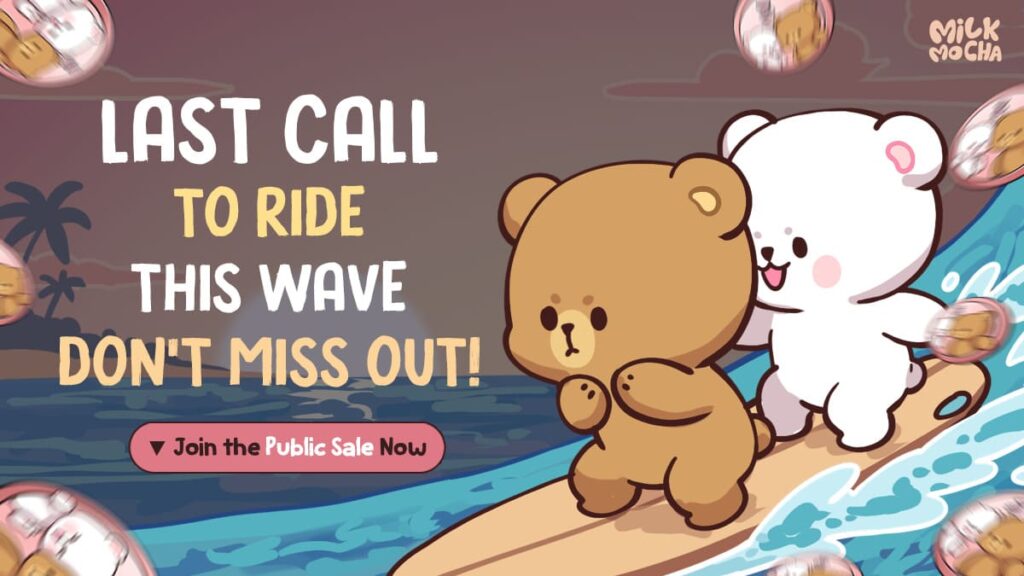
In a world where crypto projects often emphasize marketing, Milk & Mocha’s $HUGS token promotes a reward model that, according to the project’s materials, links community referrals with token-sale incentives.
The project describes a referral program in which both the referrer and the referred participant may receive an additional 10% token allocation on eligible token-sale purchases made through a referral link, subject to the project’s terms and the underlying smart-contract logic. This is a marketing incentive presented by the team, and it should not be interpreted as a guarantee of value or performance.
Turning Emotion Into Incentive
Milk & Mocha, the bear duo known for positivity online, has extended its branding into a crypto product that includes NFTs and governance features described by the project. The $HUGS ecosystem is presented as community-oriented, including participation through NFTs and DAO-style governance.
As described by the project, participants in the token sale receive a unique referral link through a user dashboard. When a new participant uses that link to purchase $HUGS tokens, the smart contract is designed to allocate an additional 10% in tokens to both parties on that purchase.
The project states there are no tiers or multi-level structures for this mechanism. Readers should still review terms and verify smart-contract details independently, as implementation and eligibility conditions can vary by project.
More broadly, the approach reflects a common incentive design used in token fundraising: encouraging distribution through referrals while tying allocations to on-chain transactions.
The Mechanics: Simple, Transparent, and Automatic
The project states the referral logic is implemented in the $HUGS smart contract, which is intended to reduce manual tracking and separate claim steps.
In practical terms, the project describes the process as follows:
- Referral link access: Token-sale participants can view a personal referral link within the project dashboard.
- Referred purchase attribution: If a buyer uses that link for an eligible purchase, the contract is designed to calculate an additional 10% token allocation for both accounts.
- Ongoing application during the token sale: The project describes the referrer–buyer connection as persisting for future purchases made by the referred buyer during the token sale, so that the same bonus logic may continue to apply while the sale is active.
The project says these bonus allocations are credited to the token-sale account in real time and can be checked on-chain, depending on the network and tooling used. As with any on-chain claim, users may want to verify contract addresses and transaction details independently.
References to “fairness” or “transparency” in this context reflect design intent and on-chain auditability, not an assurance of outcomes.
The Psychology Behind “Sharing Hugs”
Milk & Mocha frames its referral incentives around kindness and connection. This kind of positioning is common in consumer communities and can be used to encourage participation and sharing.
Instead of pitting participants against each other through tiered rewards, the project’s described structure allocates the same percentage to both sides of a referral. Whether this results in sustained engagement depends on broader factors, including market conditions, distribution, and ongoing utility.
The project’s messaging also aims to turn word-of-mouth marketing into a community activity, with rewards tied to tracked purchases.
In the words of one community member:
“It’s not about shilling a coin, it’s about sharing something that actually feels good to give.”
Any claims about adoption levels or “organic uptake” should be treated as promotional unless supported by independently verifiable data.
On-Chain Proof of Fairness
According to the project, referral-related allocations are executed by smart contracts and recorded on the blockchain, allowing participants to review transaction history.
Users may be able to independently verify items such as:
- Which addresses received referral-related allocations
- The amounts distributed
- When transactions were processed
However, on-chain visibility does not eliminate all risks. Token-sale participation can involve smart-contract risk, liquidity risk, and market risk, among others.
Why the Referral System Works So Well
The project presents the referral bonus as being funded from the token-sale allocation, with distributions handled proportionally via contract logic. As with similar designs across the market, the long-term effects depend on the token’s broader economics and how the project executes on its roadmap.
The project’s “lifetime” wording appears to refer to ongoing application during the token sale for purchases attributed to a referral relationship. Readers should consult official terms for scope, duration, eligibility, and any exclusions.
The project also references other mechanisms such as weekly burns, staking rewards, and leaderboard incentives. These features are described in project materials and may change; they do not guarantee price support or returns.
A Socially Driven Future
Beyond financial incentives, Milk & Mocha positions the program as a community feature meant to reflect the brand’s tone. Whether this approach broadens participation will depend on user interest and broader market dynamics.
In practice, referral links function as an attribution method for token-sale allocations; users should treat them as part of the project’s marketing and distribution strategy.
As with any token-sale incentive structure, readers may want to consider how rewards are sourced, what assumptions are required for the model to function as described, and what risks apply if market conditions change.
Final Thoughts
In 2025’s crypto landscape, Milk & Mocha’s $HUGS token is an example of a brand-led project using a referral bonus to encourage community distribution during its token sale.
The project’s stated approach—an additional 10% token allocation for both referrer and referred participant on eligible purchases during the token sale—illustrates how incentive mechanics can be encoded in smart contracts. It should not be treated as a promise of future value.
More generally, the “sharing hugs” theme functions as branding around a referral mechanism that tracks and rewards attributed purchases.
Project links (for reference):
This article contains information about a cryptocurrency token sale. This outlet is not affiliated with the project mentioned. This article is for informational purposes only and does not constitute financial or investment advice.

