TL;DR
- Russia’s central bank acknowledges Bitcoin mining supports the ruble, marking a major policy shift.
- Mining revenues in hard currency help offset the impact of Western sanctions.
- The stance has changed from considering bans to developing a regulatory framework.
Russia’s central bank has acknowledged that Bitcoin mining is bolstering the ruble, signaling a significant change from its historically cautious stance toward cryptocurrencies. Governor Elvira Nabiullina stated that the activity acts as an additional factor supporting the currency but stressed that its precise impact remains difficult to quantify since much of the industry operates beyond formal oversight.
As of December 22, the ruble trades near $0.01265 per RUB, showing unexpected resilience. Policymakers increasingly attribute this strength to non-traditional export flows, with crypto mining emerging as one of the contributors.
Mining Recognized as a New Export Channel
The central bank’s acknowledgment echoes earlier remarks from Maxim Oreshkin, a presidential aide who labeled crypto mining a “new export product” influencing the foreign-exchange market. He noted that revenue generated by miners—often earned in hard currency—feeds into Russia’s external accounts more than official projections recognize. These inflows, while opaque, are helping offset capital constraints tied to Western sanctions.
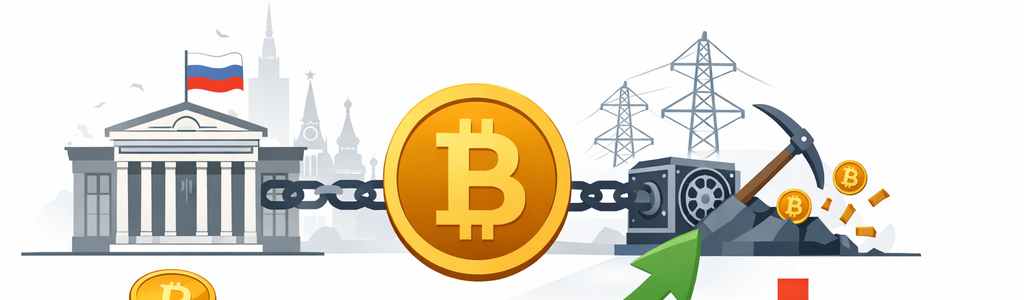
Nabiullina agreed that mining’s contribution cannot be ignored, even if most activity remains within the “grey zone.” The central bank has started assessing the sector’s footprint on the balance of payments, reflecting a growing effort to track digital-asset-related FX inflows.
From Restriction to Regulation
This shift accompanies a broader policy transformation. After years of considering outright bans, Russia moved in 2024 to legalize both mining and cross-border crypto settlements, seeking to adapt its economy to sanction-driven isolation.
The Bank of Russia is now working with the Ministry of Finance, Rosfinmonitoring, and other agencies to design a unified framework that will bring mining and digital-asset transactions under state supervision.
First Deputy Governor Vladimir Chistyukhin recently underscored the urgency of “legalizing” the crypto sphere through strict laws and compliance measures. The strategy aims to harness the ruble-supporting benefits of mining while curbing financial opacity.