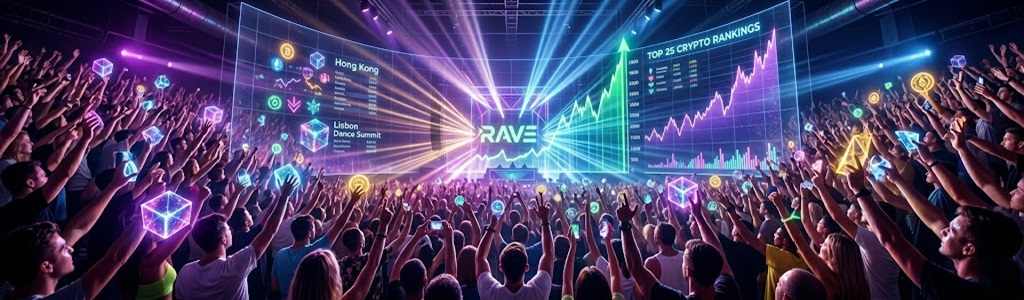
RaveDAO (RAVE) is a Web3-native entertainment protocol that fuses electronic music culture with blockchain, offering real-world events, NFT ticketing, philanthropic initiatives, and a governance-driven token economy. It is not just a crypto project; it is a cultural movement with tangible adoption and a deflationary token model.
What is RaveDAO?
Origins and Cultural Mission
RaveDAO is a blockchain-powered entertainment collective designed to merge electronic dance music culture with decentralized ownership. Launched in late 2023, it quickly evolved from small afterparties into a global project that integrates real-world events with Web3 technology. Its mission is to transform audiences into active participants, giving fans a stake in the ecosystem while preserving the energy and inclusivity of rave culture.
Core Features of the Ecosystem
The foundation of RaveDAO is the RAVE token, which serves as both a utility and governance asset. Holders can use it for ticket purchases, merchandise, and exclusive access to events. Organizers stake RAVE to license the brand or certify partnerships, ensuring authenticity and alignment with community standards. Attendees receive NFT proofs of participation, creating a verifiable digital identity that unlocks future rewards and strengthens long-term engagement.
Philanthropy and Social Impact
A distinctive element of RaveDAO is its philanthropic initiative known as āRave for Light.ā Approximately 20% of event proceeds are directed toward charitable causes chosen by the community. Past efforts include funding cataract surgeries in Nepal and supporting wellness programs in Seattle. This commitment to social good differentiates RaveDAO from purely speculative crypto projects, embedding humanitarian values into its operating model.
Tokenomics and Global Partnerships
The RAVE token has a fixed supply of one billion, structured through vesting schedules and supported by a buyback-and-burn mechanism that makes it deflationary over time. The project has generated millions in event revenue without relying on venture capital, proving real-world adoption. Partnerships extend across major blockchain networks like BNB Chain, Polygon, and Aptos, as well as collaborations with Binance, OKX, Bitget, Coinbase, and Warner Music. RaveDAO has also partnered with festivals such as Tomorrowland, NEON Countdown, and 808 Festival, solidifying its presence in both the crypto and entertainment industries.
How Does RaveDAO Work?
Decentralized Event Infrastructure
RaveDAO operates as a decentralized entertainment protocol, using blockchain to manage every aspect of live events. Instead of relying on centralized ticketing or promoters, the system distributes responsibilities across its community. Organizers stake RAVE tokens to gain access to the brand and host events, while attendees interact through smart contracts that validate entry and secure transactions. This structure ensures transparency, reduces fraud, and empowers participants to directly influence the ecosystem.
NFT Identity and Participation Layer
A central mechanism is the issuance of NFTs as proof of participation. Each attendee receives a unique digital asset when attending an event, which acts as both a ticket and a permanent record of involvement. These NFTs are more than collectibles; they form a digital identity layer that can unlock future benefits such as discounts, exclusive access, or governance rights. By embedding identity into blockchain assets, RaveDAO creates a verifiable and enduring connection between fans and the protocol.
Governance and Community Decision-Making
RaveDAO integrates governance directly into its operations. Holders of the RAVE token can propose and vote on decisions ranging from treasury allocations to philanthropic initiatives. This democratic model ensures that the community, not a centralized authority, determines the direction of the project. Voting power is proportional to token holdings, but mechanisms are in place to encourage broad participation, preventing dominance by a few large stakeholders.
Token Utility and Deflationary Mechanics
The RAVE token functions as the backbone of the ecosystem. It is used for payments, licensing, and governance, but its design also incorporates deflationary mechanics. A buyback-and-burn system reduces circulating supply by tying token demand to event revenue. As more events succeed, more tokens are removed from circulation, potentially increasing scarcity. This model aligns economic incentives with cultural growth, ensuring that the success of the community directly strengthens the value of the token.
What is the RAVE Token?
Foundation of the Cultural Economy
The RAVE token is the coordination layer that powers RaveDAOās global network of artists, organizers, and fans. It transforms cultural participation into an economy by linking every chapter, event, and creator under one shared system. With a fixed supply of one billion tokens, RAVE is designed to sustain long-term growth and distribute value across the community. Its allocation supports diverse needs: 30% for community builders, 31% for ecosystem expansion, 20% for the team, and smaller portions for early supporters, liquidity, and philanthropic reserves. This structure ensures a balance between grassroots participation and institutional development.
Token Distribution and Vesting
RAVEās distribution schedule is carefully structured to align incentives with long-term engagement. At the Token Generation Event, just over 23% of the supply entered circulation, primarily for ecosystem activation, liquidity, and initial airdrops to past event participants. The remainder follows a vesting model with cliffs and gradual releases over 36 months. This approach prevents sudden market shocks while rewarding sustained involvement. Each category, community, ecosystem, team, and supporters has tailored vesting rules, ensuring that growth is paced and aligned with real-world expansion.
Utilities Across Layers
The tokenās design spans three layers: B2B, B2C, and governance. On the B2B side, organizers stake RAVE to license intellectual property, vendors stake to qualify as verified providers, and artists stake to launch collaborations. For B2C, fans use RAVE for tickets, VIP access, collectibles, and on-site purchases, while earning rewards through referrals and participation. Governance integrates community decision-making, allowing holders to vote on event locations, artist lineups, and philanthropic allocations. This multi-layered utility ensures that RAVE is embedded in every aspect of the ecosystem.
Is the RAVE Token a Good Investment?
RAVE is designed to accrue value through real activity rather than speculation. Its deflationary mechanics, buyback-and-burn, staking rewards, and reinvestment of event revenue, tie token demand directly to cultural expansion. As festivals, chapters, and collaborations grow, so does the utility of RAVE. For participants, it represents more than financial upside; it is a stake in a cultural movement that blends music, technology, and social impact. The tokenās strength lies in its ability to capture value from authentic experiences, making it a unique proposition in the blockchain space.
Conclusion
RAVE is more than a token; it is the cultural backbone of a decentralized entertainment movement. By combining governance, utility, and philanthropy, it transforms live events into a participatory economy. With deflationary mechanics, structured distribution, and multi-layered utilities, RAVE represents a sustainable model where music, technology, and community converge into lasting value.