

Two meme-token projects drawing attention in current market discussions are Pudgy Penguins ($PENGU) and BullZilla ($BZIL). Pudgy Penguins is associated with a well-known NFT brand and a large community, while BullZilla is an early-stage token project that is conducting a fundraising token sale, according to its website.
Meme tokens are typically volatile and can be influenced by sentiment, social-media activity, liquidity conditions, and broader crypto-market trends. Against that backdrop, Pudgy Penguins’ profile is closely tied to brand recognition and community, while BullZilla’s materials emphasize token-sale mechanics such as staged pricing and supply reductions (“burns”).
BullZilla ($BZIL): Token-sale mechanics described by the project
According to BullZilla’s website, the project uses a “Mutation Mechanism” in which the token-sale price can increase when a fundraising threshold is reached or after a set amount of time. The project frames this as a staged pricing model; details and outcomes are not independently verified.
The project states it is in “Stage 5 (Roar Drop Incoming, Phase 3)” and lists a token-sale price of $0.00012574, with figures such as tokens allocated and amounts raised also published by the team. Any figures related to fundraising progress, token distribution, or timelines should be treated as project-reported information that may change.
BullZilla’s materials also reference “burns,” a staged token-sale structure, and staking features. Where the project advertises staking returns (for example, “70% APY”), those figures are marketing terms and are not guarantees; actual results can vary significantly and may depend on protocol rules, token price movements, and participation levels.
Token distribution (project-reported)
BullZilla states that 50% of its 160 billion tokens are allocated to token-sale participants. The project’s published breakdown also mentions allocations for staking, ecosystem incentives (including referral programs), token burns, and a team allocation with a lock-up period. As with any early-stage token project, distribution terms are subject to the project’s own implementation and documentation.
Pudgy Penguins ($PENGU): Brand-driven token with NFT roots
Pudgy Penguins originated as an NFT collection and has developed into a recognizable crypto brand. Discussion around the token often focuses on community size, licensing initiatives, and broader consumer visibility, though market performance is still subject to typical meme-token volatility.
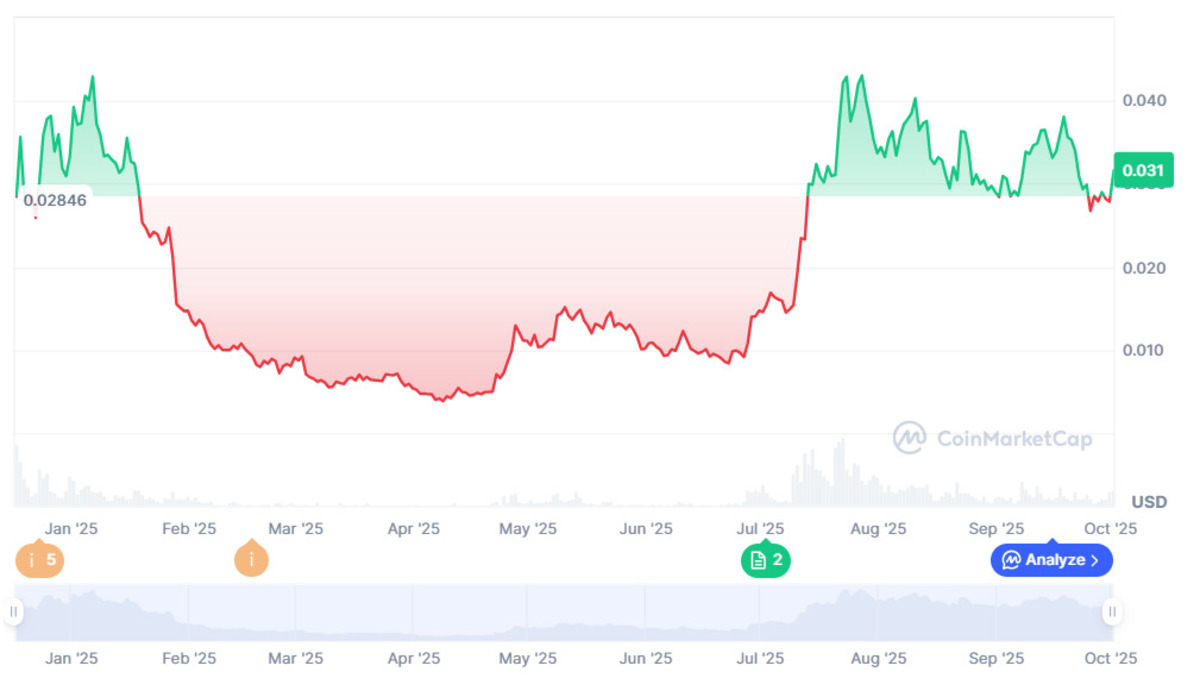
Based on publicly available market dashboards, $PENGU was trading around $0.03185 at the time referenced in this article, with a market capitalization shown near $1.99 billion and reported daily volume around $579.92 million. Short-term percentage changes can shift rapidly and should not be interpreted as a reliable indicator of future performance.
Market outlook (speculative)
Some commentators suggest $PENGU could retest prior highs if NFT demand and brand partnerships expand. Such scenarios are inherently speculative and depend on factors that can change quickly, including overall market conditions, liquidity, and project execution.
Summary: Different narratives in the meme-token segment
Pudgy Penguins is generally discussed in terms of culture, brand reach, and its NFT-linked ecosystem. BullZilla, based on its own materials, emphasizes token-sale staging, supply adjustments, and staking features. Readers should approach both as high-risk crypto assets and verify claims using primary sources and on-chain data where possible.
Project website (for reference):
Frequently Asked Questions
How do early-stage token sales typically get announced?
Projects commonly publicize token-sale details through official websites and verified social channels. Information should be cross-checked with on-chain data and reputable third-party sources where available.
How can readers evaluate token-sale claims?
Consider reviewing token distribution, vesting/lock-up terms, audited code (if any), liquidity plans, and whether key metrics can be verified on-chain. Marketing materials may emphasize best-case outcomes and should not be treated as guarantees.
What are the main risks of meme tokens?
Meme tokens can face extreme volatility, thin liquidity, concentrated ownership, and rapid shifts in sentiment. Loss of capital is possible.
Glossary
- Token-sale allocation: Portion of total supply designated for a project’s fundraising sale.
- Mutation Mechanism: BullZilla’s term for its staged token-sale pricing rule (as described by the project).
- Lore Bible: A narrative framework referenced in BullZilla’s marketing materials.
- APY (Annual Percentage Yield): A way of quoting annualized staking rewards; quoted APY is not guaranteed and may change.
- Burn: Permanent removal of tokens from circulation.
- NFT (Non-Fungible Token): A unique digital asset recorded on a blockchain.
- Market Cap: Total value of circulating supply (price × circulating tokens), typically shown by market-data providers.
- ATH/ATL: All-Time High/Low price levels shown on market charts.
- Liquidity: How easily an asset can be bought or sold without significant price impact.
- Utility Token: A token intended for use within a product or ecosystem.
Disclaimer
This article is for informational purposes only and does not constitute financial or investment advice. This outlet is not affiliated with the project mentioned. Cryptocurrency markets are highly volatile; past performance does not guarantee future outcomes. Always conduct independent research and consult a licensed financial advisor before making investment decisions.
This article contains information about an early-stage token sale. Crypto Economy is not associated with the project. As with any initiative within the crypto ecosystem, we encourage users to do their own research before participating, carefully considering both the potential and the risks involved. This content is for informational purposes only and does not constitute investment advice.

