TL;DR:
- Polymarket archived a nuclear detonation contract; a cache showed $650,000+ volume, and an X post citing 22% odds was deleted.
- Critics warned war markets could reward insiders; Bubblemaps flagged wallets earning about $1 million by betting on U.S. strikes on Iran ahead of the attacks.
- Scrutiny grows: Kalshi invoked a “death carveout,” senators urged the CFTC to ban death contracts, and Chair Michael Selig signaled new rulemaking.
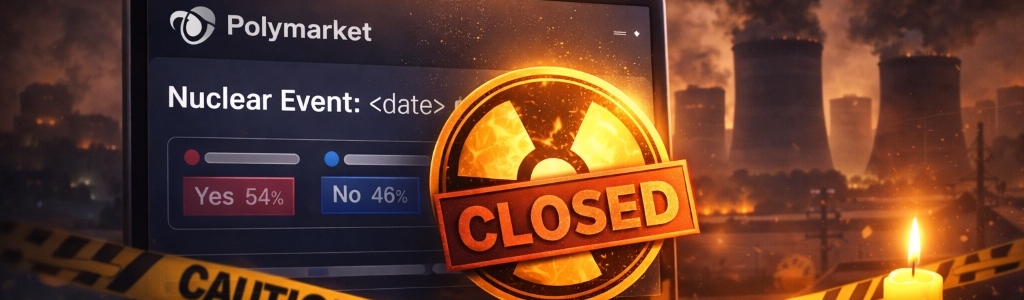
Polymarket has archived its contract asking whether a nuclear weapon would be detonated this year, pulling the market after mounting criticism of death and war-linked betting. Before removal, the page offered resolution windows of March 31, June 30, and before 2027, and a web cache showed at least $650,000 in volume. The page now displays “The event has been archived” and was titled “Nuclear weapon detonation by…?” In short, the contract’s shutdown turned volume into controversy as Polymarket also deleted a Tuesday X post citing a 22% chance. It now sits as a cautionary case.
Polymarket has created a market that would monetize a nuclear attack amid increasing concerns that bets are happening among government insiders who can make military decisions. pic.twitter.com/r1CbWaLWcw
— David Sirota (@davidsirota) March 3, 2026
Backlash, information risk, and regulatory pressure
Backlash centered on information asymmetry. Critics argued that war-and-death contracts can monetize non-public intelligence, letting insiders profit from bets tied to military actions. In Polymarket’s case, the nuclear contract’s timelines and visible odds made the optics worse once the platform itself amplified them on X. The episode now feeds broader scrutiny of geopolitical prediction markets, where regulators and lawmakers are questioning whether platforms sufficiently guard against insider trading and the misuse of non-public information. The concern is less about forecasting and more about incentives that could distort behavior. That governance question is now central risk.
The criticism intensified after Bubblemaps flagged newly created wallets that collectively earned roughly $1 million by betting the U.S. would strike Iran shortly before the attacks occurred. For skeptics, that example reinforced the insider-risk thesis in geopolitical markets, even when platforms cannot prove intent. The debate is not limited to one venue. Rival Kalshi faced backlash over a contract on whether Iran’s Supreme Leader Ayatollah Ali Khamenei would be removed from power after his death, prompting CEO Tarek Mansour to cite a “death carveout” and settle at the last traded price. War markets are barred.
In Washington, pressure is translating into policy asks. Six Democratic senators led by Adam Schiff urged the CFTC to prohibit prediction contracts tied to an individual’s death, citing Polymarket examples involving the fates of political figures. That letter raises a compliance line-in-the-sand for event contracts, especially where outcomes intersect with violence, coercion, or privileged information. CFTC Chair Michael Selig signaled Tuesday that the agency is preparing new rulemaking and guidance for prediction markets, telling industry participants to “stay tuned” as regulators work to establish clearer standards for what can trade, until those standards are formalized.