


Fans of Pepe continue to follow price commentary around the token, while the broader market also tracks ongoing Shiba Inu news. Both meme tokens have drawn significant attention in previous cycles, but market conditions in 2025 could look different.
A newer project being discussed by some traders is Layer Brett ($LBRETT), which the team describes as an early-stage token sale. Any expectations about future performance remain speculative and should be treated cautiously.

PEPE price action weakens as demand indicators soften
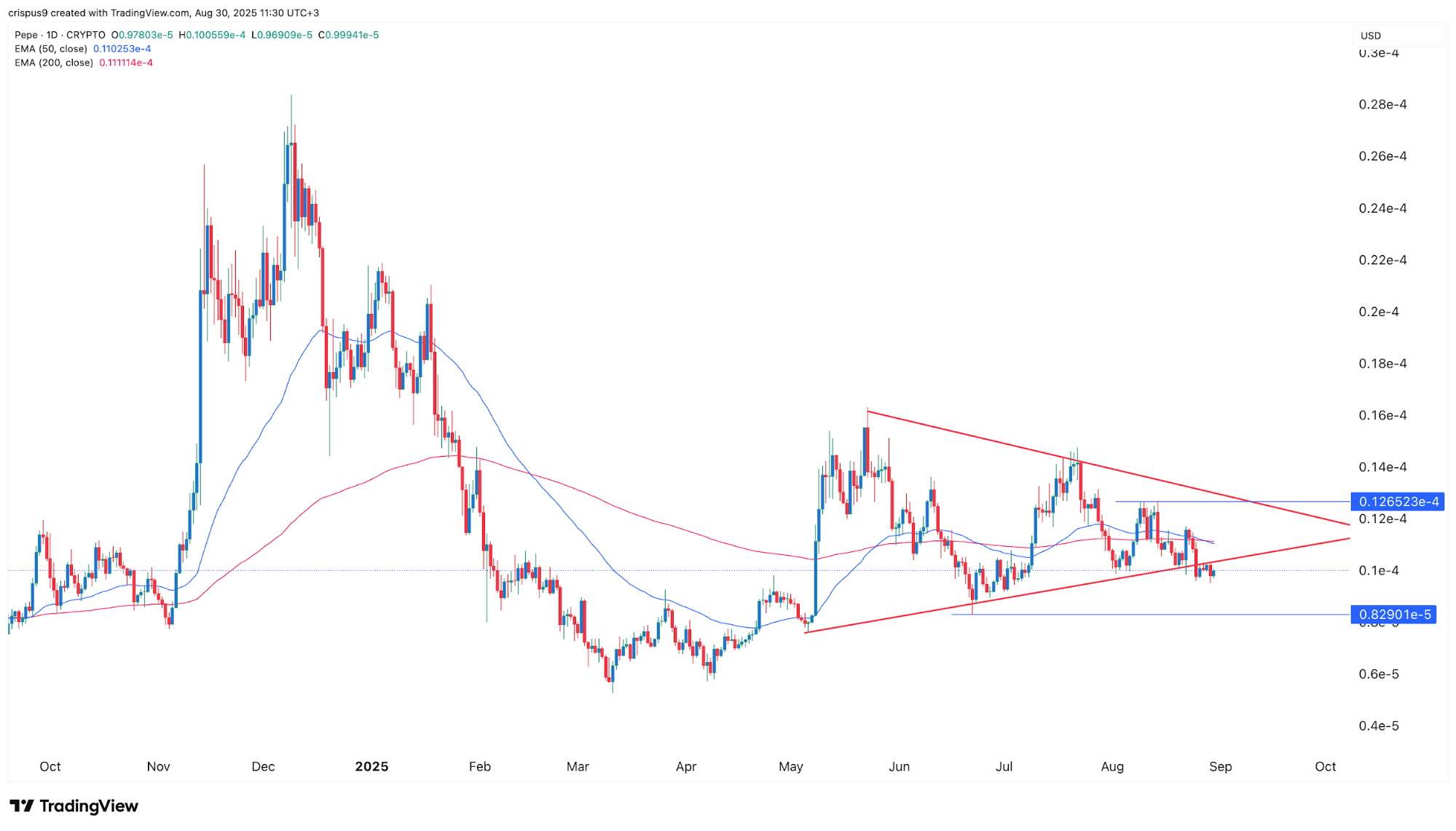
PEPE price chart. Source: Crypto.news
Pepe has moved below a key support level, while its weighted funding rate reportedly slipped to minus 0.011%, described as the lowest since August 24. The same source notes a decline in futures open interest from over $1 billion in July to $548 million, which may indicate reduced derivatives activity and weaker momentum.
According to recent data, Pepe has fallen by 7.09% in the past month. Commentary about “smart money” positioning and large-holder activity varies by methodology, and any PEPE price prediction remains uncertain and dependent on broader market conditions.
Shiba Inu news: SHIB remains under pressure amid mixed signals
Recent Shiba Inu news have left SHIB trading in a downward trend since February 2024, with the price below its 50-week simple moving average and under a falling resistance trendline. Its Open Interest-weighted funding rate has also been described as negative, which can reflect bearish sentiment in derivatives markets.
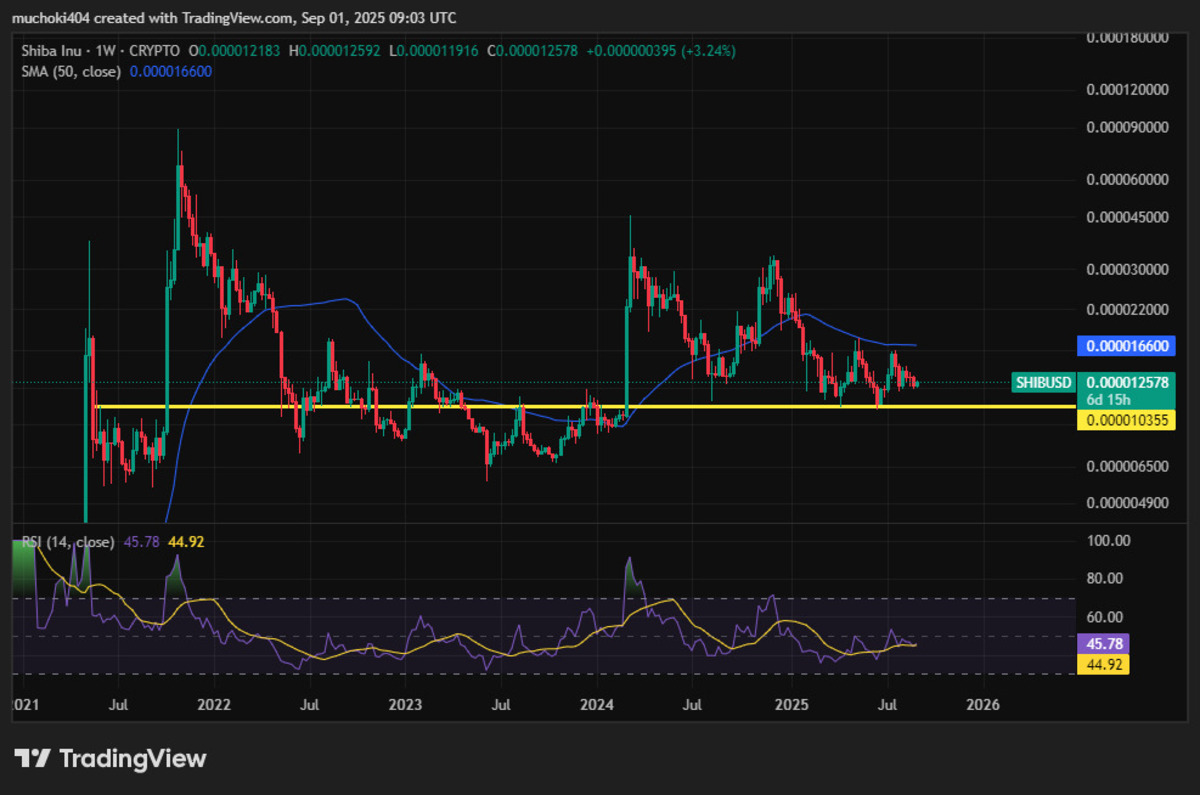
SHIB price analysis. Source: TradingView
Project and community commentary has pointed to possible technical patterns and ecosystem initiatives such as regional expansion and token burns, though their market impact is uncertain. SHIB is described as up 1.26% over the past month according to CoinMarketCap data.
Layer Brett: overview of project claims and features
Layer Brett is presented by its team as a meme-themed project built around Ethereum Layer 2 infrastructure, with the stated aim of reducing transaction costs and congestion associated with Ethereum Layer 1. As with any early-stage token, these claims should be evaluated against independent documentation and risk factors.
Project materials also describe interoperability features and decentralized governance, meaning holders may be able to participate in proposals and decisions. Specific implementation details and adoption levels can vary over time.
Layer Brett also references staking incentives. Any reward rates are determined by the project’s rules and market conditions, can change, and do not represent guaranteed returns.
The team further highlights a simplified user interface intended to reduce friction for participants in an early-stage token sale. Ease of use does not remove the risks associated with token participation, including price volatility and smart-contract risks.
Conclusion
Pepe’s recent weakening indicators and Shiba Inu’s extended downtrend illustrate how quickly sentiment can shift in meme-token markets. Metrics such as funding rates, open interest, and large-holder activity can provide context, but they do not determine outcomes on their own.
Layer Brett is one of several newer tokens drawing attention alongside established meme coins. Readers can review third-party listings such as CoinMarketCap and any primary documentation to understand how the project describes its token sale and staking mechanics. Figures cited in marketing materials may change and are not independently verified.
Project website (for reference): https://layerbrett.com
X (for reference): (1) Layer Brett (@LayerBrett) / X
This article is for informational purposes only and does not constitute financial or investment advice. This outlet is not affiliated with the project mentioned. Crypto assets are volatile and participation in any token sale or staking program involves risk; readers should do their own research and consider their personal circumstances.

