TL;DR:
- Payward and Franklin Templeton are collaborating to bring traditional financial products onchain, including tokenized equities, yield products, custody and institutional liquidity access.
- Payward’s xStocks framework, which has processed more than $30 billion since launch, will support actively managed onchain strategies.
- Kraken plans to integrate BENJI tokenized money market funds for collateral and cash management, making institutional adoption the key next test for both firms over coming months.
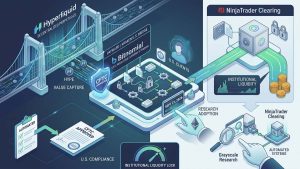
Payward and Franklin Templeton are teaming up to bring more traditional financial products onchain, joining a crypto-native infrastructure company with one of the asset management industry’s most established names. The collaboration centers on tokenized equities, yield products, custody and institutional liquidity access through Kraken’s OTC and Prime services. Traditional finance is entering crypto infrastructure more deliberately, but the setup is not just branding. It suggests Wall Street firms increasingly want programmable products that still carry familiar asset-management credibility, compliance expectations and operational guardrails for investors moving capital between old and new markets.
Payward and Franklin Templeton Target Onchain Utility
The partnership pairs Franklin Templeton’s investment management and tokenization experience with Payward’s trading, custody and onchain infrastructure stack. Payward’s xStocks framework, which has processed more than $30 billion in volume since its 2025 launch, will support actively managed onchain strategies developed with Franklin Templeton. Tokenized equities become the distribution layer, not the endpoint. The more strategic question is whether familiar investment strategies can become more useful once they are made programmable, transferable and composable across digital asset venues without losing the controls institutions require.

A major component is the planned integration of BENJI, Franklin Templeton’s tokenized money market fund suite, into Kraken’s platform. The funds could serve as collateral or cash-management tools for institutional trading clients seeking blockchain-based alternatives to traditional treasury workflows. Cash management is becoming an onchain use case, and that may matter more than speculative token exposure. If institutions can park capital, manage collateral and access liquidity through tokenized money market instruments, the boundary between crypto trading accounts and conventional operating cash starts to blur in practical, balance-sheet terms.
The collaboration also plans tokenized yield products for institutional investors and, where permitted, eligible retail users. That ambition raises the execution bar. Regulated yield is the difficult prize, because it must satisfy investor demand for transparency and programmability while navigating product eligibility, custody standards, jurisdictional limits and risk disclosures. The tie-up follows a broader Payward expansion across tokenized stocks, custody and payments, while Franklin Templeton continues building digital-asset capabilities around BENJI and blockchain-based fund infrastructure. The next test is adoption: whether these products become active financial rails or remain strategic announcements waiting for liquidity, regulation and user workflows to converge at institutional scale during the next market phase.