
TL;DR:
- The Central Bank of Norway concluded that there is no need to introduce a CBDC at this time.
- The decision is based on the fact that the Nordic country’s current payment system is “efficient and secure.”
- Norway will continue researching tokenization and monitoring CBDC development in the European Union.
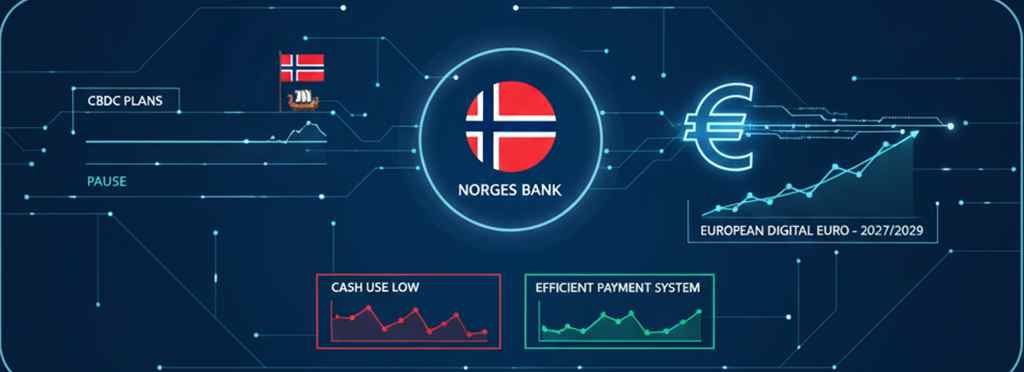
For now, there is no need to introduce a Central Bank Digital Currency (CBDC). This was determined by the Central Bank of Norway (Norges Bank), solidifying the conservative stance of Nordic authorities regarding such instruments. The verdict puts an end to several years of research by the Norwegian central bank into whether, and in what form, a CBDC might be needed.
Although the use of cash in the Nordic country has declined to one of the lowest levels globally, which added urgency to the debate, the Norges Bank cited the efficiency and security of the existing payment system as the main reason for its conclusion, which translates into a temporary postponement.
Governor Ida Wolden Bache stated in a release that they will be “ready to introduce a central bank digital currency if it becomes necessary to maintain an efficient and secure payment system,” while committing to cooperate with the financial industry and other central banks in this area.
Nordic Conservatism Versus Eurozone Advancement
The postponement by the Central Bank of Norway contrasts with the accelerated pace in other regions. While politicians in Norway and neighboring Sweden have been historically skeptical about issuing digital money, the European Central Bank (ECB) is moving steadily, expecting to launch a digital euro pilot in 2027 and conduct the first issuance as early as 2029, assuming the necessary legislation is approved.
Although Sweden called for a reconsideration of the idea of a possible e-krona, Norway prefers to adopt a watchful stance. It should be noted that the Norges Bank has not ruled out issuing a CBDC in the future.
In fact, it announced that it will publish a detailed report on its CBDC research and provide more detailed plans for further work during the first quarter of next year. The institution will continue monitoring research in key areas such as tokenization and other forms of digital money, while closely tracking international developments.
The decision reflects a confidence in its current contingency mechanisms and a desire to avoid introducing an instrument that could disrupt a system that already works well.
In summary, for Norway, this action is a strategic pause, not an abandonment, allowing it to observe the implementation process in the Eurozone and learn from its challenges before taking a definitive step.