TL;DR:
- Paolo Ardoino denied that Tether is allied with banks to restrict stablecoin interest in U.S. legislation.
- Traditional banks fear that yield-bearing stablecoins could trigger a massive flight of deposits toward the digital ecosystem.
- The dispute over digital asset rewards continues to block the progress of a comprehensive crypto market law.
Tether CEO Paolo Ardoino has pushed back against reports linking the world’s largest stablecoin issuer with the interests of traditional banking. Ardoino was emphatic in stating that his firm’s position is neutral, clarifying that its business model does not include yield sharing.
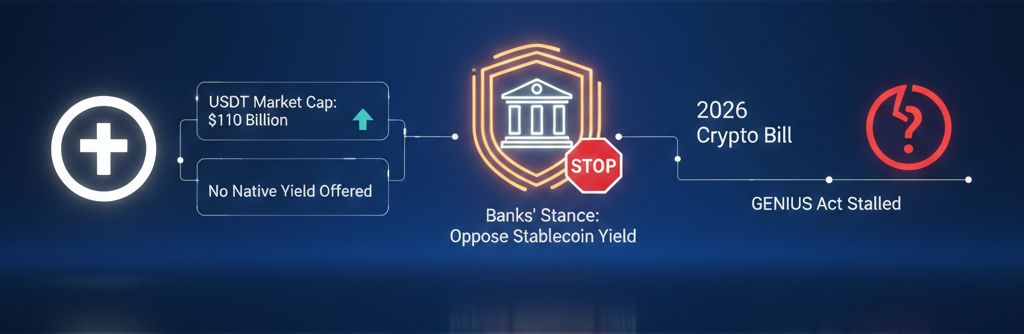
The executive emphasized that Tether “has no beef in this fight,” debunking rumors of a supposed alliance with the Senate Banking Committee. Notably, his statements come amid a heated debate over whether issuers should be required to share their profits with end-users.
Unlike its competitors, the firm focuses on maintaining USDT’s stability without entering the direct competition for deposits through interest rates. Consequently, its focus remains on liquidity and regulatory infrastructure rather than the dispute over yields.
The Legislative Conflict: Banking vs. the Crypto Industry
The primary point of friction so far is the GENIUS Act. This bill prohibits the direct payment of interest but allows for rewards through third-party platforms. This legal loophole has alerted banking entities, which view stablecoins as a direct threat to their balance sheets.
On the other hand, companies like Coinbase have withdrawn their support for certain versions of the bill due to excessive restrictions on DeFi rewards. This internal division within the private sector is delaying the consensus needed for the regulations to move forward in the U.S. Senate.
In summary, by remaining neutral, Tether seeks to protect its dominant position without alienating regulators or banks. Meanwhile, the future of crypto legislation continues to depend on how the complex dilemma of financial yields on the blockchain is resolved.