

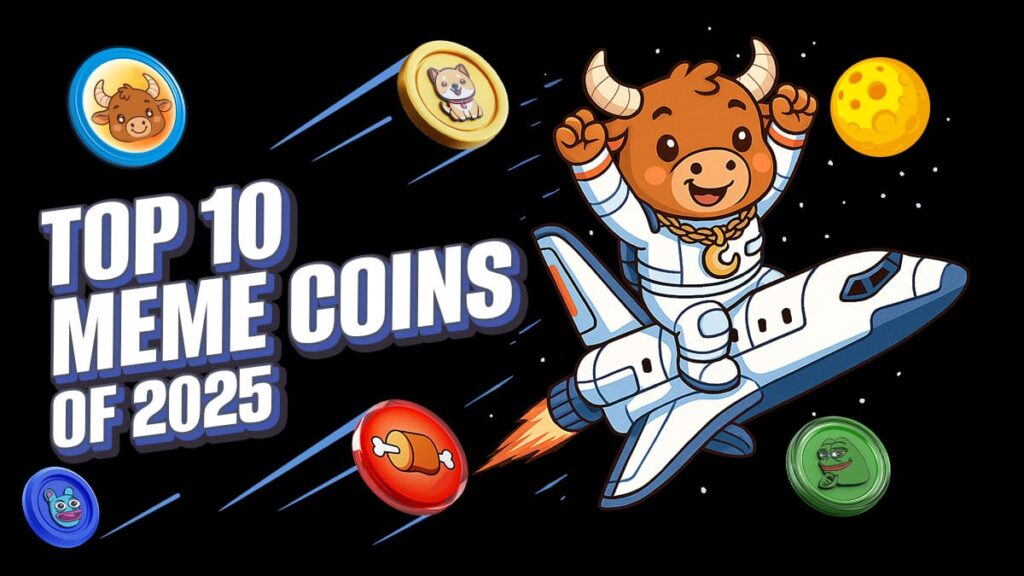
The best 100x crypto discussion often centers on speculation about where attention may shift next. Recently, MoonBull, Polkadot, and World Liberty Financial have been frequently mentioned across social channels. Each asset carries different risk profiles and levels of market maturity.
Polkadot has been climbing again, with reported trading activity of over $240 million in the last 24 hours. Meanwhile, World Liberty Financial, a newer project, has been attempting to stabilize after recent dips. As always, past market moves in meme tokens do not provide a reliable guide to future performance, and new tokens can carry outsized risks.
MoonBull is currently running a token sale, according to the project’s materials. Meme tokens such as Dogecoin and Shiba Inu have shown how online communities can drive large market valuations, but outcomes vary widely. MoonBull describes itself as combining meme branding with tokenomics features intended to support liquidity and supply management.
MoonBull ($MOBU) token sale: project-reported details
MoonBull ($MOBU) is being marketed by its team as a high-upside token, though such positioning is speculative and not independently verifiable. The project says its token sale is in “Stage 4,” with tokens priced at $0.00005168 and total proceeds crossing $250,000, along with more than 900 holders. These figures are project-reported and can change; they do not indicate future market performance and do not account for liquidity, market capitalization, or post-listing conditions.
According to the project, MoonBull ($MOBU) uses a transaction-fee model that allocates portions of activity to liquidity, holder distributions (often referred to as “reflections”), and token burns. Such mechanisms are design choices and do not guarantee price appreciation, liquidity conditions, or long-term viability.
How liquidity and fees are described by the project
MoonBull’s materials state that, on each trade, 2% is allocated to liquidity, 2% is distributed to holders, and 1% is burned. If implemented as described, these rules would affect circulating supply dynamics and distribution flows. Readers should note that tokenomics alone cannot prevent sharp price swings, smart-contract risks, or market manipulation.
The project also references staking and a referral program. Participation details, rewards, and terms are typically set by the issuer and may change; they should be reviewed directly in the project’s documentation and assessed against relevant risks.
Polkadot ($DOT): recent market context
Polkadot (DOT) remains one of the larger blockchain infrastructure projects by market capitalization. Trading at $4.24 in the figures cited here, Polkadot’s daily volume was described as rising by nearly 8% to more than $240 million, with a market cap of over $6.3 billion.
DOT previously reached an all-time high of $54.98 and is down over 92% from that level, while still more than 54% above a prior low of $2.70, based on the numbers referenced. These swings highlight how volatile even established crypto assets can be. Polkadot’s core focus is cross-chain interoperability, a continuing area of development across the industry.
Polkadot may appeal to market participants tracking infrastructure-focused networks, but any exposure to crypto assets involves risk and can lead to losses.
World Liberty Financial ($WLFI): recent market context
World Liberty Financial (WLFI) has positioned itself around U.S.-focused branding and community-building. In the figures cited here, it trades at $0.2006 with a market cap of over $5.4 billion.
WLFI’s volume was described as around $170 million over the past day, while its performance over the past week fell by more than 6%, compared with a wider market move of nearly 9% upward in the same timeframe. Relative comparisons can shift quickly and do not predict future performance.
The token’s all-time high was cited as $0.3313, and it is currently trading almost 40% below that level, while about 22% above a prior low of $0.164. Price recoveries are not guaranteed, and drawdowns can deepen in risk-off conditions.
WLFI is not a meme token in the same style as MoonBull and does not emphasize cross-chain infrastructure in the way Polkadot does. Market interest may depend on factors such as liquidity, exchange access, ongoing development, and broader sentiment.
Conclusion
MoonBull’s token sale has attracted attention online, and the project reports raising more than $250,000. Any claims about outsized returns should be treated as promotional messaging rather than analysis.
Polkadot remains a well-known infrastructure project with a longer operating history, while World Liberty Financial appears to be trading with mixed momentum in the period referenced. These assets differ substantially in maturity, liquidity, and risk, and readers should evaluate each on its own terms.
For More Information:
Website (for reference): Visit the Official MOBU Website
Social (for reference): Follow MOBU ON X (Formerly Twitter)
Frequently Asked Questions
What is MoonBull and what does the project say it is building?
MoonBull ($MOBU) is a meme-themed token project. Its team says it combines community-driven branding with tokenomics features such as liquidity allocations, holder distributions, and token burns. As with any early-stage token, these are project claims and should be reviewed independently.
How should readers interpret “boom” claims for meme coins?
Statements that a token is expected to “boom” are speculative. Meme tokens can move sharply in either direction, and outcomes are often driven by sentiment and liquidity conditions rather than fundamentals.
How does MoonBull’s staking system work?
MoonBull’s materials describe a staking program with an advertised variable APY and a staged rollout, alongside lockups and flexible unstaking options. Yield figures in crypto are not guaranteed and can change; readers should verify the terms and assess smart-contract and counterparty risks.
What makes Polkadot different from other cryptos?
Polkadot focuses on cross-chain interoperability, enabling different blockchains to communicate and transfer data, which remains a key area of development in the crypto space.
How should WLFI’s recent performance be interpreted?
WLFI’s recent price and volume data shows mixed momentum in the timeframe referenced. Relative underperformance versus peers can persist or reverse, and it should not be treated as a signal of future returns.
Glossary of Key Terms
- Token sale: An early-stage token sale, sometimes conducted before broader exchange availability.
- Staking: Locking tokens to earn rewards, subject to protocol and smart-contract rules.
- APY: Annual Percentage Yield; a quoted rate that may change and is not guaranteed.
- Referral Program: A marketing incentive system where participants may receive benefits for inviting others, subject to terms.
- Token Burn: Permanent removal of tokens from supply.
- Reflections: Distributions to token holders funded by transaction fees, where implemented.
- Governance: A system allowing token holders to vote on project decisions, where applicable.
This article is for informational purposes only and does not constitute financial or investment advice. This outlet is not affiliated with the project mentioned. Crypto assets can be highly volatile, and readers should conduct independent research and consider risks before making any decisions.

