


Some crypto market participants focus on “whitelist” or early-access lists and token sales as part of how new projects are introduced. These mechanics can affect who gets access first, but they do not indicate future performance and carry significant risk.
As Floki Inu showed how meme-themed tokens can gain visibility, some attention is shifting to earlier-stage projects that use allowlists before broader distribution. DOGEBALL ($DOGEBALL) is one project using a whitelist-based approach, and it describes planned gameplay features alongside an Ethereum Layer 2 component. Readers should treat project materials as promotional and independently verify any claims.
DOGEBALL ($DOGEBALL): Overview of the Whitelist Phase
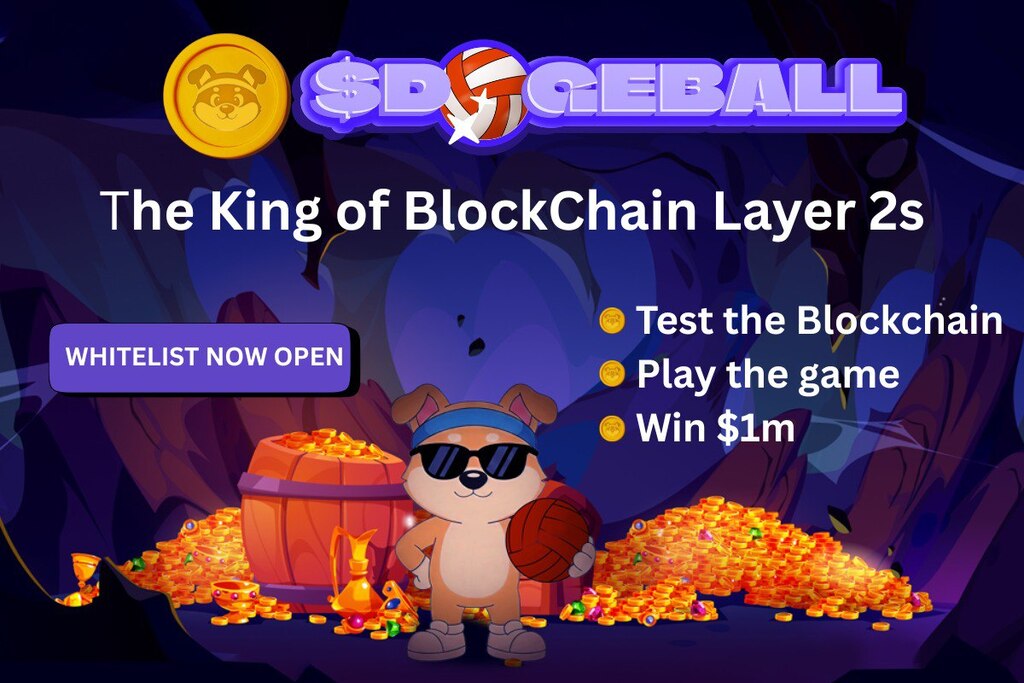
According to the project, DOGEBALL is using a whitelist (allowlist) phase before its token sale opens. The project states that approved participants may receive access ahead of a broader public phase, with a stated token-sale start date of 02 Jan 2026.
The project frames the approach as a way to manage access and participation. For context, whitelist-based launches are common in crypto, but participation terms, eligibility rules, and risks vary substantially between projects.

How the Project Describes Early Access
The project describes DOGEBALL as an ERC-20 token on Ethereum with a total supply capped at 80B tokens, and it describes the token-sale period as lasting about four months. It also mentions staged pricing and marketing incentives (such as referral- or bonus-style mechanics), which are common in token sales but are not independently verified here.
DOGEBALL also states that it has funded development of its website, a “DOGECHAIN” Layer 2 blockchain, and a DOGEBALL game. The project further states that at least 15% of token-sale funds are intended to be allocated to liquidity, though actual implementation depends on execution and market conditions.
In its materials, DOGEBALL combines meme-oriented branding with a dodgeball game described as playable on mobile, tablet, and PC. The project also advertises a $1M prize pool and a $500k top reward, and it states that it has a partnership with Falcon Interactive; these claims should be verified via primary sources and official announcements.
Floki Inu (FLOKI): From Meme Beginnings to Market Recognition
Floki Inu’s history is often cited as an example of how meme culture and online communities can contribute to a token’s visibility. Over time, FLOKI has been associated with branding efforts and gaming-related plans, alongside active community engagement.
At the same time, established tokens and newer projects typically have different risk profiles, liquidity conditions, and information availability. Past market performance does not predict future results, and comparisons across projects can be misleading.
Context: Whitelists, Token Sales, and Risk
Whitelist-based token sales can shape how a project distributes access and communicates with early participants, but they can also add complexity around eligibility, lockups, pricing stages, and disclosures. Outcomes are uncertain, and losses are possible.
In DOGEBALL’s case, project materials emphasize a whitelist phase, a planned token-sale timeline, and product components such as a game and a Layer 2 network. Readers considering any crypto token sale should review official documentation, confirm on-chain details where possible, and consider regulatory, technical, and market risks.
For reference, the project’s whitelist information is presented on the DOGEBALL website.
For More Information:
Website: https://dogeballtoken.com/
X: https://x.com/dogeballtoken
This article contains information about a cryptocurrency token sale. This article is for informational purposes only and does not constitute financial or investment advice. This outlet is not affiliated with the project mentioned.

