

Meme coins remain a visible part of crypto markets in 2025, with communities often forming around branding, social momentum, and token-design narratives. Names such as Snek, BullZilla, and MoonBull have drawn attention, though projects vary widely in maturity, transparency, and risk. Below is a summary of several tokens and the claims each project makes about its design and plans.
MoonBull says it is running a multi-stage token sale and has published details about its token supply, staking terms, and liquidity plans. Figures cited by the project include amounts raised and the number of wallet holders; these statements are not independently verified here, and early-stage token sales can carry significant risk.
1. MoonBull ($MOBU): “Mobunomics” and project-reported token design
MoonBull describes its “Mobunomics” framework as its approach to supply allocation and launch mechanics. According to project materials, the token supply is 73.2 billion tokens, with portions allocated to a multi-stage token sale, a staking program (the project advertises yields that may reach 95% APY), and liquidity that it says will be locked after launch. Terms such as yields, locks, and allocations can change and are not guarantees of performance.
MoonBull also describes a launch process in which tokens become claimable after liquidity is locked, alongside a short initial “claim delay” mechanism intended to limit immediate selling. As with any smart-contract feature, how such mechanisms operate in practice depends on execution, market conditions, and the underlying code.
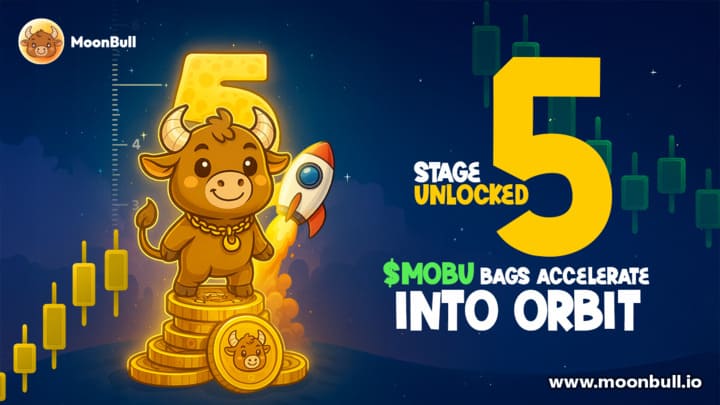
Stage 5 token-sale details (project-reported)
MoonBull describes its token sale as being in “Stage 5.” The project lists a token price and reports more than $450,000 raised and around 1,400 holders at the time of its marketing materials. Any projections about future prices, listings, or returns are inherently uncertain and should not be treated as forecasts.
2. Snek ($SNEK): Cardano-based meme token
Snek is a meme token associated with the Cardano ecosystem. Community activity, liquidity conditions, and exchange availability are key factors that typically influence trading dynamics for tokens of this type, though these can shift quickly.
Some token communities also promote supply-reduction features (such as burns) and staking programs; readers can review primary documentation and on-chain data where possible to understand what is implemented versus what is planned.
3. BullZilla ($BZIL): Token-sale marketing and project features
BullZilla is promoted as an Ethereum-based meme project and advertises features such as staking (the project has marketed yields up to 70% APY), burn mechanics, and referral-style incentives. As with any yield figure, advertised APY is not a guarantee and may depend on token emissions, lockups, and market conditions.
The project also frames its roadmap around community growth and deflationary mechanics. Readers may want to compare the project’s public documentation with independently verifiable signals such as contract addresses, audits (if any), and liquidity conditions.
4. La Culex ($CULEX): Meme branding with game/NFT plans
La Culex is a mosquito-themed meme coin that has been marketed through social channels, with the team describing plans for NFTs and game-style utilities. Such plans can be early-stage and may change substantially during development.
As with other emerging tokens, readers often evaluate timelines, delivered products, and the extent to which features are live versus aspirational.
5. Dogecoin ($DOGE): Established meme coin
Dogecoin remains one of the best-known meme coins and is widely traded across major exchanges. Compared with newer tokens, DOGE generally has deeper liquidity and broader recognition, though it can still be volatile.
Ongoing discussion around payments and integrations continues to shape sentiment, but market outcomes depend on adoption and broader crypto conditions.
6. Brett ($BRETT): Base ecosystem meme token
Brett is a meme token associated with Base. Community activity and ecosystem integrations (including NFTs and related campaigns) are often cited by supporters as drivers of attention, though these do not remove market or execution risk.
As with many meme tokens, visibility can be heavily influenced by social trends and exchange access.
7. Apecoin ($APE): Brand-linked token with meme-market overlap
Apecoin is a token linked to the Bored Ape Yacht Club ecosystem and is sometimes discussed alongside meme-market narratives due to its cultural visibility. Its market dynamics, however, can differ from early-stage meme tokens because it is more established and widely traded.
Commentary around community initiatives and partnerships can affect sentiment, but price movements remain uncertain.
Conclusion
This list highlights several meme-related tokens that are frequently discussed across different ecosystems. Tokens such as Dogecoin and Apecoin are relatively established compared with newer projects, while early-stage offerings like MoonBull, BullZilla, and La Culex rely heavily on project roadmaps and community-led narratives.
Where projects publish token-sale stages, staking terms, or liquidity-lock plans, readers can compare those claims with primary sources and on-chain data. Market outcomes are uncertain, and early-stage tokens can carry elevated risks including smart-contract risk, liquidity risk, and extreme volatility.
Project links (MoonBull; for reference):
Project website: Visit the Official MOBU Website
Project social account: Follow MOBU ON X (Formerly Twitter)
Frequently Asked Questions for meme coins
How do people track early-stage token sales?
People often monitor launchpads and token-listing aggregators, along with official project channels. Availability and reliability vary, so it can help to cross-check contract details, published documentation, and any third-party security reviews where available.
How should readers evaluate token sales in 2025?
Key considerations typically include who is behind the project, whether the smart contracts are published and reviewed, how liquidity is handled, token allocation and vesting terms, and whether features discussed in marketing materials are already live. None of these factors eliminate risk.
Can anyone predict which meme coin will outperform in 2025?
No. Meme-coin prices can be influenced by broader market cycles, liquidity, exchange access, and shifting social attention, and outcomes are highly uncertain.
What are common risks with meme coins?
Common risks include extreme volatility, limited liquidity, smart-contract vulnerabilities, concentrated token ownership, and changes to tokenomics or incentives over time. Readers may want to treat all marketing claims as unverified until corroborated.
Do meme coins have a long-term role in crypto markets?
Some meme-coin communities persist and evolve, while others fade quickly. Whether a project lasts often depends on sustained user interest, credible development, and market conditions.
Glossary of Key
- Token sale: A fundraising distribution of tokens that may occur before or alongside exchange availability.
- Liquidity Lock: Smart-contract mechanism intended to restrict access to liquidity for a specified period.
- APY: Annual Percentage Yield; a quoted rate for staking or reward programs that may change and is not guaranteed.
- Deflationary: Token model designed to reduce circulating supply over time (for example, via burns), depending on implementation.
- Governance: Voting mechanisms that may allow token holders to influence project decisions, depending on the system’s design.
This article is for informational purposes only and does not constitute financial or investment advice. This outlet is not affiliated with the project mentioned. As with any initiative within the crypto ecosystem, readers may wish to review primary sources and consider both potential benefits and risks.

