

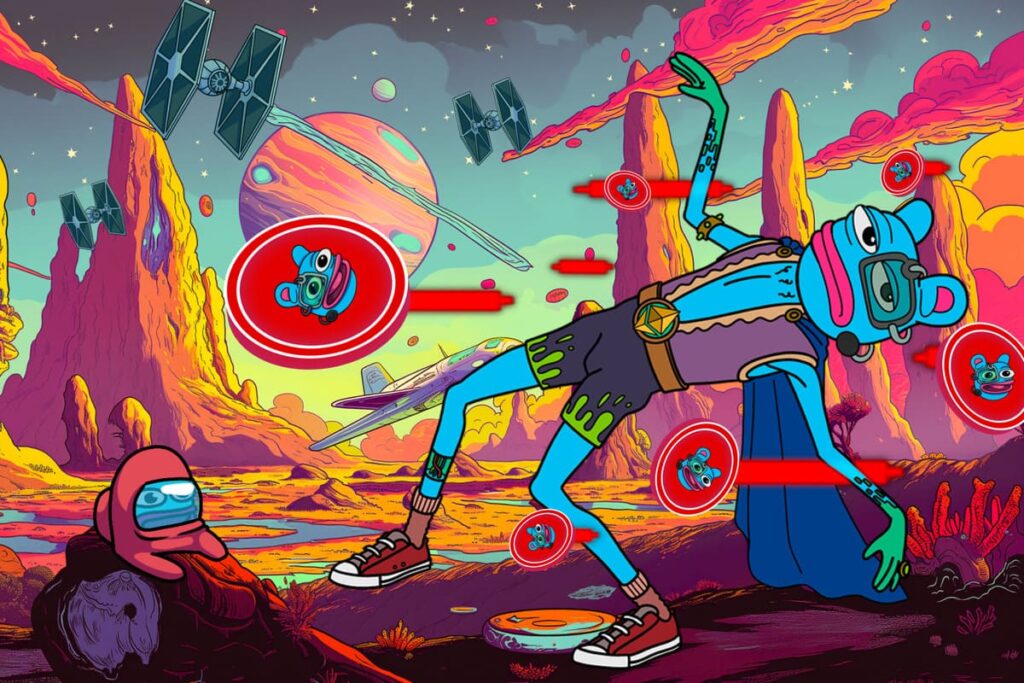
Market attention in crypto can shift quickly, and 2025 has introduced another newly launched project being discussed online. Layer Brett is described as an Ethereum layer 2 meme token with a token-sale price of $0.0055 per $LBRETT, according to the project’s website. The sale has been promoted by the team as an early-stage fundraising event.
Project materials frame it as an alternative to more established assets such as VET, LTC, and LINK, although these tokens differ substantially in history, adoption, and risk profile.
Why Layer Brett is being discussed
Many meme-token projects are driven primarily by community interest, and Layer Brett’s team says it is being built with additional utility. According to project statements, it is designed as an Ethereum layer 2 network intended to reduce transaction costs and increase throughput. The project has advertised targets of up to 10,000 transactions per second and fees around $0.0001, though such figures are typically dependent on network conditions and are not independently verified in this article.
The project also promotes an optional staking program and has advertised a headline yield figure of around 765% APY. Staking rates can change, may depend on participation terms, and do not guarantee future returns.
What the project highlights
Project materials state that the token sale supports wallet-based purchases using ETH, USDT, or BNB. The same materials describe a roadmap that mentions gamified staking, NFT features, and bridging tools. They also reference marketing incentives, including a promotional giveaway described as up to $1 million.
The team’s community-focused framing differs from how longer-running networks such as VET, LTC, and LINK are typically presented, but comparisons across projects may be limited because they serve different markets and use cases.
What is VeChain (VET)?
VET powers the VeChain network, which focuses on enterprise supply chain use cases and data transparency. VET is commonly referenced as the network’s value-transfer and utility token in that ecosystem.
VeChain supports smart-contract functionality and has highlighted corporate and institutional collaborations over time. Like many digital assets, VET’s market performance has fluctuated significantly across cycles.
What is Litecoin (LTC)?
LTC, sometimes called “digital silver,” is one of the older cryptocurrencies. It was built for peer-to-peer payments and has faster block times than Bitcoin, with an established user and developer community.
Litecoin has seen multiple periods of higher and lower market activity since launch, and its price history reflects broader market conditions as well as coin-specific developments.
What is Chainlink (LINK)?
LINK is associated with Chainlink’s decentralized oracle services, which are designed to help smart contracts access off-chain data. The network is used across parts of the DeFi and Web3 ecosystem.
As with other large-cap cryptoassets, LINK’s market performance has varied over time and should not be interpreted as an indicator of future results.
Notes on pricing discussion
Layer Brett is marketed at $0.0055 per $LBRETT during its token sale, and the project has stated that it intends to pursue exchange listings in the future. Any expectations about future price movements or listing outcomes are speculative and uncertain. The team has also described a fixed supply of 10 billion tokens, alongside staking and other features.
Readers should treat forward-looking statements, including price targets circulating on social media, as unverified and not predictive.
Conclusion
VET, LTC, and LINK are established projects with distinct use cases, while Layer Brett is a newer token whose claims and roadmap are primarily based on project-provided information. As with any newly launched crypto project, outcomes depend on execution, market conditions, and user adoption.
This article contains information about a cryptocurrency token sale. This outlet is not affiliated with the project mentioned. Readers may wish to conduct their own research and consider the risks before making any decisions. This article is for informational purposes only and does not constitute financial or investment advice.

