TL;DR:
- The National Bank of Kazakhstan will deploy the National Crypto Analytics Hub on its SupTech supervisory architecture.
- The infrastructure will integrate with the state Anti-Fraud Center, which logged 80,871 suspected fraud incidents as of January 1, 2026.
- The tool will provide verification and analytical capabilities to commercial banks, law enforcement agencies, and authorized digital asset service providers.
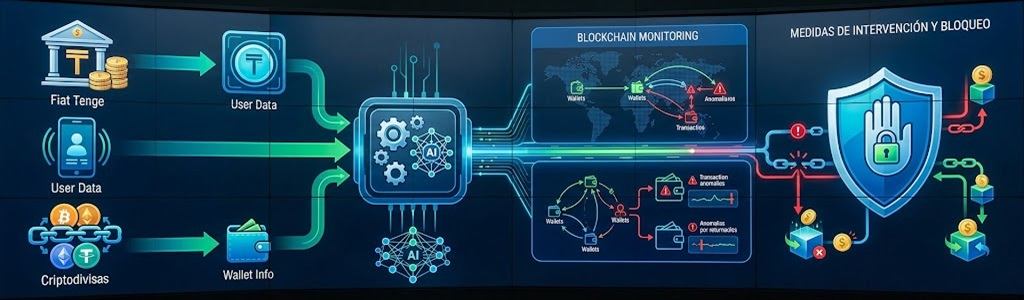
The National Bank of Kazakhstan announced this Tuesday that it is developing a crypto analytics hub aimed at monitoring intangible asset transactions, fiat payments, wallets, and user identity data.
The development was revealed by central bank governor Timur Suleimenov during a government cabinet meeting reported by the Qazinform news agency. The official specified that the infrastructure will run on the central bank’s supervisory technology (SupTech) platform.
The system will process transactional data in both tenge and cryptocurrencies, linking operations to customer profiles and registered wallet addresses. Official figures indicate that the central bank expects to transition the full supervisory cycle into this technical environment during the second half of 2026.
Commercial banks, judicial bodies, and licensed platforms will have direct access to the system’s verification modules.
Technical Integration with the Anti-Fraud Center
The new analytics hub will operate interconnected with the central bank’s Anti-Fraud Center, a mechanism established in August 2024 to flag suspicious activity. According to official data from the National Bank, more than 200 entities—including commercial banks, telecom operators, and law enforcement agencies—were already linked to this network by July 2025.
As of January 1, 2026, the anti-fraud platform logged 80,871 case files related to financial scams and 19,810 incidents tied to illegal gambling and pyramid schemes.
Through these coordinated interventions, regulatory agencies blocked 2.8 billion tenge by early 2026. State reports also show that more than 500 million tenge was reimbursed to victims of fraudulent transactions.
Integrating crypto analytics aims to close traceability gaps between fiat deposits and transfers across decentralized networks. According to the source, authorities are assessing artificial intelligence tools to run behavioral analysis and detect anomalies at an early stage.
Strict Oversight and Regulated Digital Services
The technical rollout follows a dual strategy of cracking down on underground operators while formalizing permitted services. Throughout 2025, Kazakh authorities blocked more than 1,100 unauthorized web portals offering digital asset exchange services.
In an earlier enforcement operation in 2024, regulatory watchdogs shut down 36 illicit platforms with a cumulative turnover of 60 billion tenge. During those proceedings, officials seized 4.8 million USDT tied to unlicensed operations.
In parallel, the country continued onboarding regulated channels into its formal financial perimeter. In November 2025, Bybit Kazakhstan rolled out a P2P platform supervised by the Astana Financial Services Authority (AFSA), routing fiat funds exclusively through corporate accounts at Halyk Bank.
Furthermore, the AFSA launched a pilot program in September 2025 allowing corporate regulatory fees to be paid using U.S. dollar-pegged stablecoins.
The government’s roadmap also covers building a national cryptocurrency reserve, funded partly by assets recovered in criminal proceedings. Data from the National Investment Corporation indicated in January 2026 that the agency allocated $350 million from its international reserves toward indirect cryptoasset investments through specialized hedge funds.
Kazakhstan’s legal framework grants supplemental electricity quotas to industrial Bitcoin miners that transfer a portion of their mining rewards into this state reserve.
Authorities are scheduled to conclude the full supervisory cycle deployment on the SupTech platform by the end of 2026. With this milestone, the National Crypto Analytics Hub will achieve full operational synchronization with the country’s banking records and telecommunications databases.