TL;DR:
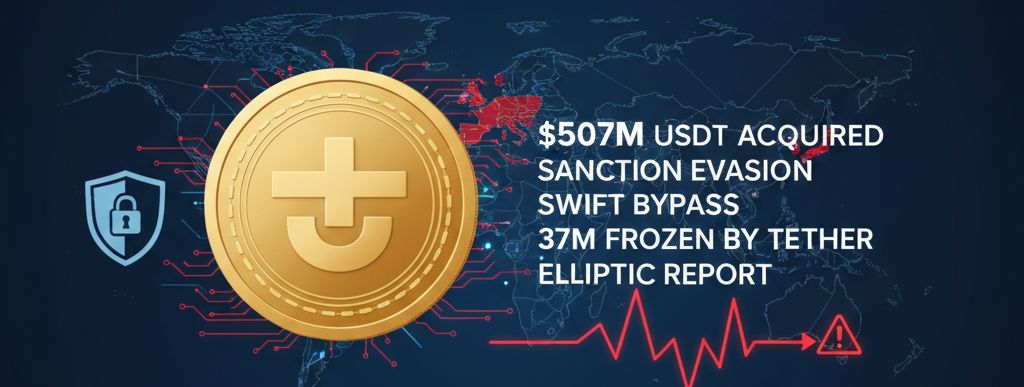
- The Central Bank of Iran accumulated at least $507 million in USDT over the past year.
- Operations used intermediary entities and wallet networks to inject liquidity into the rial.
- Tether has frozen approximately $37 million linked to these illicit regime activities.
A recent report by Elliptic has exposed the use of USDT by the Central Bank of Iran as a tool to bypass the traditional financial system. The investigation reveals that the entity acquired over $500 million in Tether’s stablecoin to settle international trade transactions.
Leaked documents reveal that purchases were identified through brokers and entities such as Modex, using United Arab Emirates dirhams for payment. Consequently, the Iranian regime managed to build a “sanctions-proof” network of wallets that replicates the utility of dollar accounts but remains out of reach for U.S. authorities.
This financial move sought to facilitate foreign trade in the face of the SWIFT system blockade while also stabilizing its local currency. By injecting USDT into national exchanges like Nobitex, the central bank attempted to slow the devaluation of the Iranian rial by providing digital dollar liquidity.
Complex Transactions and Tether’s Response to the Report
Following a massive hack of Nobitex in mid-2025, the flow of funds shifted toward cross-chain bridge services and decentralized platforms. This tactic allowed the Central Bank of Iran to convert TRON-based tokens to the Ethereum network, attempting to obfuscate the money trail before moving it into other digital assets.
Tether, for its part, reaffirmed its zero-tolerance policy regarding the illegal use of its assets and highlighted its constant collaboration with law enforcement. To date, the company has frozen more than $3.8 billion linked to criminal activities, including accounts directly tied to this Iranian case.
In summary, this report confirms the versatility of stablecoins as tools that offer both privacy to evade controls and transparency for forensic detection. While the market assimilates these revelations, regulatory pressure on digital asset issuers continues to intensify globally.