

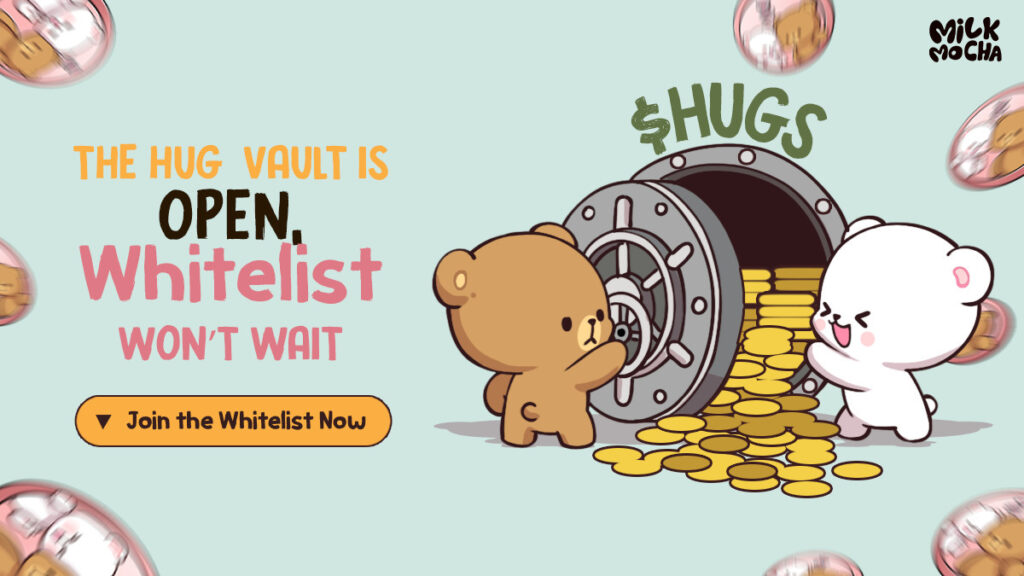
Crypto communities often focus on price charts, new listings, and short-term market moves. Less attention is sometimes paid to projects that attempt to build around brand recognition and online culture, where engagement can matter as much as technical features.
Milk & Mocha is an established character brand with a large online following. The team behind a token called $HUGS says the project is connected to the Milk & Mocha community and is intended to support digital collectibles and other on-chain features. As with any brand-related crypto initiative, readers should verify the nature of any licensing or partnership claims through primary sources.
According to project materials, $HUGS is being positioned around NFTs, games, a staking program, charitable donations, and community governance. The team also says an email-based allowlist is available for an early-stage token sale and that it does not require identity verification (KYC). Those details can change and should be confirmed directly with the project.
$HUGS and the Milk & Mocha brand: what the team is proposing
The project’s core pitch is that existing fan communities can translate into on-chain participation. In this case, the team argues that Milk & Mocha’s existing reach and ongoing use in messaging and social content could support engagement around a token ecosystem.
The team describes $HUGS as a utility token intended to be used across mini-games, digital collectibles, staking, and a DAO-style voting system. These features are roadmap items and product claims, not guarantees of adoption or future value.
Project documents describe an early-stage token sale with multiple pricing stages, increasing prices over time, and a mechanism that would remove unsold tokens from circulation. The same materials also reference buyer and participation-based incentives. Readers should treat these as project-stated tokenomics and marketing terms, and review any smart-contract and audit information independently where available.
How the project describes the NFT and game ecosystem
The team says the ecosystem will include NFT releases and in-app uses for collectibles, such as access to games, upgrades, and seasonal events. The project also describes token “burn” mechanics connected to in-game spending.
If launched as described, these mechanics would make parts of the experience dependent on continued development, user activity, and the project’s ability to maintain the underlying platforms. As with other consumer-facing crypto products, the practical value of NFTs and in-game items may vary significantly over time.
Staking program (project-reported terms)
The project says it intends to offer staking rewards and has promoted a headline rate of 50% APY. Any APY figure is not guaranteed and may depend on factors such as emissions schedules, participation levels, token price volatility, and changes to program rules. Users should review the full terms, including lockups, withdrawal conditions, and smart-contract risks, before engaging with any staking product.
Project materials also mention additional incentives for higher participation (for example, badges, NFTs, or token rewards). These should be treated as promotional incentives and may be subject to change.
Mini-games, spending mechanics, and token burns
The team describes mini-games and tournament-style activities where tokens could be spent to participate or unlock items. It also claims spent tokens would be allocated across different purposes such as rewards, token burns, and funding for ongoing development.
Whether these mechanics lead to sustained engagement depends on product execution and user retention, and does not provide assurance about token performance.
DAO voting and charitable donations
$HUGS is also presented as a governance token for a community voting system (referred to as a DAO). The team says token holders would be able to vote on certain decisions, including topics like NFT themes, staking parameters, and which charities to support.
The project states that charitable donations would be tracked transparently. Readers should look for verifiable reporting (such as transaction records and confirmations from recipient organizations) when assessing any donation claims.
Participation details and risks
The team says the early-stage sale uses an allowlist/whitelist model with email-based registration and no KYC, and that there are no maximum allocation caps. Participation mechanics, eligibility rules, and token distribution terms can materially affect risk. Users should confirm these details, understand any jurisdictional restrictions, and consider the security implications of sharing personal information or connecting wallets to third-party websites.
This article is for informational purposes only and does not constitute financial or investment advice. This outlet is not affiliated with the project mentioned.
Project links (for reference):
This article is for informational purposes only and does not constitute financial or investment advice. This outlet is not affiliated with the project mentioned.

