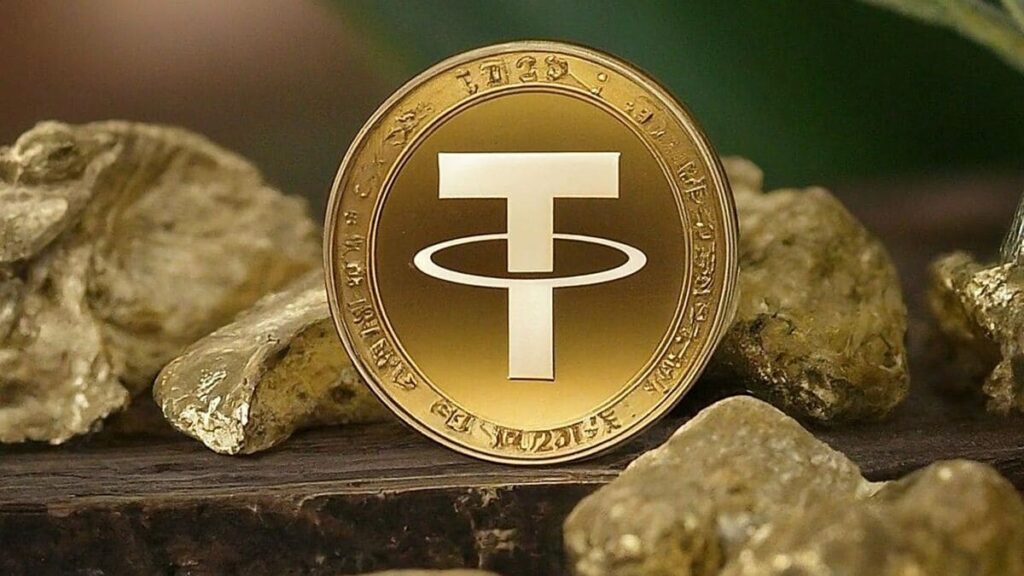
The meeting point between physical gold and blockchain markets has stopped being a theoretical discussion. In 2026, the integration is visible in daily trading activity, especially through gold-backed tokens paired with Tether.
This arrangement allows investors to move between a stable digital dollar and tokenized bullion without leaving the crypto environment. This shift changes how price discovery works, how liquidity is distributed, and how portfolios are adjusted in real time. It also introduces a practical bridge between traditional commodities and digital assets that operate around the clock.
The basic structure of tokenized gold is straightforward
Each token represents a direct claim on a defined amount of physical gold stored in professional vaults. Issuers typically hold bars that meet London Good Delivery standards, which require at least 99.5 percent purity and standardized weights.
These bars sit in secure vaults, often in Switzerland or the United Kingdom, under insurance coverage and audit procedures. This arrangement aims to mirror physical ownership while avoiding the logistical burden of storage and transport. The blockchain layer simply records the digital representation and keeps the token supply aligned with the metal held in reserve.
Digitization expands access. Physical gold is hard to divide, but tokens can be split into small fractions. Investors can hold a fraction of a troy ounce, sometimes down to several decimal places.
This fractional structure lowers the capital threshold and opens participation to smaller traders. It also changes how gold behaves inside a portfolio, because entry and exit become as simple as transferring a token. In practical terms, gold becomes as transferable as any other crypto asset, while still referencing a tangible reserve.
The Gold-USDT pair has become the central trading route
Tether functions as a stable unit of account within crypto markets, and pairing it with tokenized gold creates a liquid exchange channel.
Centralized exchanges such as Binance, OKX, and Bybit host large volumes of this trading. Fees often remain below those charged by traditional bullion dealers. This cost difference encourages traders to use tokenized gold for short-term allocation shifts rather than only long-term storage. Liquidity depth also reduces slippage during volatile sessions, which matters when macroeconomic news breaks.
Automated market makers allow liquidity providers to allocate capital within price ranges near the current gold value. This structure improves efficiency compared with earlier models that spread liquidity across wide price intervals. As a result, spreads tighten and trading becomes more precise, even for an asset traditionally viewed as slow moving. The effect is subtle but measurable: tokenized gold begins to behave more like a liquid currency than a heavy commodity.
Two issuers dominate the market. Tether offers XAUt, which prioritizes liquidity and multi-chain support. Paxos Trust Company issues PAXG, which emphasizes regulatory oversight and audit transparency. Each appeals to different participants.
Active traders often prefer XAUt for its integration with the Tether network, while institutional investors lean toward PAXG due to regulatory clarity. This division reflects a broader split in crypto markets between speed and compliance. Neither approach eliminates risk, but both provide structured exposure to physical gold.

Tokenized gold also plays a role in price discovery. Traditional bullion markets close during weekends, leaving gaps when geopolitical events occur. Blockchain markets continue operating. During several episodes in 2025 and 2026, tokenized gold moved before the physical spot market reopened.
These weekend price signals often acted like a compass pointing toward Monday’s direction. This does not replace traditional benchmarks, but it shows how continuous trading alters information flow. In a market influenced by global news, time no longer stops.
Arbitrage keeps token prices aligned with physical gold. When tokenized gold trades above the spot price, institutional desks can buy bullion, mint tokens, and sell them for USDT. When the token trades below spot, the reverse process occurs.
This loop helps maintain the one-to-one relationship between tokens and reserves. It also demonstrates that tokenized gold does not float independently; it remains tied to the underlying metal through financial incentives.
Macroeconomic conditions explain the growing interest
Gold climbed sharply between 2025 and early 2026, reaching levels above five thousand dollars per ounce. Inflation concerns, rising debt, and geopolitical tension pushed investors toward defensive assets. During periods of uncertainty, tokenized gold offered speed without sacrificing the traditional hedge role of bullion. Capital often rotated from volatile crypto assets into gold tokens, then moved back when risk appetite returned. This flow resembles a tide that shifts with sentiment.
Compared with exchange-traded funds, tokenized gold removes some constraints. ETFs trade during market hours and settle on a delayed basis. Tokens settle within minutes and remain tradable at any time. Physical gold avoids counterparty exposure but requires storage and insurance. Tokenization sits between these models, combining direct ownership claims with digital mobility. For many investors, this hybrid approach feels practical rather than ideological.

Risks remain. Custody is centralized, and investors must trust the issuer. Smart contract vulnerabilities, although audited, cannot be dismissed. Regulatory rules may also change, affecting cross-border transfers or redemption. These factors remind participants that tokenized gold is not a perfect substitute for physical ownership. It is a new instrument with its own balance of convenience and exposure.
Institutional interest continues to grow
The proposal known as “Gold as a Service,” promoted by the World Gold Council, seeks to standardize custody and token issuance. The idea is to connect vaults, issuers, and financial platforms through shared infrastructure. If implemented widely, this model could make different gold tokens interchangeable, like standardized units of metal. Such interoperability would reduce fragmentation and attract larger participants.
Gold has existed as a store of value for centuries, while blockchains operate at digital speed. Their convergence produces a tool that blends tradition with immediacy. In a market defined by constant information flow, the ability to trade gold at any hour carries practical weight. Investors no longer need to wait for market openings to adjust exposure.
Tokenized gold paired with USDT does not replace physical bullion, nor does it replace other digital assets. Instead, it forms a third channel. It allows capital to move quickly between safety and risk, between tangible reserves and digital liquidity. This quiet transformation suggests that the boundary between commodities and crypto is becoming thinner. The metal remains the same, but the rails that carry it have changed.