


Comparisons between new crypto projects and past market moves such as Shiba Inu’s are common, but they can be misleading. In digital assets, some tokens have posted sharp gains over short periods, but outcomes vary widely and depend on timing, liquidity, and broader market conditions. Shiba Inu’s early trading history is often cited as an example of how volatility and community interest can contribute to large price swings.
Today, Apeing (APEING) is being promoted by its creators as an early-stage project planning a token sale. Project materials also describe an allowlist (often marketed as a “whitelist”) process that may affect access or allocations, depending on how the sale is structured. As with any fundraising or token distribution, terms can change and participation involves risk.
Apeing and its planned token sale and whitelist
According to the project’s website, Apeing plans to use a staged token sale with an allowlist/“whitelist” component. The project describes limited allocations for some stages and states a planned initial token price; it also references a later “listing price.” These figures are project-reported and are not a guarantee of future market pricing or returns.

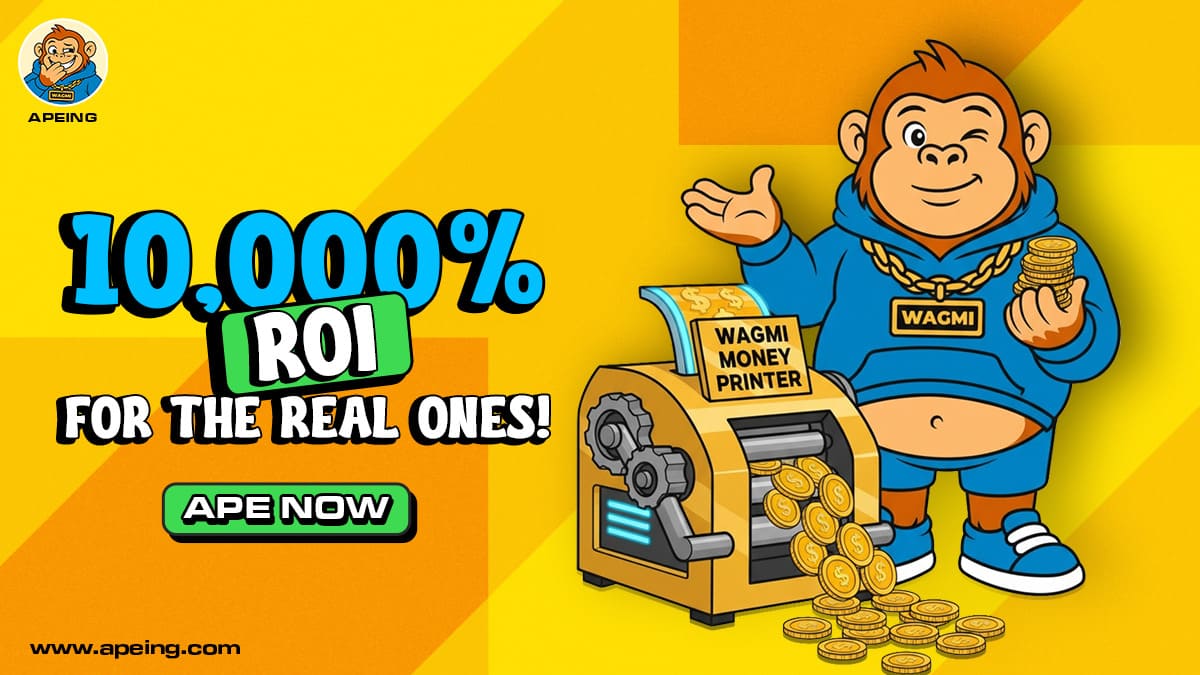
The project also uses marketing language that emphasizes limited availability and early participation. Readers should treat any projected upside scenarios, percentage-return claims, or comparisons to past meme-coin runs as promotional messaging rather than verified analysis.
The Shiba Inu breakthrough that few expected
Shiba Inu entered the market at a very small unit price and initially received limited attention. Over time, social interest and broader market conditions contributed to significant volatility, including periods of rapid appreciation.
That history is often used as a reminder that meme tokens can move quickly in either direction, and that price performance in one cycle does not reliably predict outcomes for other projects.
Why Apeing is being compared to earlier meme-coin cycles
Apeing is presented by its promoters as a new candidate in the meme-coin category and is being discussed alongside earlier examples such as Shiba Inu. Any similarity is interpretive: projects can differ substantially in liquidity, distribution, execution, and market reception, especially during early fundraising stages.
Conclusion
Shiba Inu’s past price history illustrates how speculative tokens can experience extreme volatility. Apeing’s planned token sale and allowlist/“whitelist,” as described by the project, are part of its early distribution approach, but they do not indicate future performance. Anyone evaluating participation may wish to review the project’s documentation, token distribution terms, and risk disclosures.

For More Information:
Website: Apeing project website (for reference; consult official sources).
Telegram: Apeing Telegram channel (link removed in this editorial version)
Twitter: Apeing account on X (formerly Twitter): https://x.com/apeingcoin (for reference)
FAQs about token sales and common claims
How do people evaluate cryptocurrencies?
There is no single “best” cryptocurrency for every person or market condition. People typically research factors such as project documentation, token distribution, on-chain activity, liquidity, security history, and regulatory risks, and they should be cautious about content that frames outcomes as certain.
What are common risks when evaluating meme coins?
Meme coins are highly speculative and can be driven by social trends rather than fundamentals. When researching them, readers may look at liquidity, exchange availability, token supply dynamics, and transparency about teams and contracts, while recognizing that sharp losses are common.
Why are “1000x” claims unreliable?
“1000x” claims are marketing language and are not reliable forecasts. Any asset can rise or fall significantly, and readers should treat extreme upside targets as speculative and uncertain rather than a basis for decision-making.
Why are specific price targets uncertain?
Price targets (including reaching “1”) depend on many variables, including market capitalization, token supply, liquidity, and broader market conditions. Predicting specific price levels by a certain year is inherently uncertain.
Why are year-ahead rankings speculative?
Year-ahead rankings are speculative. Readers can focus on understanding risk, comparing transparent disclosures, and avoiding content that relies on urgency or guaranteed-outcome framing.
Summary
Shiba Inu’s history is frequently referenced as an example of how meme tokens can experience periods of extreme volatility. Apeing (APEING) is described by its promoters as an early-stage project planning a token sale and allowlist/“whitelist” access; the project also publishes staged pricing and allocation details. These details are project-reported and may change, and they do not imply or guarantee future price performance.
This article contains information about a cryptocurrency token sale. This outlet is not affiliated with the project mentioned. As with any initiative within the crypto ecosystem, readers are encouraged to do their own research and carefully consider the risks involved. This article is for informational purposes only and does not constitute financial or investment advice.

