TLDR
- The sector’s total capitalization has hit a historic record, driven by strong growth in September and December.
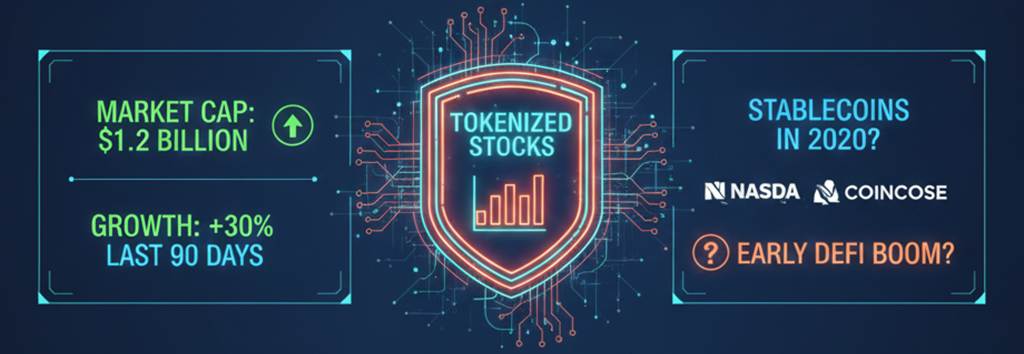
- Token Terminal analysts compare the sector’s current state to that of stablecoins in 2020.
- Giants like Nasdaq, Coinbase, and BlackRock lead the integration of traditional assets into blockchain networks.
Tokenized stocks have seen a meteoric rise. Data from Token Terminal indicates that the combined market capitalization of these assets has reached $1.2 billion, marking a milestone in the adoption of Real World Assets (RWA).
This growth suggests that traditional equities on the blockchain could be the next major catalyst for mass adoption, following in the footsteps of Bitcoin and stablecoins.
Industry experts point out that tokenized stocks are currently in a position similar to where stablecoins were in 2020. That year, stablecoins were an emerging niche that has now grown into a $300 billion industry.
The ability to offer instant settlement, 24/7 trading, and fractional ownership is attracting both retail investors and large financial institutions seeking greater operational efficiency.
Institutional Momentum: From DeFi Protocols to the Nasdaq Exchange
The definitive takeoff of tokenized stocks was consolidated following strategic moves by key players. In September, Backed Finance launched its xStocks suite on Ethereum, integrating nearly 60 tech stocks through alliances with Kraken and Bybit.
Added to this is Securitize’s announcement regarding plans for compliant on-chain trading of public equities, and Ondo Finance’s intention to deploy ETFs and U.S. securities on the Solana network in early 2026.
The strongest signal of this shift comes from Nasdaq, which has already filed with the SEC for permission to offer tokenized stocks directly on its platform. Along with Coinbase’s plans to transform into an “everything exchange,” it is clear that traditional financial infrastructure is merging with distributed ledger technology.
In summary, as the market matures, the possibility of owning a fraction of a Wall Street company through a digital token is moving from a futuristic vision to a global financial reality.