

Evaluating crypto projects in 2025 often means looking past marketing and focusing on utility, development progress, and how clearly a team communicates what it is building. Some networks are known for long-running reliability, while others emphasize early product demos and community testing ahead of broader availability.
Across early-stage token sales and established networks supporting real-world applications, the market includes a wide range of approaches and risk profiles. Below is a look at four projects that are frequently discussed—BlockDAG, Litecoin, Chainlink, and Cardano—highlighting what each is known for and the information that is publicly described by their teams and communities.
1. BlockDAG: Exchange Simulation and Early Product Preview
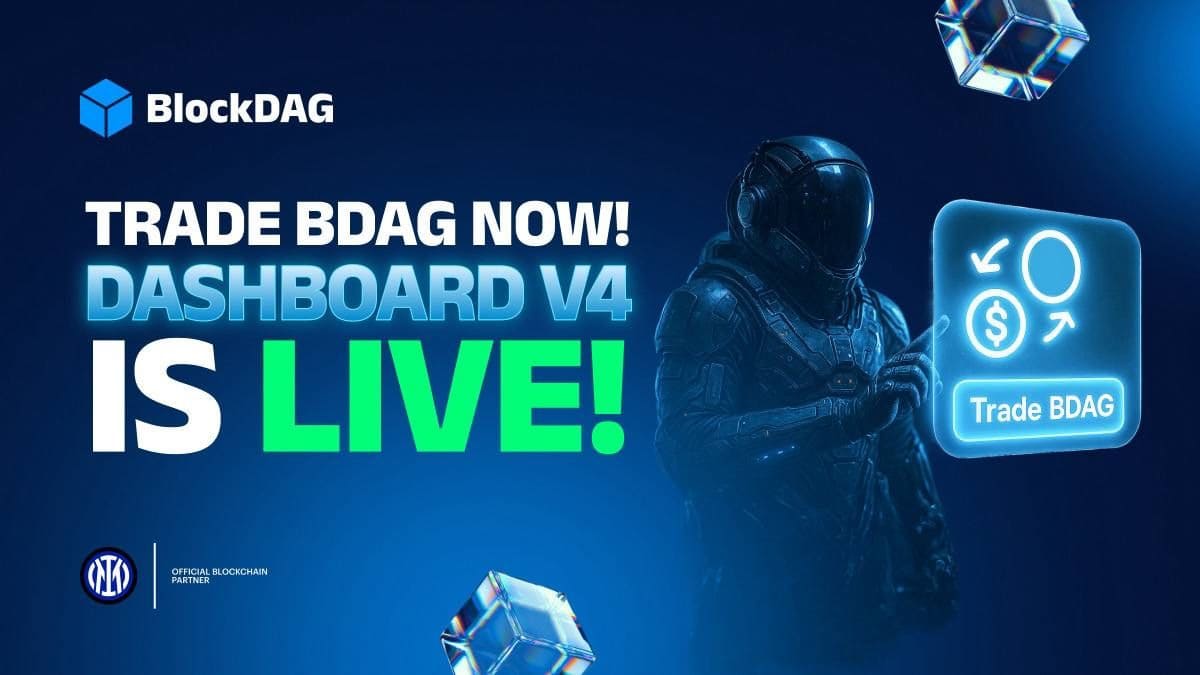
BlockDAG is presenting elements of its planned user experience before the token is broadly available. With the release of Dashboard V4, the project describes a BDAG Exchange simulation intended to resemble a trading interface. The demo includes BDAG/USD chart displays, an interactive buy/sell panel, and interface elements such as order-book and market-feed views.
As described by the project, this preview is meant to let users explore tools that may be offered after launch. Whether the final product matches the simulation and how it performs in live conditions are factors that can only be assessed over time.
The project also publishes token-sale figures. According to BlockDAG’s materials, it has raised $363 million, sold over 24.7 billion BDAG, and is currently in batch 29 with a stated token price of $0.0276 at the time of writing. These figures are project-reported and may change; they should not be interpreted as guarantees of future performance.
In discussions about early-stage crypto projects, BlockDAG is often cited for pairing fundraising updates with a product demo and a public-facing dashboard.
2. Litecoin: A Long-Running Payment-Focused Network
Litecoin has long been viewed as one of the older assets in the crypto ecosystem. With comparatively fast transaction confirmation and relatively low fees, it has positioned itself around payments and transfers. The network continues to receive periodic upgrades, maintaining its role as a functional and scalable payment option.
While it receives less attention than newer launches, its longevity and ongoing maintenance remain key reasons it is monitored by market participants.
3. Chainlink: Data Infrastructure for Smart Contracts
Chainlink is commonly described as infrastructure that connects smart contracts to external data. As blockchain applications expand, its role as a decentralized oracle network has become a widely cited use case. It is used across DeFi and other applications, and its integrations have continued to grow over time.
Supporters often point to demand for reliable, tamper-resistant data feeds as a key reason Chainlink remains relevant, though adoption trends and market pricing can change and remain uncertain.
4. Cardano: Research-Led Development and Smart Contracts
Cardano is a project that emphasizes long-term scalability and research-driven development. Built with a layered architecture, it separates settlement and computation layers, allowing for upgrades and governance mechanisms to be developed and deployed over time.
The project has continued work on smart contracts and has announced partnerships in areas such as education and government. The impact of those initiatives depends on execution, adoption, and broader market conditions.
For readers comparing different approaches to smart-contract platforms, Cardano is often discussed in the context of formal methods, governance, and incremental deployment.
Final Thoughts
Comparing crypto projects typically involves assessing what a network offers today, what is still in development, and the risks associated with timelines, adoption, and market volatility. BlockDAG is being marketed around a public dashboard and an exchange-style simulation; Litecoin is known for longevity and payments; Chainlink is widely used for oracle infrastructure; and Cardano continues to develop its smart-contract ecosystem.
This article is for informational purposes only and does not constitute financial or investment advice. This outlet is not affiliated with the project mentioned.

