TL;DR:
- Strategic agreement: South Korean weather platform Kweather and blockchain network Flare signed a Letter of Intent (LOI) to record climate data on the blockchain.
- Technical infrastructure: The pilot project will use the Flare Time Series Oracle (FTSO) system to deliver decentralized and tamper-resistant metrics.
- Financial expansion: The initiative projects the development of parametric climate insurance and the future interconnection of these services with the XRP asset ecosystem.
This Tuesday, South Korean weather firm Kweather and Layer-1 network Flare announced they are teaming up to bring verified climate records to the blockchain. The joint project between Kweather and Flare aims to structure a financial pilot focused on mitigating climate risks through smart contracts.
— Flare ☀️ (@FlareNetworks) July 14, 2026
Oracles and Decentralized Climate Finance
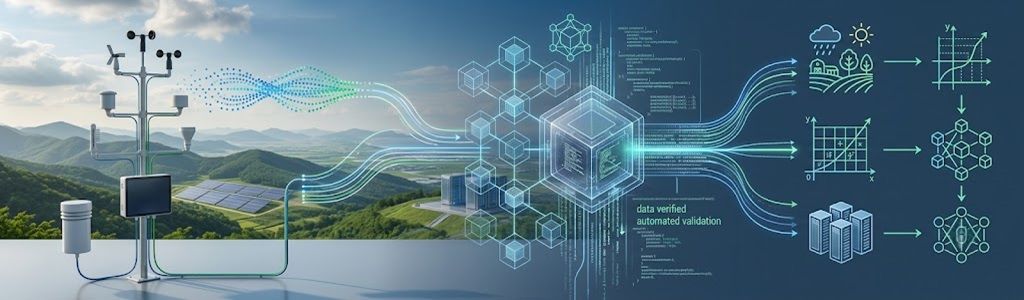
According to information from the Kweather team, the company will integrate precipitation, temperature, and wind variables directly into the Flare Time Series Oracle (FTSO) system. According to the official report, this oracle structure will provide high-frequency information flows to automate validation processes without intermediaries. The immutability of the blockchain would allow insurers and climate-sensitive industrial sectors to independently audit every recorded atmospheric variable.
Data from Flare reveals that this pilot will serve as a fundamental basis for the development of next-generation parametric insurance. This type of financial instrument executes automatically when pre-agreed specific thresholds of drought, heatwaves, or torrential rains are met. The firms explained that this mechanism eliminates the need for prolonged manual assessments in the face of agricultural or logistical losses.
Furthermore, the initiative explores the feasibility of designing customized climate derivatives to optimize risk management in the fields of agriculture and energy. According to the current trend described by the developers, Kweather’s physical station infrastructure could operate under a decentralized physical infrastructure network (DePIN) model. This technical transition would facilitate the tokenization of data-based revenue streams as real-world assets (RWA).
Future Connection with the XRP Ecosystem
The pilot project documentation contemplates evaluating the integration of these data services within the XRP Ledger (XRPL) network. The organizations indicated that connectivity would be achieved using Flare’s execution layers and native interoperable bridges to link the XRP ecosystem to climate liquidity provision.
Hugo Philion, CEO and co-founder of Flare, stated that Kweather’s operating model fits precisely with the data integrity-focused ecosystem promoted by his network. The development of the pilot will continue under a defined technical schedule that will extend through the coming months of 2026 to validate the mathematical models of the financial contracts on the testnet.