

Cryptoassets trading under $1 can appear inexpensive, but a low unit price alone does not indicate value. Assessments typically also consider factors such as circulating supply, market capitalization, liquidity, token distribution, and the risks described in project documentation.
Many tokens priced under $1 have very large supplies or limited trading liquidity, which can increase volatility and make outcomes difficult to predict.
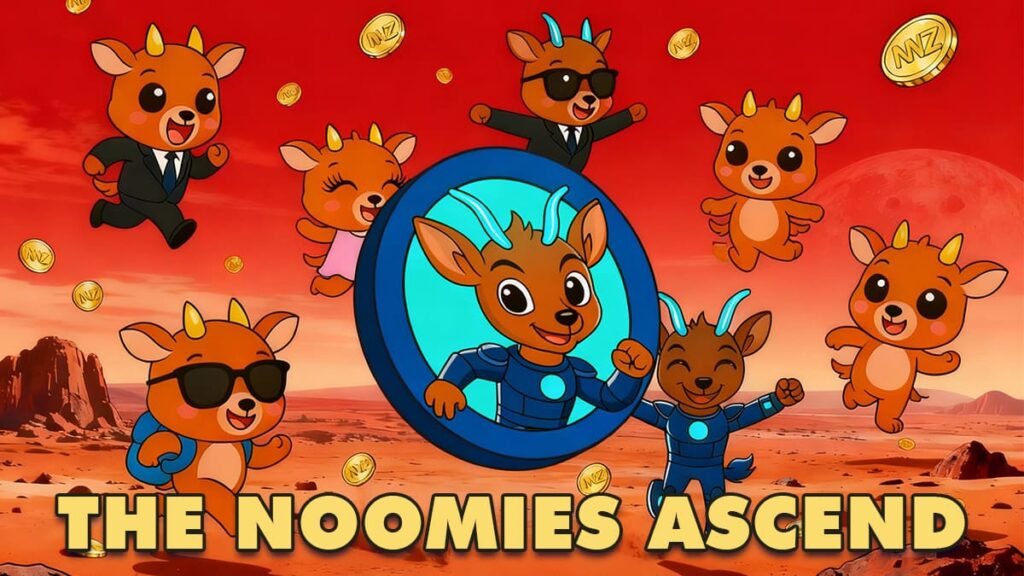
One early-stage project that has been discussed online is Noomez ($NNZ). According to project materials, NNZ is being distributed through a staged token sale, and the project lists a price of $0.0000187 in Stage 4 at the time of writing.
Below are five cryptoassets currently quoted under $1 (prices are approximate and can change quickly) and a brief, non-exhaustive comparison of commonly discussed characteristics.
1. Noomez ($NNZ) — Early-stage token sale project (project-reported details)
Based on the project’s own disclosures, Noomez states that it:
- Has a fixed total supply
- Uses token burns intended to reduce supply during the token sale
- Uses a staged pricing schedule as part of the token sale
- Mentions a staking program that has been marketed as offering up to 66% APY (project-stated) (terms can change and returns are not guaranteed)
- Publishes on-chain or dashboard-style metrics, such as holders and burn totals
- States it is currently in Stage 4
The project lists a token-sale price of $0.0000187 at Stage 4. Any future market price, exchange listings, liquidity, and staking outcomes are uncertain and depend on factors beyond the project’s control.
Project details (as described by the team):
- A multi-stage token sale with changing stage prices
- A burn mechanism for unsold tokens (project-reported)
- A dashboard (“Noom Gauge”) that the project says tracks metrics such as holders, funds raised, and burns
- A stated fixed supply of 280 billion tokens (per project materials)
- Planned products referenced by the project, including the “Noom Engine” and staking vaults
2. XRP (~$0.50) — Large network and established market
XRP is a widely held cryptoasset that has historically traded below $1. It is associated with a long-running ecosystem and relatively high market liquidity compared with many smaller tokens.
Points often discussed by market participants include:
- A large market capitalization relative to many under-$1 tokens
- Potential sensitivity to broader market cycles and sentiment
- Ongoing regulatory and legal uncertainty in some jurisdictions
As with any cryptoasset, price performance is uncertain and depends on market conditions and project-specific developments.
3. Cardano (ADA) (~$0.50) — Established but still cyclical
Cardano is a long-running network token that has often traded below $1. It has an active community and an established development history.
Common considerations include:
- A large total supply and circulating supply dynamics
- Network activity and developer adoption relative to competitors
- The fact that past market cycles have not reliably predicted future pricing
Trading under $1 does not, by itself, indicate whether a token is undervalued or overvalued.
4. Dogecoin (DOGE) (~$0.17) — Meme-driven demand and ongoing issuance
Dogecoin is a widely recognized token whose demand has often been influenced by social media attention and broader retail sentiment.
Frequently noted factors include:
- An ongoing issuance schedule rather than a hard capped supply
- High sensitivity to sentiment-driven moves
- Price volatility that may not align with fundamentals
These characteristics can affect how market participants evaluate long-term supply and demand.
5. Shiba Inu (SHIB) — Very low unit price with a large supply
Shiba Inu is another well-known meme token. Its very low unit price can be appealing to some traders, but supply dynamics and liquidity conditions remain key considerations.
Often-cited points include:
- A very large total supply relative to many other tokens
- Burn mechanisms that may or may not materially affect circulating supply over time
- Market cycles that can be heavily sentiment-driven
As with other meme tokens, outcomes can be highly volatile and difficult to forecast.
Summary: assessing cryptoassets priced under $1
Tokens priced under $1 range from large, long-established networks to early-stage projects distributed through token sales. Comparing them meaningfully usually requires more than unit price, including market capitalization, supply schedule, liquidity, concentration of holdings, utility, and the reliability of publicly available disclosures.
Early-stage token sale projects can carry additional risks, including limited liquidity, incomplete product delivery, and uncertainty about future exchange listings and market pricing.
This article is for informational purposes only and does not constitute financial or investment advice. This outlet is not affiliated with the project mentioned. Information about Noomez and its token sale, including pricing, staking terms, burns, and stage structure, is based on project materials and has not been independently verified.

