TL;DR:
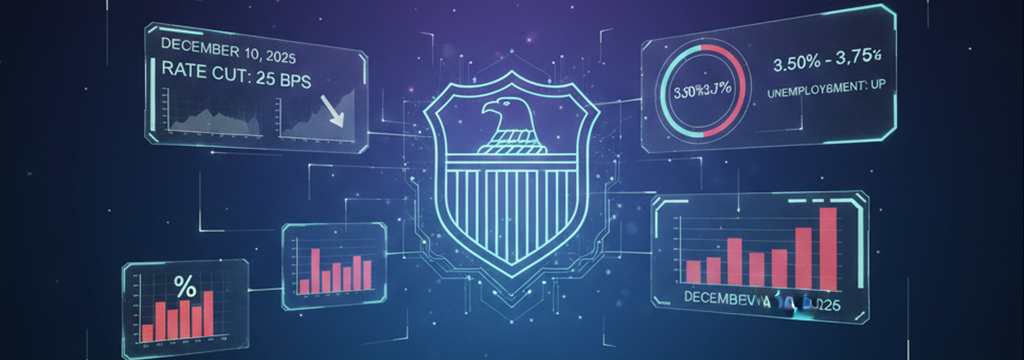
- The Federal Reserve cut the interest rate by 25 basis points, setting it between 3.50% and 3.75%.
- The decision responds to slow job growth, a softer labor market, and increased downside risks.
- The Fed begins purchasing short-term Treasury bills to ensure banking system liquidity.
This Wednesday, the U.S. Federal Reserve (Fed) applied a quarter-point rate cut. Its rationale for this action was the deterioration in the economic outlook due to the slowdown in job creation, a softer labor market, and renewed upward pressure on inflation.
Monetary policymakers characterized economic activity as expanding “at a moderate pace,” but admitted that uncertainty about the outlook has increased and downside risks to employment have escalated in recent months.
The Committee made a unanimous decision, supported by Chairman Jerome Powell. The action lowered the target range for the federal funds rate to 3.50%–3.75%, signifying an ease after a year marked by stagnating labor conditions and uneven inflationary progress.
Internal Division and Operational Measures Accompanying the Cut
The rate cut represents a strategic shift, as, although inflation has rebounded this 2025, the body prioritizes achieving maximum employment in a context where job growth is weakening and unemployment is rising. The measure was accompanied by several key operational actions designed to reinforce the Committee’s stance and ensure liquidity.
For instance, the interest rate on reserve balances was reduced to 3.65%, and the repurchase (repo) and reverse repo operations were adjusted. Additionally, the Central Bank announced it will begin purchasing shorter-term Treasury bills and, if necessary, additional securities with maturities of up to three years to ensure that reserves remain ample.
Curiously, the vote revealed a greater internal division: three members opposed the rate cut, with Stephen Miran favoring a larger 50-basis-point cut, while Austan Goolsbee and Jeffrey Schmid preferred to keep rates unchanged.
Despite the disagreement, the Fed’s final message places a heavier emphasis on the softening labor market and general uncertainty. The Committee underscored its commitment to returning inflation to 2% over time, but the decision to ease policy now indicates greater concern about cushioning the growth slowdown.
Upcoming employment data will be the focus of attention in the following months, as will inflation expectations and any signs of financial or international strain. The Fed has signaled that it will adjust policy again if conditions deteriorate.