TL;DR:
- FOCIL (EIP-7805) is emerging as the flagship feature of Hegotá to guarantee transaction inclusion.
- The mechanism uses random validator committees to force builders to stop excluding payments.
- The upgrade is scheduled for the second half of 2026, following the Glamsterdam hard fork.
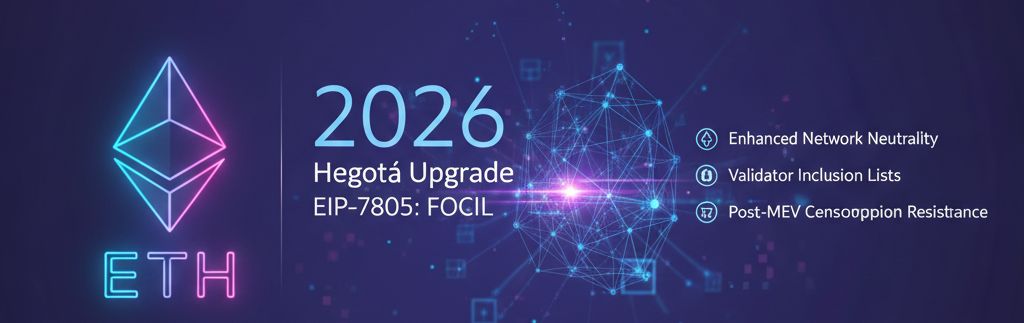
A profound structural shift is approaching the Ethereum ecosystem with the proposal of Fork-Choice Enforced Inclusion Lists (FOCIL). This mechanism, documented as EIP-7805, aims to be the cornerstone of the Ethereum Hegotá upgrade to ensure absolute neutrality.
The initiative arises as a response to growing centralization and censorship by block builders in the post-MEV era. Thanks to FOCIL, control will return to the protocol since the decision of which transactions are included will no longer rest exclusively with external entities.
The technical operation is based on a rotating committee of 16 validators selected at random in each time slot. These participants will generate mandatory transaction lists that builders must process, under the risk of having their blocks rejected by the network.
Censorship Resistance and the Future of the Network in 2026
Notably, the Ethereum Hegotá upgrade will integrate this system directly into the consensus rules, unlike other solutions. This means it will not rely on social agreements; rather, economic and technical incentives will make censorship irrational for nodes.
Although FOCIL was initially considered for the Glamsterdam fork, researchers decided to postpone it to give it the necessary prominence. Due to its technical complexity, it requires a dedicated development cycle to ensure the total stability of the network’s consensus system.
In summary, in addition to FOCIL, other critical improvements such as Verkle Trees and state expiry are being evaluated to reduce node load. All these proposals reflect a coordinated effort to maintain Ethereum as a global, scalable, and, above all, credibly neutral settlement layer.