TLDR:
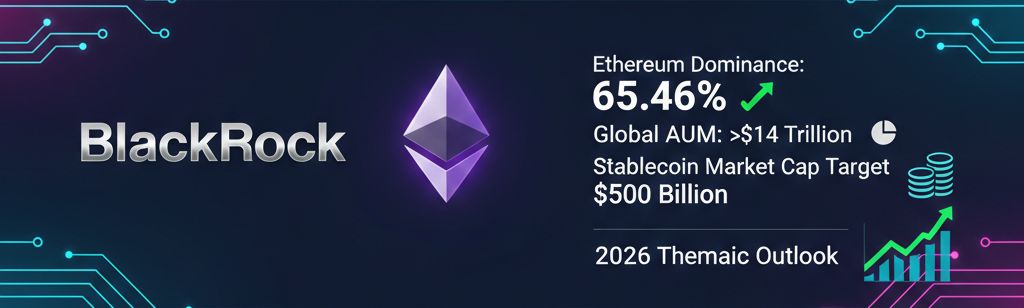
- BlackRock identifies Ethereum as the primary beneficiary of the digital asset boom, holding a 65.46% market share.
- The firm has shifted from viewing cryptocurrencies as speculative assets to treating them as payment and settlement infrastructure.
- Driven by tokenization, stablecoins are expected to reach a $500 billion market capitalization this year.
The world’s largest asset manager is leading the profound transformation currently reshaping the global financial sector. BlackRock’s most recent report, “2026 Thematic Outlook,” highlights that Ethereum tokenization will be one of the most innovative trends for investors throughout 2026.
The company, which manages over $14 trillion, asserts that crypto assets have evolved beyond mere speculation. They are now recognized as vital infrastructure for liquidity management and settlement across global markets.
In this scenario, ETH is undoubtedly the undisputed leader of the sector, standing well above peers such as BNB Chain and Solana. The network’s programmability facilitates the efficient migration of real-world assets into the digital environment.
Institutional Growth and the Future of Digital Assets
The success of products like the iShares Bitcoin Trust (IBIT) validates BlackRock’s thesis regarding institutional demand. However, the focus is now shifting toward how Ethereum tokenization can democratize access to Treasury bonds and other traditional financial instruments.
Furthermore, entities like Mercado Bitcoin agree that the integration between traditional finance (TradFi) and the decentralized economy is inevitable. Stablecoins, acting as the key components of this bridge, are projected to see massive growth, reaching $500 billion.
Additionally, other multinational managers, such as Mirae Asset Global Investments, are analyzing global frameworks for fund tokenization. This collective effort promises to lower entry barriers for investors of all levels, enabling global wealth creation.
In summary, the report concludes that Ethereum acts as the “highway” for this new financial era. With a proven infrastructure and growing adoption, the network is prepared to absorb a significant portion of traditional assets seeking greater transparency and speed.