


Ethereum Activity Remains High
Ethereum remains one of the most active blockchain networks by on-chain activity. It processes over 1.2 million transactions per day, supporting a wide range of uses across decentralized finance and NFTs. Network activity can vary over time and does not, on its own, indicate future market performance.
While Ethereum is widely used, its growth and price dynamics are often influenced by broader market conditions. Some market participants also look at smaller, early-stage tokens, which can carry higher volatility and higher risk.
MAGAX Reports 4,000 Holders in a Single Day
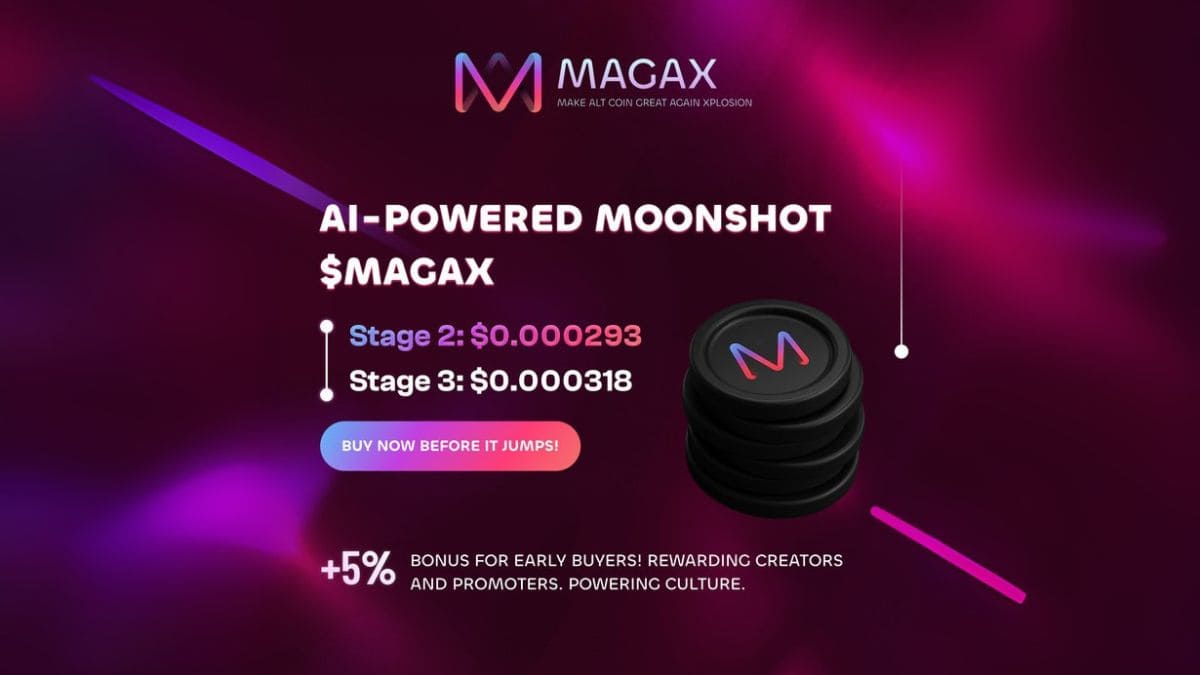
MAGAX, a meme-themed token, says it reached 4,000 holders in one day during what it describes as Stage 2 of its token sale, according to information published on the project website. Holder counts can be difficult for independent observers to verify without additional context, and they do not guarantee liquidity, exchange listings, or sustained demand.
In general, rapid changes in holder numbers are sometimes cited in marketing materials as a sign of interest, but they can reflect short-term attention and do not necessarily translate into long-term adoption.
Meme-to-Earn: What the Project Says About Utility
MAGAX promotes what it calls a Meme-to-Earn model powered by Loomint AI. The project describes a system intended to reward users for creating and sharing content, and it claims to filter bots and inauthentic engagement. These mechanisms and any associated rewards depend on the project’s implementation and may change over time.
If such a model is deployed as described, participation metrics would be one way the project could measure engagement. However, engagement and “utility” claims should be evaluated carefully, including how rewards are funded and what constraints may apply.
How to Interpret Holder-Growth Claims
Crossing 4,000 holders in a short period may indicate heightened interest, but it is not, by itself, a reliable measure of project quality or market outcomes. For early-stage tokens, token distribution, lockups, liquidity plans, and disclosure quality can be as important as headline holder figures.
Token sales are also associated with elevated uncertainty, including smart-contract risk, limited trading history, and execution risk related to product delivery and exchange access.
Price Projections and Return Claims Are Speculative
Some promotional materials around early-stage tokens include large return projections tied to future adoption assumptions. Such projections are inherently speculative, may not reflect realistic market conditions, and should not be treated as forecasts.
MAGAX also references a CertiK audit and mentions plans for DeFi integration. Audits can help identify certain technical issues, but they do not eliminate risk, and roadmap items may change based on execution and market conditions.
Ethereum vs. Early-Stage Tokens: Different Risk Profiles
Ethereum’s transaction activity highlights continued use of major blockchain infrastructure. Early-stage tokens like MAGAX, by contrast, typically have less operational history and may be more sensitive to sentiment, liquidity conditions, and project-delivery risk.
Readers considering any token sale should review available documentation, understand token distribution and vesting terms, and assess whether claims can be independently verified.
Key Takeaways From the MAGAX Token-Sale Materials
Ethereum’s reported activity provides one view of demand for blockchain networks. MAGAX’s materials emphasize a Meme-to-Earn concept and the project’s holder-growth claims as indicators of interest.
According to the project, Stage 2 of its token sale is active. As with similar early-stage offerings, participants face significant uncertainty, and outcomes can differ substantially from project descriptions.
This article contains information about a cryptocurrency token sale. This outlet is not affiliated with the project mentioned. This article is for informational purposes only and does not constitute financial or investment advice.

