

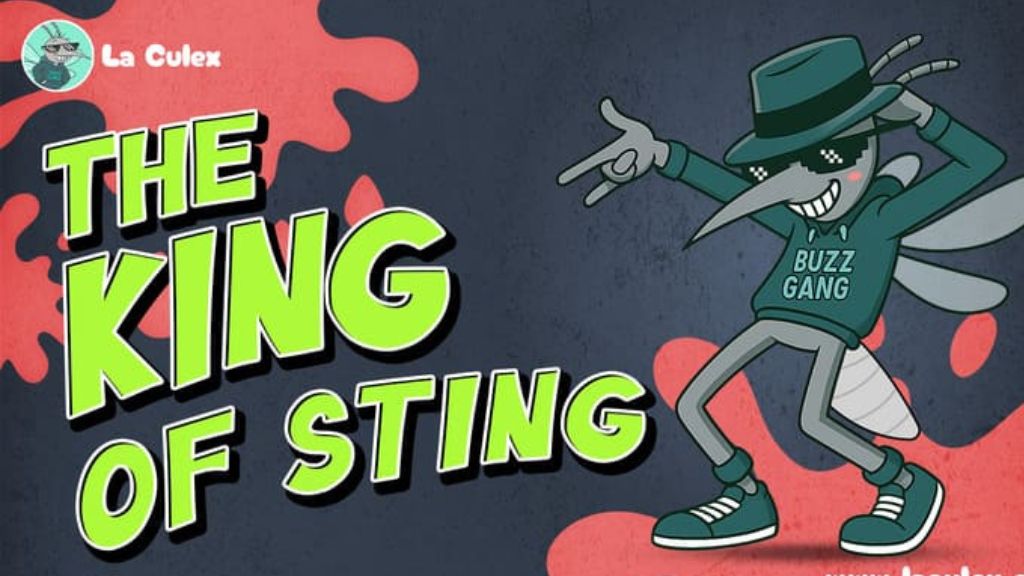
La Culex ($CULEX) is an Ethereum-based meme token that is being marketed around a mosquito-themed brand and an early-stage token sale. As with any newly launched token, available details largely come from project materials and may change over time.
This article reviews three crypto assets discussed in recent market commentary: La Culex ($CULEX), Ethereum ($ETH), and Chainlink ($LINK). It summarizes project-reported features for La Culex and outlines commonly cited context for Ethereum and Chainlink, while noting that prices and narratives in crypto markets can shift quickly.
La Culex ($CULEX): An Early-Stage Meme Token on Ethereum
La Culex is described in project materials as a meme token built on Ethereum. Project marketing has referenced a token-sale price of $0.00002274 and has included forward-looking scenarios related to potential exchange listing prices; such scenarios are speculative and should not be treated as predictions or guarantees.

According to project-provided descriptions, La Culex includes elements such as token burn mechanisms, staking rewards, and referral-style marketing incentives. The project has also stated that its token sale has raised more than $8,000 and that hundreds of millions of tokens have been sold; these figures have not been independently verified in this article.
Like other meme tokens, La Culex’s visibility may depend heavily on community activity and social-media attention. Coverage from crypto media outlets has previously discussed how engagement can influence short-term demand for meme-driven assets, though outcomes vary and can reverse quickly.
Staking programs, where offered, can involve smart-contract, liquidity, and counterparty risks. Any rewards are typically variable and subject to the project’s terms, which can change.
Ethereum: Smart-Contract Platform and Market Context
Ethereum, trading at $3,838.51 USD as referenced in the data cited here, remains a widely used smart-contract platform for decentralized applications and DeFi protocols. The same snapshot cites a market capitalization of $463.3 billion, a circulating supply of 120.7 million ETH, and no fixed maximum supply.
Network upgrades such as Dencun and Pectra have been discussed in the ecosystem as part of ongoing efforts to improve efficiency. Commentary has also cited relatively low transaction fees in some periods (for example, figures attributed to Cointelegraph), though fees can fluctuate substantially based on demand and network conditions.
Recent market discussion has referenced $81.4 million in outflows from Ethereum ETFs alongside softer derivatives demand. Such flows are one of many variables that can affect price and sentiment, and their interpretation can differ across analysts.
Many tokens, including meme tokens like La Culex, are created on Ethereum and use its smart-contract functionality. That dependency on Ethereum does not, by itself, reduce the risks associated with any individual token.
Chainlink: Oracle Infrastructure for On-Chain Data
Chainlink (LINK) is commonly described as an oracle network that helps bring off-chain data onto blockchains for use in smart contracts. The market snapshot referenced here lists LINK at $17.17 USD with a market cap of $11.96 billion and a circulating supply of 696.85 million out of a 1 billion maximum.
Chainlink’s broader narrative is tied to data feeds, interoperability, and enterprise and DeFi integrations. The article’s source text references an Ondo Finance integration and cross-chain activity via CCIP; readers should treat partnership claims and their scope as dependent on public announcements and ongoing implementation.
Market commentary sometimes highlights large on-chain transfers and their possible short-term impact on liquidity or resistance levels. These interpretations are not definitive and do not reliably predict future price action.
Chainlink has also been mentioned in public discussions involving institutions such as Swift and J.P. Morgan; the significance of any such references depends on the specific product scope, timelines, and whether usage is in production or pilot settings.

Conclusion
La Culex ($CULEX) is being marketed as an early-stage meme token with project-described features such as staking rewards, token burns, and referral-style incentives. Ethereum remains the underlying platform for many token projects and continues to evolve through network upgrades, while Chainlink focuses on oracle and interoperability infrastructure used across multiple chains and applications.
Because token launches and meme-asset narratives can change quickly, readers may want to separate project marketing from independently verifiable information, and consider volatility, liquidity, smart-contract risk, and regulatory uncertainty when evaluating any cryptoasset.

For More Information:
Project website (for reference): Visit the Official CULEX Website
Twitter/X (project account, for reference): Follow CULEX ON X (Formerly Twitter)
Frequently Asked Questions About the La Culex Token Sale
What is La Culex ($CULEX)?
La Culex is marketed as an Ethereum-based meme token that, according to the project, includes staking rewards and token burn mechanisms.
How should readers interpret ROI examples mentioned in token-sale marketing?
Any ROI or “$X becomes $Y” scenarios are speculative marketing illustrations. Actual outcomes can differ materially, and losses are possible.
Why is Ethereum often described as a major platform?
Ethereum is widely used for smart contracts, decentralized apps, and DeFi, with a large developer and application ecosystem. This does not mean it is risk-free.
What is Chainlink’s main function?
Chainlink provides oracle services that can deliver real-world data to blockchain smart contracts.
Are meme coins safe?
Meme coins can be highly volatile and can carry liquidity and project-execution risks; research and risk management are important.
What is staking in crypto?
Staking generally involves locking tokens to receive rewards under a protocol’s or project’s rules. Rewards are typically variable and not guaranteed.
How does token burning affect price?
Burning reduces supply. The market impact is uncertain and depends on demand, liquidity, and broader conditions.
Glossary of Key Terms
Token sale: An early fundraising phase for a token, sometimes before broader exchange availability.
ROI (Return on Investment): Percentage gain or loss on an investment.
Staking: Locking up crypto assets to receive rewards under specific rules.
Token Burn: Permanent removal of tokens to reduce supply.
Oracle: A service that feeds real-world data to blockchain smart contracts.
Layer 1: The base blockchain protocol (e.g., Ethereum).
CCIP: Cross-Chain Interoperability Protocol.
Summary
This article reviews La Culex, Ethereum, and Chainlink. It summarizes La Culex as an Ethereum-based meme token being marketed through an early-stage token sale, with project-described features including staking rewards, token burns, and referral-style incentives. It also outlines commonly cited market context for Ethereum and Chainlink, focusing on their roles in smart contracts and oracle infrastructure, respectively.
This article is for informational purposes only and does not constitute financial or investment advice.
This outlet is not affiliated with the project mentioned.
As with any initiative within the crypto ecosystem, readers should do their own research and carefully consider risks.

