

ETH and LINK remain in focus as Ethereum’s price trades around $4,031 and Chainlink around $19.04 at the time of writing. Alongside these large-cap assets, MoonBull ($MOBU) has also attracted attention due to an ongoing token sale promoted by the project. Any figures or features described below are based on project materials and may change.
MoonBull’s token sale has been discussed on social media and in the project’s own channels. Marketing language around the sale has described MoonBull using phrases such as “top cryptos to join for October 2025,” and the project has highlighted community growth and fundraising progress. Readers should treat these claims as promotional and independently verify details before making any decisions.
MoonBull overview: staking and token distribution (project-reported)
According to MoonBull’s materials, the project offers a staking program reported at 95% APY. Staking terms, reward rates, and lock-up conditions can change, and staking returns are not guaranteed. The project also states that staking can be managed through its dashboard and describes a lock-in period intended to support liquidity and token distribution. MoonBull additionally reports that a total of 14.6 billion $MOBU tokens has been committed to its staking pool; this figure has not been independently verified.
MoonBull’s documentation also outlines “Mobunomics,” including a stated total supply of 73.2 billion tokens and an allocation model across multiple categories. The project describes 50% (36.6 billion $MOBU) as allocated to a 23-stage token sale, 10% (7.32 billion) to liquidity over two years, and 20% (14.64 billion) to staking rewards. It also describes 11% (8.05 billion) for referral marketing incentives (including references to 15% bonuses for both parties), with remaining allocations for community programs, burns, influencers, and the team. The project states that unallocated tokens would be burned before a listing; any such actions depend on execution and are not a guarantee of future price performance.
MoonBull token sale status (project-reported figures)
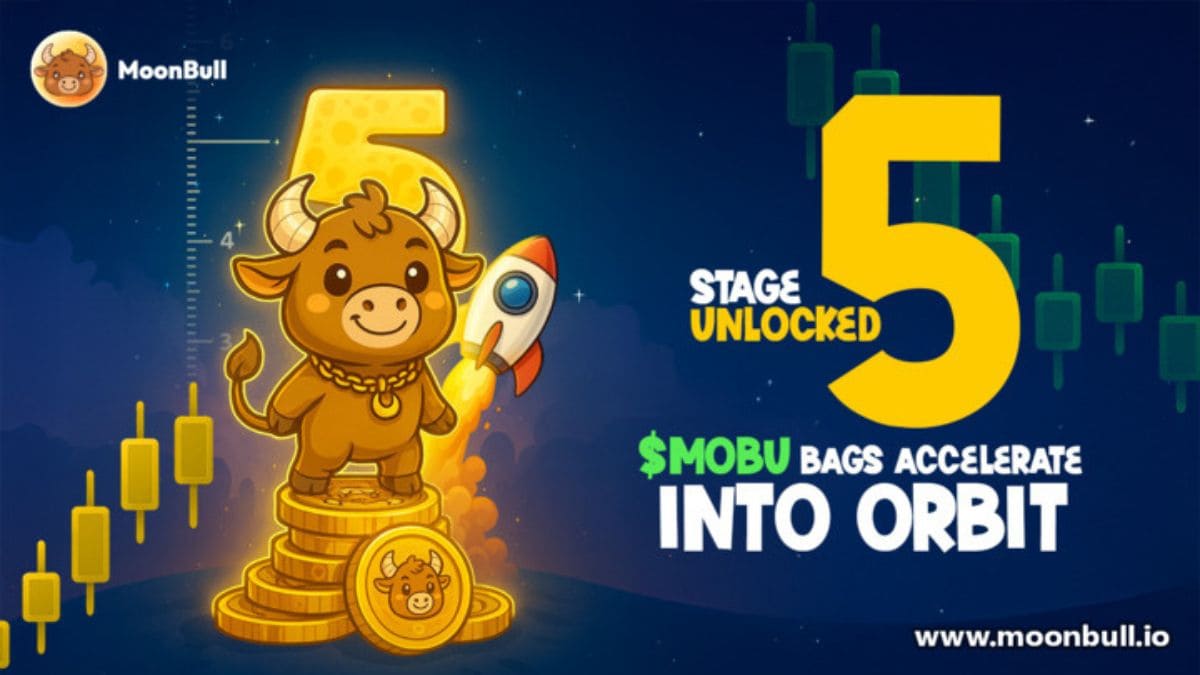
MoonBull describes its token sale as being organized in stages. In its materials, the project reports that it is in Stage 5 with a token sale price of $0.00006584, with more than $400K raised and over 1,200 holders. These numbers are project-reported and may not reflect on-chain or independently audited data.
The project also describes stage-based price changes between stages. Any discussion of potential gains, listings, or future valuations should be treated as speculative; markets can move in either direction and outcomes are uncertain.
Ethereum (ETH): price and market factors
Ethereum (ETH) is trading around $4,031.17 USD, with 24-hour trading volume reported at nearly $59.9 billion USD. Market commentary has pointed to developments such as Layer 2 adoption, institutional activity, and restaking-related products as factors that may influence sentiment. Some analysts have referenced levels such as $4,500 as a possible resistance area, but such targets are uncertain and not guaranteed.
ETH remains closely watched as a bellwether for broader crypto market conditions. Ethereum’s role in smart contracts, DeFi activity, and network upgrades is widely discussed, though price direction depends on macro conditions, on-chain activity, and risk appetite.
Chainlink (LINK): demand narrative and price levels
Chainlink (LINK) is trading around $19.04 USD with 24-hour volume reported above $1.37 billion USD. Observers often focus on adoption of Chainlink services, including integrations related to CCIP, as potential demand drivers. Some market commentators have suggested a move toward $25 if momentum continues, though this remains speculative.
LINK’s role in oracle infrastructure and data delivery continues to be highlighted in discussions around tokenization and enterprise blockchain applications. As with other crypto assets, price performance can be volatile and subject to rapid changes.
Conclusion
ETH and LINK remain key assets followed by traders and long-term participants, while smaller projects such as MoonBull can draw attention through fundraising campaigns and marketing. Readers should separate project promotions from independently verifiable information, particularly when a token sale, staking, or referral incentives are involved.
Project-reported tokenomics, staking rates, and any stated listing plans should not be treated as forecasts. Anyone evaluating participation in a token sale should review primary documentation, verify smart contracts and terms where possible, and consider the possibility of total loss.
Project links (for reference):
Website (project link for reference): Visit the Official MOBU Website
Telegram (project social link for reference): Join the MOBU Telegram Channel
Twitter: Follow MOBU ON X (Formerly Twitter)
Frequently Asked Questions about crypto marketing terms (Oct 2025)
What do people mean by a “1000x” crypto?
“1000x” is informal shorthand used online to describe a highly speculative scenario where an asset’s price increases by a factor of 1,000. Such outcomes are rare and not predictable, and they should not be treated as realistic expectations. Any token sale marketing that references “1000x” should be viewed as promotional rather than a forecast.
How do people evaluate meme coins?
Meme coins are often evaluated based on liquidity, token distribution, contract risks, community activity, and whether there is any verifiable utility. They can be especially volatile, and many projects fail to sustain attention. It is important to review primary sources and on-chain data where possible.
What should readers know about ROI claims in crypto marketing?
ROI figures and “potential gain” claims in crypto marketing are not guarantees and are often based on assumptions that may not hold. Listings, market depth, and broader conditions can materially change outcomes. Readers should treat such claims as speculative and consider downside risk.
What are common risks in early-stage token sales?
Risks can include smart-contract vulnerabilities, illiquidity, unclear token allocations, limited disclosures, and execution risk. Even when a project publishes terms, real-world delivery may differ from plans. Independent verification and cautious position sizing are commonly recommended risk-management practices.
What are common considerations for staking programs?
Staking programs can involve lock-ups, variable rewards, counterparty and smart-contract risk, and changing terms. Published APY figures are not guaranteed returns and can fluctuate based on participation rates and token price movements.
This outlet is not affiliated with the project mentioned. This article is for informational purposes only and does not constitute financial or investment advice. As with any initiative within the crypto ecosystem, readers should do their own research and carefully consider the risks involved.

